Theopolis Logo

Writing

Explore our collection of theological essays, biblical studies, and reflections on faith and culture.

See all
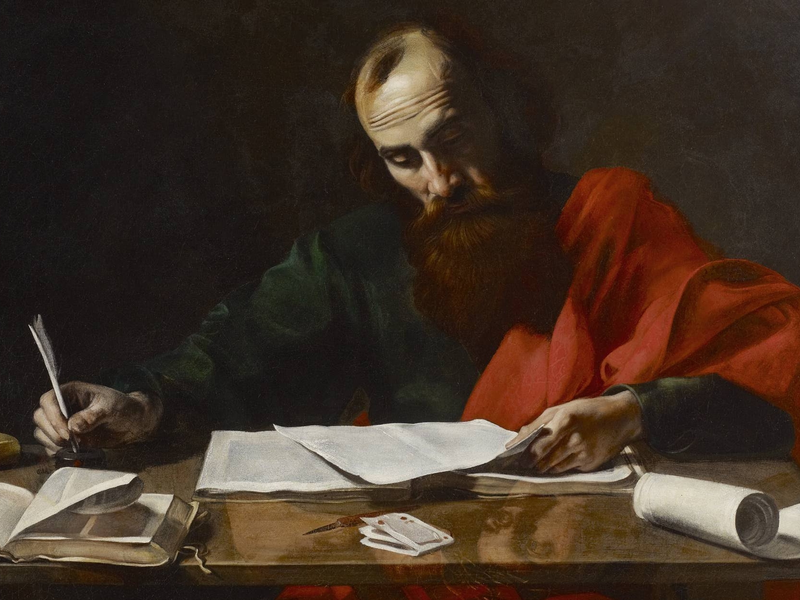
13071-probablyvalentindeboulogne-saintpaulwritinghi-1
1 Corinthians

The Great Exchange: Understanding Second Corinthians 5.21

He made Him who knew no sin to be sin on our behalf, that we might become the righteousness of God in Him. My argument is simple: What Paul means in writing the quotation above in context is the same as what he was telling the Ephesians when he wrote,…

by Mark HorneJune 7, 2004

ben-white-w8qqn1pmqh0-unsplash
Biblical Theology

What is Biblical Theology (Part 3) : The Art of Biblical Theology

THE ART OF BIBLICAL THEOLOGY IN PRACTICE: INTERTEXTUALITY AND TWO PAULINE CASE STUDIES The Art of Biblical Theology: Intertextuality Biblical Theology is really an art. Like other skills of this sort, it is not a matter of following rules (though there are certainly guidelines and techniques). Rather, it’s matter of…

by Rich LuskJune 6, 2004
malcolm-lightbody-tc2f02iq8le-unsplash
Biblical Theology

What is Biblical Theology: (Part 2) The Christotelic Spiral

Click HERE for Part 1 Reading Christotelically Jesus Christ is the heart of God’s plan for creation and history. There is no “hidden plan” or “hidden God” lurking behind Christ; rather, in and through Christ God has revealed himself and his intentions towards the world. In Christ, the Father has…

by Rich LuskJune 6, 2004
aaron-burden-qjdzyt_k8xg-unsplash
Biblical Studies

What is Biblical Theology? (Part 1)

STORY THEOLOGY AND A THEOLOGY OF STORY Defining Biblical Theology What is Biblical Theology? How does it compare to other ways of doing theology, such as Systematic Theology? Geerhardus Vos suggested that whereas Biblical Theology draws a line, Systematic Theology draws a circle. That is to say, Biblical Theology is…

by Rich LuskJune 6, 2004
screenshot-2023-09-21-at-3-59-23-pm
Hebrews

Living by His Faith: Some Rough Thoughts on the Faithfulness of Christ

The gospels strongly imply Jesus lived by faith in the promise of his heavenly Father. How else can his prayer life understood? How else could he have wrestled through the Gethsemane experience? How else could he have committed himself into his Father’s care at death? How could Jesus have presented…

by Rich LuskJune 6, 2004
sixteen-miles-out-al48tflf4e8-unsplash
John

John 3:16

John 3:16 is probably best-known, or at least, best-liked Bible passage in North America: “For God so loved the world, that he gave his only Son, that whoever believes in him should not perish but have eternal life.” This declaration of God’s love of the whole world is greatly comforting…

by Mark HorneJune 6, 2004

Showing page 223 of 309

See all

Showing page 31 of 43

See all

Law and Gospel in Public

Drawing on the work of Oliver O'Donovan, Jamie Smith offers a critique of natural law as an adequate grounding for political theology. Positively, Smith argues that “he public task of the church is not just to remind the world of what it (allegedly) already knows (by ‘natural' reason), but to…

April 2, 2015

Symbolizing Reality

At the beginning of his Silence and Praise , Ryan Hansen summarizes several of the recent approaches to understanding the cosmology of the book of Revelation. The most popular today borrows from the sociology of knowledge to suggest that John's writing creates a “symbolic universe” or “worldview” for his readers.…

April 2, 2015

Kept from Women

The emphasis on chastity, virginity, and lack of defilement from women does not have to do with misogyny or asceticism. In biblical perspective, it means that this is both a liturgical and a military assembly. When Israel arrived at Sinai, the men had to keep themselves from women so as…

April 1, 2015
Ecclesiology

Unity First?

In his Gift and the Unity of Being , Antonio Lopez claims that “Christ's kenotic gift of self restores unity with God. The redemption of the gift allows man to see that unity with God is possible and that it generates a whole that is greater than its parts. St.…

April 1, 2015

Nothing Sacred

Douglas Rushkoff's Nothing Sacred is rather all over the place (as one might say if one had a thickly superior British accent). The Judaism he favors isn't a “traditional community with concrete values and well-defined rules” (1) but one that “stresses transparency, open-ended inquiry, assimilation of the foreign, and a…

April 1, 2015

Automatic Writing

Explaining the power of liturgical habit, Paul Griffiths ( Decreation ) offers writing as an example of the self-forgetful, and world-forgetful, character of habit. It's one of the best descriptions of the experience of writing that I have come across. A few preliminaries to make sense of the analysis: Griffiths…

April 1, 2015

Showing page 445 of 2212

Browse by Category

In Medias Res

Your weekly digest for all things Theopolis.

Donate

Theopolis is nearly 100% donor-supported. Consider joining us on our mission.