Theopolis Logo

Writing

Explore our collection of theological essays, biblical studies, and reflections on faith and culture.

See all
timothy-eberly-djj49s6ud2o-unsplash
Biblical Studies

Whom Shall We Believe? Evangelicals and Scholarship

As we move into the Persian period of ancient history, and try to reconcile it with Daniel’s prophecies, we need to ask some hard questions about the interpretation of the data before us. One question concerns the reliability of the Biblical witness, and beyond that a second question concerns the…

by James B. JordanJanuary 30, 1991

a2-118606403-jpg
Biblical Horizons

Understanding Russia

Ewa Majewska Thompson: Understanding Russia: The Holy Fool in Russian Culture Ewa M. Thompson is Professor and Chairman of the Department of German and Slavic Studies at Rice University. In this seminal study, she investigates the concept of the "holy fool" as it exists in Russian culture and civilization. While…

by James B. JordanJanuary 30, 1991
alfons-morales-ylswjsy7stw-unsplash-1
Biblical Studies

The Bible and Western Literature

The most cursory glance at the history of Western literature reveals that it has been deeply influenced by the Bible. Some of the greatest classics of Western literature draw their plots, characters, and ideas largely from Scripture; Dante’s Divine Comedy and Milton’s Paradise Lost are two of the most notable…

by Peter LeithartJanuary 23, 1991
screen-shot-2022-04-28-at-4-57-36-pm
Exodus

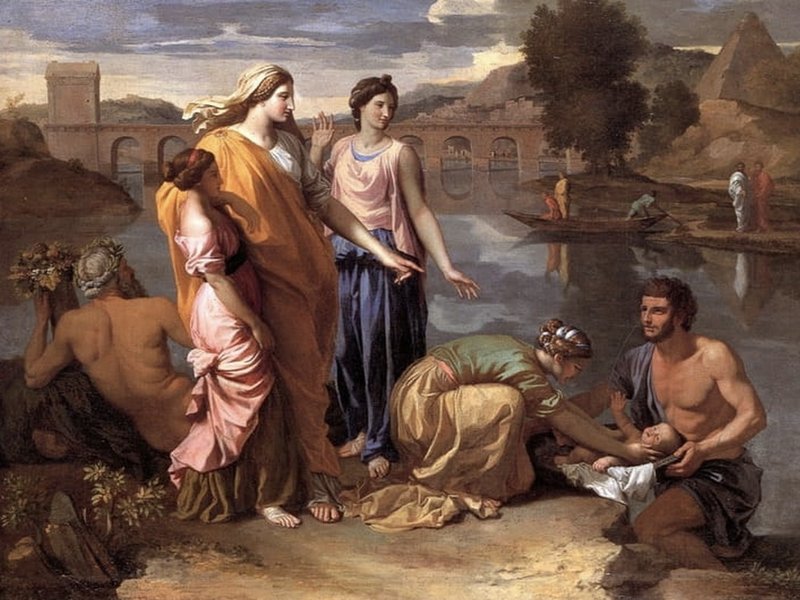
The Beautiful Child

Each time the Scriptures recount the story of Moses’ birth and deliverance from Pharaoh, reference is made to two facts about that event. First, each text points out that Moses was "beautiful." Second, each text points out that Amram and Jochebed, his parents, hid him for three months (cf. Ex.…

by Peter LeithartJanuary 23, 1991
501819ld-2
Romans

Who Rules the Land? The Meaning of the Noahic Covenant, Part 2

Click HERE for Part 1. The Message of the Covenant Can we really say that the saints presently rule the world, and always have since Noah? Look around and you can see that the wicked rule in virtually every country on earth. There are wicked civilizations that rise Babelically age…

by James B. JordanDecember 30, 1990
hebrew-manuscript-6
Hermeneutics

Daniel’s 70 Weeks

As we saw last time , we have come to the place in the study of Biblical chronology where it seems that we are forced to abandon the Bible itself as our primary source of information. If we assume that the seventy sevens of Daniel 9:24-27 are in fact weeks…

by James B. JordanDecember 23, 1990

Showing page 300 of 309

See all

Showing page 31 of 43

See all

Jesus the Carpenter

W hen Jesus begins the Sermon on the Mount, He is sitting on a mountain teaching about the law. He is a new Moses; He is Yahweh. To get the full force of the analogy, we should recalled that God reveals more on Sinai than the Ten Word or moral…

January 6, 2015

Salt of the Earth

Mark Kulansky observes in his Salt: A World History that “Almost no place on earth is without salt. But this was not clear until revealed by modern geology, and so for all of history until the twentieth century, salt was desperately searched for, traded for, and fought over.” Salt’s importance…

January 6, 2015

Who Are The Disciples?

When we read of Jesus’ “disciples,” we naturally think of the Twelve. But that’s not nearly as clear as we try to make it. Many Bibles include the heading “the first disciples” for the episode in Matthew 4:18-22, but the text never uses the word. Peter, Andrew, James, and John…

January 5, 2015

Salty

In a classic essay on the “Symbolic Significance of Salt,” Ernst Jones neatly summarizes how the natural properties of salt lend themselves to social and religious uses: “Salt is a pure, white, immaculate and incorruptible substance, apparently irreducible into any further constituent elements, and indispensable to living beings. It has…

January 5, 2015
Atonement

Social Atonement

H ow, Walter Rauschenbush asked in his Theology for a Social Gospel , does Jesus bear our sins? Unsatisfied with “imputation” as an explanation, he turned to a “social” explanation. Jesus was in solidarity with humanity, and human history is a history of sin. Humanity is bound in a enslaving…

January 5, 2015

Joy of Justification

In her contribution to J ustification in a Post-Christian Society (52), Christine Helmer summarizes the work of Birgit Stolt, who has examined Luther’s vocabulary of justification: “Through careful linguistic analysis, Stolt shows Luther’s doctrine of justification is not couched in the sterile dogmatic vocabulary of a cognitive appreciation for the…

January 2, 2015

Showing page 480 of 2212

Browse by Category

In Medias Res

Your weekly digest for all things Theopolis.

Donate

Theopolis is nearly 100% donor-supported. Consider joining us on our mission.