Theopolis Logo

Writing

Explore our collection of theological essays, biblical studies, and reflections on faith and culture.

See all
tanner-mardis-xuxghzhibn4-unsplash-1-2
Biblical Studies

Tweets-turned-Notes on the Bible’s Chronology

Summary In what follows, I will consider the “year-stamps” employed in Scripture, i.e., statements of the form, “Such-and-such an event took place in the Xth year of Y.” In the process, I will suggest some ways in which the Biblical narrative might relate to events in the extra-Biblical world, though…

by James BejonJuly 16, 2019
durer-prodigal-son-2
Luke

Perspectives on the Prodigal, (Part 2)

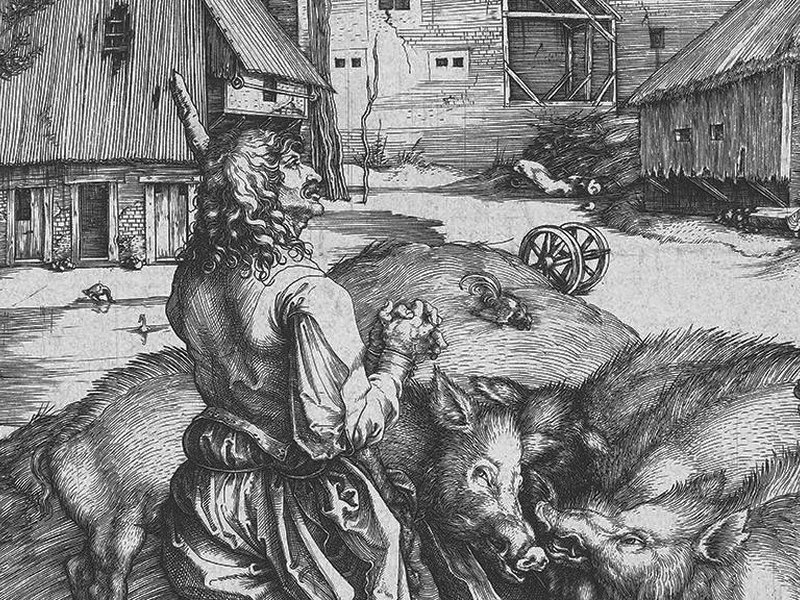
In the first essay on the parable of the Prodigal Son, I suggested that the problems commentators and others encounter in interpreting Jesus three-part parable are not accidental. These are not just problems in our ignorance of cultural background. They are intentional features of the stories —stories designed to poke…

by Ralph Allan SmithJuly 11, 2019
durer-prodigal-son-2
Luke

Perspectives on the Prodigal, (Part 1)

The story of the Prodigal Son is perhaps the most well-known story in the Bible. As others have observed, it may also be one of the most misunderstood. In two short essays, I will point out features of this story that are commonly neglected, aspects of Jesus’ parable that might…

by Ralph Allan SmithJuly 9, 2019
de-rijke-man-en-de-arme-lazarus-by-jacopo-da-ponte-16th-century
Luke

Lazarus and the Rich Man

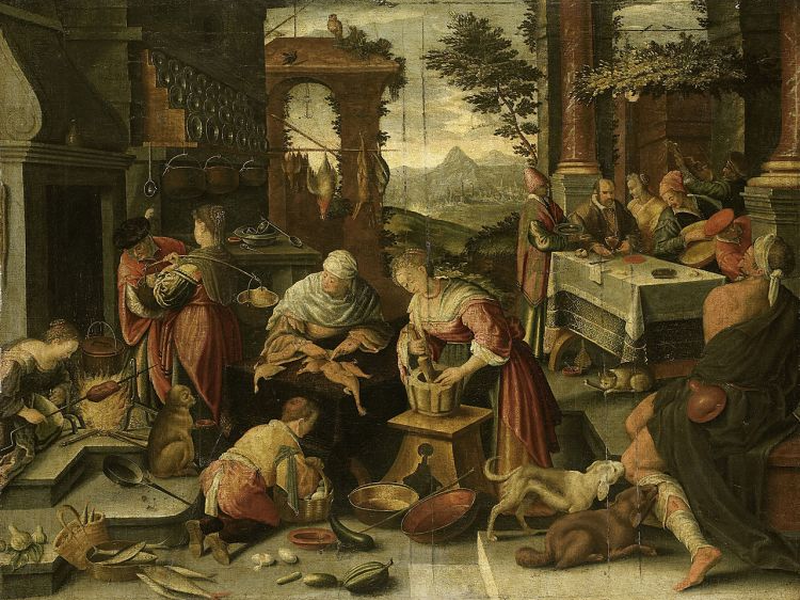
The parable of Lazarus and the nameless rich man is not an independent story. It is part of a long context that begins in Luke 15:1, where Jesus is eating with tax collectors and sinners and the scribes and Pharisees grumble. In response to their hardheartedness, Jesus tells a three-part…

by Ralph Allan SmithJuly 4, 2019
aaron-burden-uynrnfdkjwg-unsplash
Luke

Everybody has Dropsy - Luke 14:1-24

The Bible is written so that even when a reader cannot pick up on what might be deeper or more detailed aspects of a text, there is virtually always a message to be heard. In the ancient world, where the “reader” of Scripture would likely be a church official facing…

by Ralph Allan SmithJuly 2, 2019
communion
Biblical Theology

Fruit Trees and Grain Plants

The distinction between garden (or vineyard) and field begins in Genesis 2. This relates to the ordering of the formless world. Plants of the field are contrasted with the garden planted by God in Genesis 2:5&8. Later on, under the Old Covenant the Israelites will be required to keep their…

by James B. JordanJune 27, 2019

Showing page 77 of 309

See all

Showing page 31 of 43

See all

Persons, Property, Words

Samson Raphael Hirsch’s Horeb is worth reading on any topic – stimulating, eccentric, illuminating, infuriating. His treatment of the eighth commandment brings out several key themes. First, he defines property as “an artificial extension of the body” (227), and since the body is a “tool” for the spirit, so property…

November 20, 2018

Old-New Atheism

John Gray ( Seven Types of Atheism ) says that “Contemporary atheism is a flight from a godless world. Life without any power that can secure order or some kind of ultimate justice is a frightening and for many an intolerable prospect. In the absence of such a power, human…

November 19, 2018

Suffering and Death in Hebrews

Bryan Dyer deploys some sophisticated critical tools to establish the "context of situation" for the book of Hebrews in his Suffering in the Face of Death . He uses the "semantic domain theory" reflected in the Louw-Nida Lexicon to identify the variety of language the writer uses to describe suffering…

November 15, 2018

Liberal Theology, Liberal Politics

In her book on Benjamin Constant, Liberal Values , Helena Rosenblatt examines the intertwining of religious and political concerns in the work of Constant and his lover/collaborator, Madame de Stael. Through his early study of liberal Protestant theologians in Germany, Constant "hit upon what would be a central principle of…

November 14, 2018

Kantian v. Kantian

Gillian Rose ( Hegel Contra Sociology , 21-24) examines how sociology attempts to overcome Kantian problematics, but remains within them all the same. Neo-Kantianism, she argues, "founded two kinds of 'sociology,' two logics of the social: a logic of constitutive principles for the sociology based on the priority of validity,…

November 13, 2018

Male and Female

Barth is no feminist. In his discussion of man and woman (CD 3.4), he insists on the created differences between male and female. Men and women must resist the temptation "to exchange their special vocations, what is required of the one or the other as such" (154). Instead, "each man…

November 13, 2018

Showing page 53 of 2212

Browse by Category

In Medias Res

Your weekly digest for all things Theopolis.

Donate

Theopolis is nearly 100% donor-supported. Consider joining us on our mission.