Theopolis Logo

Writing

Explore our collection of theological essays, biblical studies, and reflections on faith and culture.

See all
tanner-mardis-xuxghzhibn4-unsplash-1-2
Biblical Studies

Tweets-turned-Notes on the Bible’s Chronology

Summary In what follows, I will consider the “year-stamps” employed in Scripture, i.e., statements of the form, “Such-and-such an event took place in the Xth year of Y.” In the process, I will suggest some ways in which the Biblical narrative might relate to events in the extra-Biblical world, though…

by James BejonJuly 16, 2019

durer-prodigal-son-2
Luke

Perspectives on the Prodigal, (Part 2)

In the first essay on the parable of the Prodigal Son, I suggested that the problems commentators and others encounter in interpreting Jesus three-part parable are not accidental. These are not just problems in our ignorance of cultural background. They are intentional features of the stories —stories designed to poke…

by Ralph Allan SmithJuly 11, 2019
durer-prodigal-son-2
Luke

Perspectives on the Prodigal, (Part 1)

The story of the Prodigal Son is perhaps the most well-known story in the Bible. As others have observed, it may also be one of the most misunderstood. In two short essays, I will point out features of this story that are commonly neglected, aspects of Jesus’ parable that might…

by Ralph Allan SmithJuly 9, 2019
de-rijke-man-en-de-arme-lazarus-by-jacopo-da-ponte-16th-century
Luke

Lazarus and the Rich Man

The parable of Lazarus and the nameless rich man is not an independent story. It is part of a long context that begins in Luke 15:1, where Jesus is eating with tax collectors and sinners and the scribes and Pharisees grumble. In response to their hardheartedness, Jesus tells a three-part…

by Ralph Allan SmithJuly 4, 2019
aaron-burden-uynrnfdkjwg-unsplash
Luke

Everybody has Dropsy - Luke 14:1-24

The Bible is written so that even when a reader cannot pick up on what might be deeper or more detailed aspects of a text, there is virtually always a message to be heard. In the ancient world, where the “reader” of Scripture would likely be a church official facing…

by Ralph Allan SmithJuly 2, 2019
communion
Biblical Theology

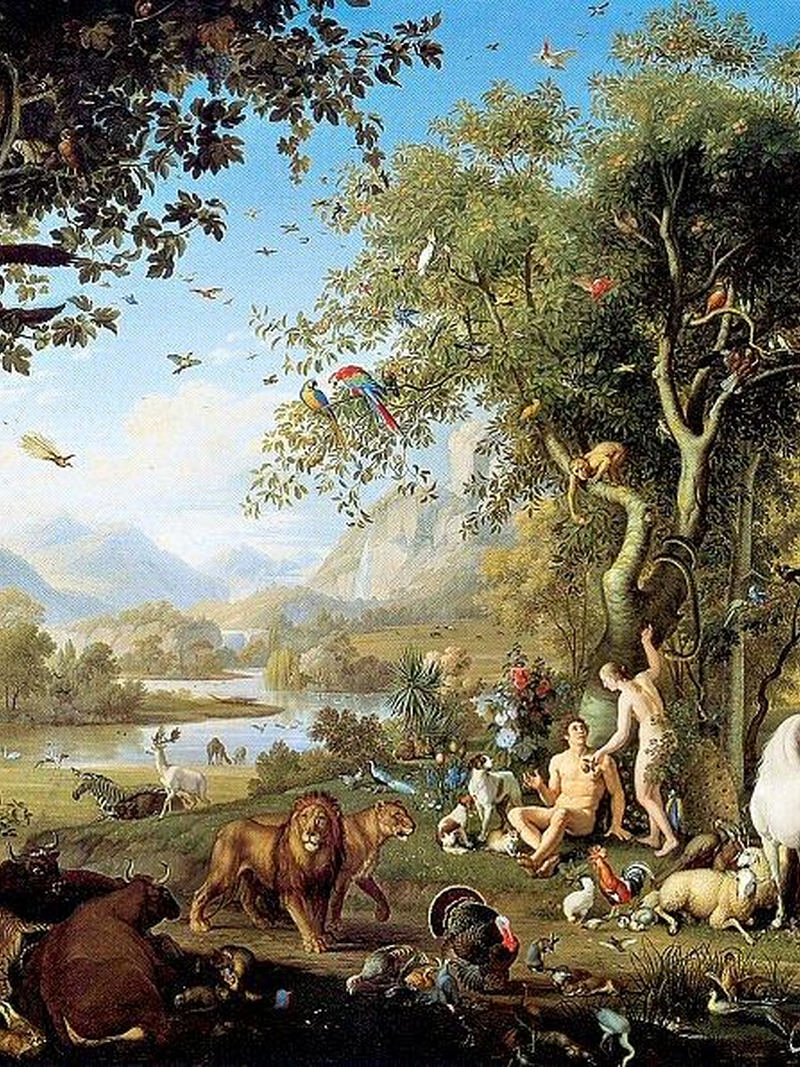
Fruit Trees and Grain Plants

The distinction between garden (or vineyard) and field begins in Genesis 2. This relates to the ordering of the formless world. Plants of the field are contrasted with the garden planted by God in Genesis 2:5&8. Later on, under the Old Covenant the Israelites will be required to keep their…

by James B. JordanJune 27, 2019

Showing page 77 of 309

See all

Showing page 31 of 43

See all

Will the Miracle Survive?

Stephen Mansfield remembers what Kurdistan was like in the early 1990s: “To be among the Kurds in the northern Iraq of those days was to be in the middle of a civil war while the troops of a tyrant amassed on a nearby border. Economic sanctions added to the general…

August 11, 2014

Persecuted Prophets

Rejoice when you are persecuted, Jesus tells His disciples, “for in the same way they persecuted ( dioko ) the prophets who were before you” (Matthew 5:10-12). Which prophets were those? The only prophet to speak directly of being persecuted is Jeremiah, who prays that those who persecute (LXX dioko…

August 9, 2014

SuperMoses

Responding to a recent post on superheroes, a friend pointed me to this , where Betsy Phillips points out that Superman was invented by two Jews and modeled on Moses. Phillips writes: “Jerry Siegel and Joe Shuster weren’t patterning Superman after Jesus. They were patterning him after Moses. A woman…

August 9, 2014

Beautiful and Sublime in History Writing

Haydn White argued that historical writing was disciplined as it moved from the sublime to the beautiful. As a result, modern historical writing is “domesticated” as it strips away all the tropes that lend themselves to the strange and terrifying possibilities of the sublime. In History and Tropology (15-16) F.…

August 9, 2014

Imperial Cherub

Cherubim have four faces, similar to four creatures: ox, lion, eagle, man. In two passages in Daniel, all of these faces become faces of Babylon. When he falls from reason, Nebuchadnezzar pastures in the field like cattle, and his hair grows like eagle feathers (4:33). Three out of four: He…

August 9, 2014

It’s the Politics, Stupid

At Politico , Nick Spencer argues that the possibility of atheism in the modern world, and the relative weakness of atheism in America, has less to do with science than with politics. Spencer writes, “‘Science’ - if we can treat that collection of disparate disciplines as one single, coherent enterprise…

August 8, 2014

Showing page 552 of 2212

Browse by Category

In Medias Res

Your weekly digest for all things Theopolis.

Donate

Theopolis is nearly 100% donor-supported. Consider joining us on our mission.