Theopolis Logo

Writing

Explore our collection of theological essays, biblical studies, and reflections on faith and culture.

See all
tanner-mardis-xuxghzhibn4-unsplash-1-2
Biblical Studies

Tweets-turned-Notes on the Bible’s Chronology

Summary In what follows, I will consider the “year-stamps” employed in Scripture, i.e., statements of the form, “Such-and-such an event took place in the Xth year of Y.” In the process, I will suggest some ways in which the Biblical narrative might relate to events in the extra-Biblical world, though…

by James BejonJuly 16, 2019
durer-prodigal-son-2
Luke

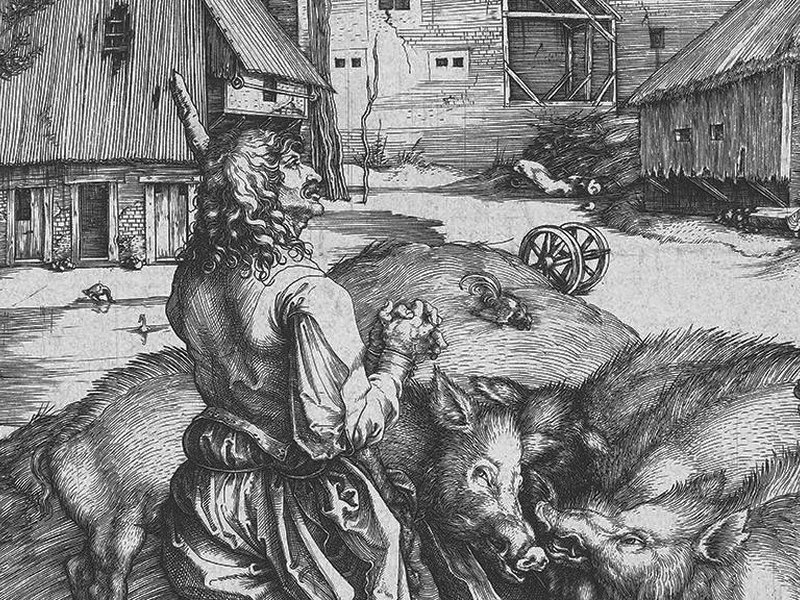
Perspectives on the Prodigal, (Part 2)

In the first essay on the parable of the Prodigal Son, I suggested that the problems commentators and others encounter in interpreting Jesus three-part parable are not accidental. These are not just problems in our ignorance of cultural background. They are intentional features of the stories —stories designed to poke…

by Ralph Allan SmithJuly 11, 2019
durer-prodigal-son-2
Luke

Perspectives on the Prodigal, (Part 1)

The story of the Prodigal Son is perhaps the most well-known story in the Bible. As others have observed, it may also be one of the most misunderstood. In two short essays, I will point out features of this story that are commonly neglected, aspects of Jesus’ parable that might…

by Ralph Allan SmithJuly 9, 2019
de-rijke-man-en-de-arme-lazarus-by-jacopo-da-ponte-16th-century
Luke

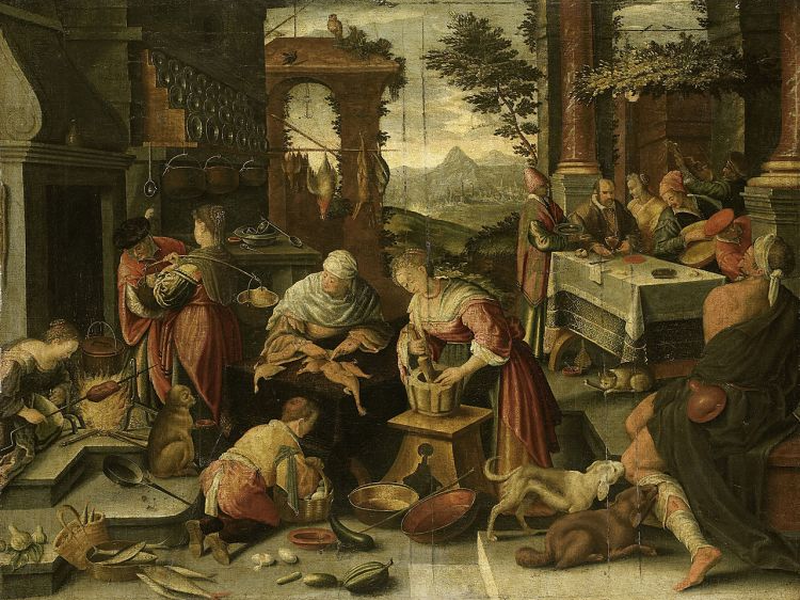
Lazarus and the Rich Man

The parable of Lazarus and the nameless rich man is not an independent story. It is part of a long context that begins in Luke 15:1, where Jesus is eating with tax collectors and sinners and the scribes and Pharisees grumble. In response to their hardheartedness, Jesus tells a three-part…

by Ralph Allan SmithJuly 4, 2019
aaron-burden-uynrnfdkjwg-unsplash
Luke

Everybody has Dropsy - Luke 14:1-24

The Bible is written so that even when a reader cannot pick up on what might be deeper or more detailed aspects of a text, there is virtually always a message to be heard. In the ancient world, where the “reader” of Scripture would likely be a church official facing…

by Ralph Allan SmithJuly 2, 2019
communion
Biblical Theology

Fruit Trees and Grain Plants

The distinction between garden (or vineyard) and field begins in Genesis 2. This relates to the ordering of the formless world. Plants of the field are contrasted with the garden planted by God in Genesis 2:5&8. Later on, under the Old Covenant the Israelites will be required to keep their…

by James B. JordanJune 27, 2019

Showing page 77 of 309

See all

Showing page 32 of 43

See all

Names and Words

One of the key distinctions in Rosenstock-Huessy’s grammatical sociology is that between names and words. In his brief discussion of this distinction in The Christian Future (CF), he begins with an expression of his horror at John Dewey’s notion that “We have to find another set of words to formulate…

October 11, 2017

Rehoboam's Cities and House

After the northern tribes abandon the house of David (2 Chronicles 10), Rehoboam settles in Jerusalem (2 Chronicles 11:5). He builds cities for defense and for storage (11:5-12), receives the Levites and priests who flee from idolatrous Israel (11:13-17), marries and has children (11:18-23). The chapter moves from land to…

October 10, 2017

Language and Relation

Underlying Rosenstock-Huessy's entire discussion of the diseases of speech is the assumption that language establishes relations. In this, Rosenstock-Huessy is again assaulting one of the premises of modernity, namely, the centrality of the Ego, and the consequent notion that language exists so that the Ego can express its thoughts and…

October 10, 2017

Learning to Sit in the Sun

My Firstthings.com column last week was about Scottish poet Thomas A. Clark (not to be confused with the American poet Tom Clark). Here are the first few paragraphs: T homas A. Clark is ambitious. In a short essay on “Imaginative Space,” the Scottish poet describes our “late culture,” which is…

October 9, 2017

Purity and Holiness

Though sometimes conflated, purity and holiness aren't the same thing in the Old Testament. There are two overlapping spectra: A spectrum from profane or common on the one side and holiness/sanctity on the other, and a spectrum with unclean/impure to clean/pure on the other. The difference is evident in the…

October 9, 2017

Logos Enables Dia-logos

Truth has a bad rap these days. A claim to know truth sounds dogmatic, oppressive, perhaps even racist. Truth-claims shut down dialogue: If you already know the truth, there's nothing for us to talk about. In his 2009 encyclical Caritas in Veritate , Benedict XVI took on this hostility to…

October 6, 2017

Showing page 135 of 2212

Browse by Category

In Medias Res

Your weekly digest for all things Theopolis.

Donate

Theopolis is nearly 100% donor-supported. Consider joining us on our mission.