Theopolis Logo

Writing

Explore our collection of theological essays, biblical studies, and reflections on faith and culture.

See all
sony-dsc
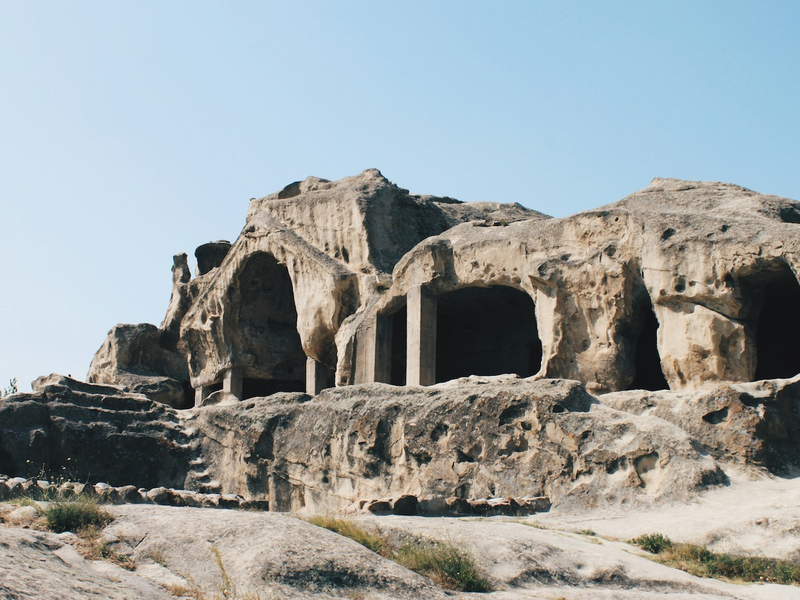
Leviticus

Cathedral Offerings

Interwoven within Leviticus’ opening offerings is a redemptive storyline meant to be rehearsed. Each offering makes a particular contribution to the retelling of the Exodus deliverance. Like learning a dance, Israel’s opening rituals recount their steps from Egypt to Sinai in a fashion meant to perpetually imprint its experience on…

by Ben LoveladyMay 15, 2025

patrick-fore-rm5dtbswzay-unsplash
Mark

Mark 7 in Color

In Capernaum, the leaders of Israel questioned Jesus in their hearts. Beside the sea, they questioned his disciples about their rabbi’s practices. They challenged Jesus in the grain fields, sought to trap him in the synagogue, tried to seize him, thinking he was mad, and accused him of being possessed.…

by George EdemaMay 13, 2025
ksenia-kudelkina-wvas_uto8wq-unsplash
Psalm-singing

Rascals in a Cave

An essay on ministry taken from recent notes for a ‘solemn charge’ I gave our pastoral team (together with their spouses) at All Saints Honolulu, a church-plant that enters its fifth year. I. After receiving the sword of Goliath from Ahimelech at Nob, and after fleeing first to and then…

by Mark BriansMay 6, 2025
lexi-laginess-zfvr_8hdngc-unsplash
Biblical Theology

A Theology of Tombs: Burial and the Promises of God

When thinking about the book of Genesis, we often think of beginnings, the beginning of the world, humanity, the elect people of God. The word “genesis” itself means beginning. Genesis is also known as the book of promises. Genesis contains three of the major Old Testament covenants: Adamic, Noahic and…

by Matthew DarbyApril 30, 2025
michael-parulava-o2zbdcbtu8g-unsplash
Luke

Mountain, Tomb, Table: Moses and Elijah as the First Witnesses at the Empty Tomb

A Theological and Typological Commentary on Luke 24:4 In Luke 24:4, we are told that as the women arrived at the tomb on Easter morning, they encountered “two men in dazzling apparel” standing beside them. This description, on its own, may not immediately provoke questions. The traditional interpretation identifies these…

by Bruce GrimmetApril 29, 2025
Acts

Easter Meditation (Part 2)

For Part 1, click HERE . The four Gospel accounts give us their strange and wonderful historical accounts of the resurrection of Jesus. The rest of the New Testament, either explicitly or by suggestion, refers to the resurrection in every book except 3 John. Unlike the Gospel accounts, however, most…

by Ralph Allan SmithApril 22, 2025

Showing page 10 of 309

See all

Showing page 32 of 43

See all
History

German Modernity

In the course of a review of Timothy Ryback’s recent book on Hitler’s library, Anthony Grafton comments on the connection between critique and occultism in early twentieth-century thought: “it is wrong to dismissed the esoteric strains in German thought in the early decades of the twentieth century simply because they…

December 20, 2008
Economics

Economies, Advanced and Primitive

Christopher Caldwell ends an intriguing article on William Bagehot ( Weekly Standard , 12/22) with this: “To be blunt, credit is successfully reestablished when financial elites say, ‘When.’ Credit is close to a synonym for the mood of the ruling class. To say an economy is based on credit is…

December 20, 2008

Wise Men

Mike Bull from Australia sent the following, which I reproduce with his permission: “We don’t know how many wise men travelled from the east, but perhaps we can make a guess via God’s deliberate typology. “We do know there were three gifts. With Christ as the human Ark of the…

December 18, 2008

India Islamicism

Philip Jenkins has an excellent brief introduction to the thought of the Indian Muslim thinker, Syed Abul Ala Mawdudi, in the December 24 issue of TNR . He writes: “His guiding assumption was a totalistic view of Islam: Everything in the universe was God’s creation, so Muslims could freely use…

December 17, 2008
Biblical Studies

Scapegoat

Priests used lots to select a scapegoat on the day of atonement (Leviticus 16:8-10). Joshua used lots to locate Achan the troubler of Israel; Achan was a scapegoat, whose death cleansed the people so they could defeat Ai. Haman threw lots, trying to pinpoint the time for offering the scapegoat…

December 17, 2008

Judaizing and the church calendar

Some Reformed charge that celebration of the seasons of the church calendar is Judaizing, a reversion to the slavery of the Old Covenant. More the opposite: The Reformed anti-calendar view says that we keep appointments with God only when He strictly and explicitly commands it. They do not think human…

December 14, 2008

Showing page 1435 of 2212

Browse by Category

In Medias Res

Your weekly digest for all things Theopolis.

Donate

Theopolis is nearly 100% donor-supported. Consider joining us on our mission.