Theopolis Logo

Writing

Explore our collection of theological essays, biblical studies, and reflections on faith and culture.

See all
308750rgsdl
Biblical Theology

Biblical Bestiary and Covenant Creatures, Part 3: Reunion of Man and Beast in Christ

Abbreviated Introduction to the Series Scripture is absolutely dripping with animal metaphors. Animal traits, characteristics, and appearances are attributed to God, Man, Angels, Nations, Armies. Since animals are the lowest creature in the three-tiered hierarchy, they are useful to metaphorically focus on a single aspect of God (bold like a…

by Jonathan WhiteOctober 27, 2025
screenshot-2025-10-21-at-2-22-31-pm
Matthew

Authority that Heals: Unpacking Matthew 4:18 – 10:4

Many years ago, while perusing Janice Anderson’s revised doctoral dissertation, Matthew’s Narrative Web: Over, and Over, and Over again , I was impressed by her attention to literary structures of repetition within and across Matthew’s Gospel. 1 Her research, in part, nudged me closer toward my present conviction that Matthew…

by Jonathan SedlakOctober 21, 2025
screenshot-2025-10-20-at-4-47-19-pm
Biblical Theology

Biblical Bestiary and Covenant Creatures, Part 2: The Animalistic Dehumanization of Sin

Abbreviated Introduction to the Series Scripture is absolutely dripping with animal metaphors. Animal traits, characteristics, and appearances are attributed to God, Man, Angels, Nations, Armies. Since animals are the lowest creature in the three-tiered hierarchy, they are useful to metaphorically focus on a single aspect of God (bold like a…

by Jonathan WhiteOctober 20, 2025
screen-shot-2025-10-14-at-7-34-36-am
Song of Songs

Like a Lily Among Thorns: Hailing the Suffering Christ in Canticles

“Like a lily among the thorns, so is my love among the maidens… My beloved is mine and I am his; he pastures among the lilies.” Song 2:2, 16 In chapter two of the Song of Solomon, the Beloved compares his Love to a lily among thorns. The language of…

by Mark BriansOctober 14, 2025
eric-welch-xuch5jnrfig-unsplash
Biblical Theology

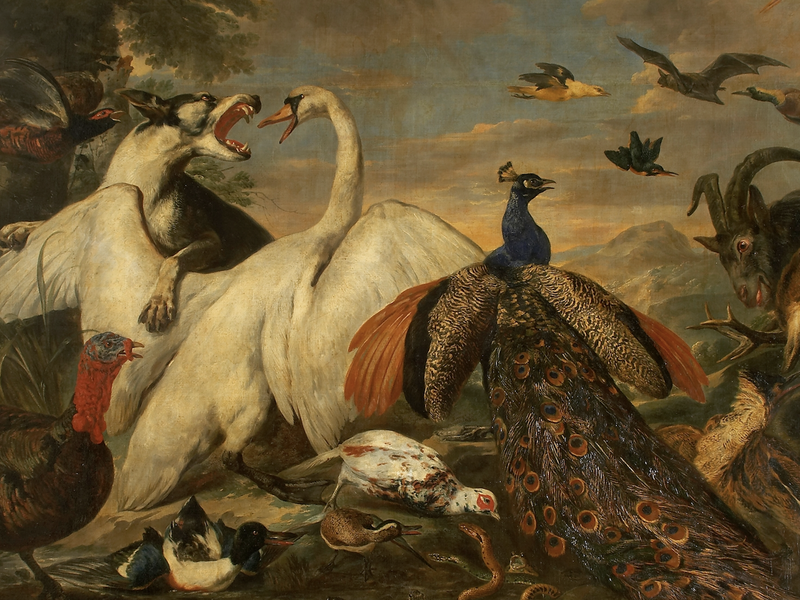
Biblical Bestiary and Covenant Creatures, Part 1: The Shared Spirit of Men and Beasts

Introduction From the very beginning, angels and animals have played mediating roles between God and Man. Just as the World was made three-tiered (Heaven, Earth, Deep), so the creatures were made (Angels, Men, Animals). Before Christ came to build the permanent bridge across the chasm between God and Man, various…

by Jonathan WhiteOctober 13, 2025
getty-images-nim1o1t51qq-unsplash
Matthew

Parables of Land and Sea in Matthew 13

Matthew 13, the third major discourse of the apostle’s gospel, is comprised almost entirely of parables. While it may seem that all the parables serve the same purpose in fulfilling the prophet Isaiah (Matthew 13:14), the parables found in verses 44–52, at the very least, function outside that purpose. This…

by David TownsendOctober 9, 2025
See all

Showing page 32 of 43

See all

Epicurean indifference revisited

Wes Callihan writes, in response to my brief quotation from Lucretius: “Possibly, however, Lucretius wouldn’t consider the indifferent watcher from the porch outside Pompeii a true Epicurean. Doesn’t the very next line go on to say something about how the pleasure is *not* in the other person’s suffering but in…

October 15, 2008
Philosophy

Direction revelation

Isaiah Berlin’s book on Hamann is lively engaging, but Berlin doesn’t get Hamann. For instance: “Hamann’s constantly repeated point is that revelation is direct contact between one spirit and another, God and ourselves.” Not. The opposite is the case: His constantly repeated point is that God speaks to the creature…

October 15, 2008

Lucretian wisdom

Book 2 of De rerum natura begins with “It is sweet on the great sea to watch from the shore other people drowning.” The words were found on a wall on a house in Pompeii. Perhaps someone sweetly watched from a perch opposite Vesuvius as the lava flow swallowed up…

October 14, 2008

Arian incoherence

Athanasius ties the Arians up in knots with an order-of-decrees argument. If the Son is created for the sake of creating us, then the Son exists for our need rather than we for His sake. That suggests a particular ordering of God’s will: “It is not that God, having the…

October 14, 2008

Speech-act Christology?

Athanasius says that “the words of human beings do not act.” Instead, “it is not by words but by hands that a human being works, for human hands have subsistence while words do not.” Hence, he is willing to adopt Irenaeus’s notion that the Son and Spirit are the two…

October 14, 2008

Creator-creature

Athanasius ( Orations Against the Arians ) writes that “God is not like us.” This is in the context of explaining how the eternal Word differs from the ephemeral words of human beings, and how the divine Word actually does what it says: “the Word of God is not, as…

October 14, 2008

Showing page 1460 of 2212

Browse by Category

In Medias Res

Your weekly digest for all things Theopolis.

Donate

Theopolis is nearly 100% donor-supported. Consider joining us on our mission.