Theopolis Logo

Writing

Explore our collection of theological essays, biblical studies, and reflections on faith and culture.

See all
cain-killing-abel-unknown-19th-century
Biblical Horizons

The Servant of the Ground

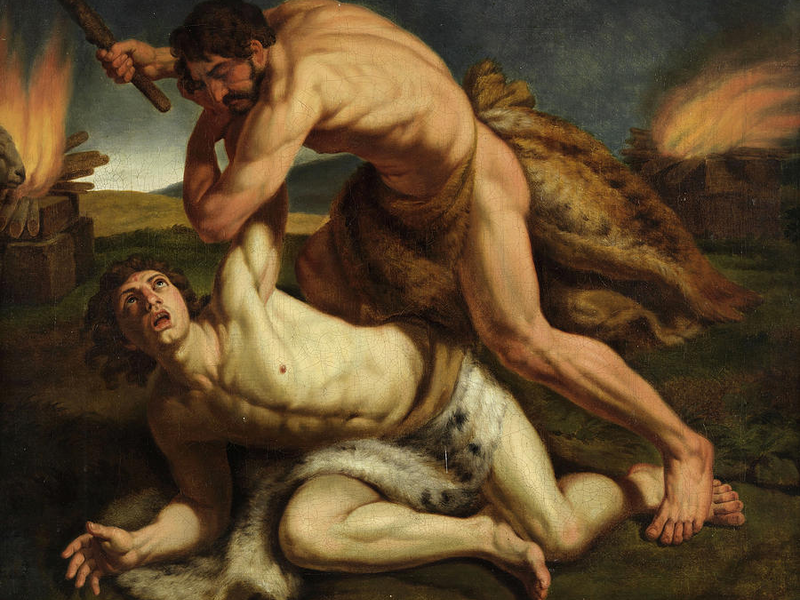
Why was Abel’s offering approved and Cain’s rejected? This question has been debated for many centuries. Some have argued that Cain’s offering was rejected because it was not a bloody offering; others that Cain’s offering was rejected because it was not from the firstfruits; others that Cain’s offering was rejected…

by Peter LeithartSeptember 19, 1990

timothy-eberly-djj49s6ud2o-unsplash
Luke

The Unjust Steward Revisited

Last year I had occasion to work through the book of Luke as I did some work for one of my editorial clients, and this year my pastor has been preaching through Luke. Thus, I have twice been reminded of the Parable of the Unjust Steward (Luke 16:1-13), a parable…

by James B. JordanSeptember 2, 1990
alfons-morales-ylswjsy7stw-unsplash-1
Biblical Chronology

The Mysterious Numbers of Edwin R. Thiele

We come now to what some have called the "Gordian Knot" of Biblical chronology: the period of the kings of Israel and Judah. We do not have a summary figure that tells exactly how long this period of time was. The book of Kings provides the years each king reigned,…

by James B. JordanSeptember 2, 1990
screen-shot-2022-02-22-at-11-59-32-am
Matthew

Additional Reflections on the Dew of Hermon

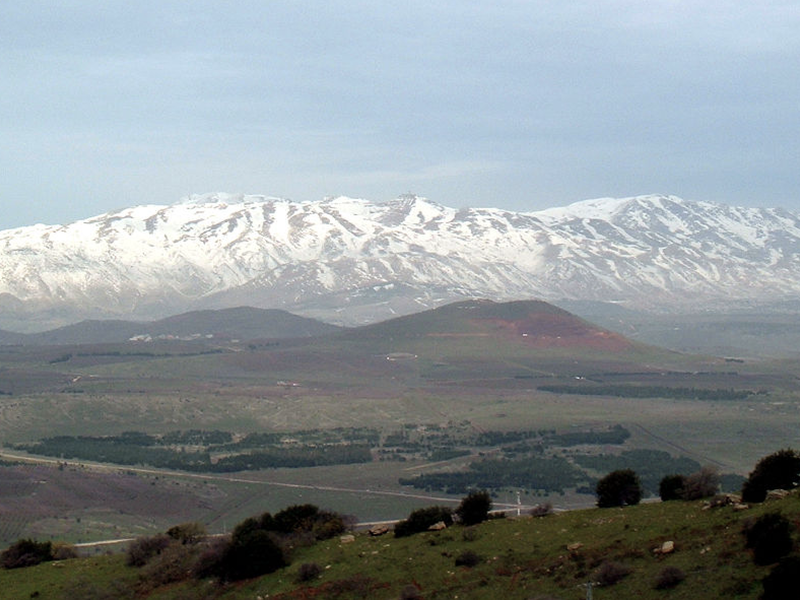
In an earlier article , while examining the biblical symbolism of dew, I noted the parallel in Psalm 133 between the dew upon Mount Hermon and the oil poured upon the head of Aaron. Both the dew of Hermon and the oil of ordination are compared to the pleasantness of…

by Peter LeithartAugust 19, 1990
screen-shot-2021-07-15-at-9-01-42-am
Biblical Horizons

Cornelius van der Waal, "The Covenantal Gospel"

The Covenantal Gospel was the last book written by the remarkable South African theologian and exegete Cornelius van der Waal. Two other works of van der Waal’s have been translated: Hal Lindsey and Biblical Prophecy , and Search the Scriptures . Because this book was written in 1979, it does…

by James B. JordanAugust 2, 1990
biljana-martinic-igj_21drt3g-unsplash
Beer

The Evangelical Cocaine Lobby

A year or so ago, my wife and I were invited to a Christian school in order to preview a film on drug abuse that was going to be shown to our children. One of the children in this film turned out, of course, to be using drugs. This child’s…

by James B. JordanAugust 2, 1990

Showing page 302 of 309

See all

Showing page 32 of 43

See all

Inner Word and Culture

Cavadini suggests that Augustine’s theory of the inner word is a theory of cultural production, formation, and transformation. First, Augustine’s theory opens space for the person’s transcendence of culture, a space that allows for critique and transformation. But this transcendence of culture does not mean removal from culture. The inner…

November 24, 2007

Inner word

Colin Gunton has cited Augustine’s doctrine of the “inner word” as a sign of his preference for abstract over the material/concrete. John Cavadini (Theological Studies 1997) responds: “Augustine’s distinctions, between the presignified and the signified, are evidence unobserved and unaccounted for by Gunton, who sees a distinction only between the…

November 24, 2007

Multiple selves

In his 1969 book on self-deception, Herbert Fingarette pointed out that self-deception could only work if the self was divisible, and suggested that the self is not a unit but a community of “subselves.” Fingarette traced this theme to Plato, and saw it intensified by the New Testament polarity of…

November 22, 2007
History

Early Modern Skepticism

John D. Cox points out in his recent Baylor Press book on Shakespeare that ancient skepticism was not a-religious in the Renaissance and Reformation, but often served the purposes of reform. Erasmus, for instance, deployed skeptical arguments in challenging traditional, but corrupt, practices in the Catholic church. Like More, he…

November 22, 2007

Tennis scoring

Why 15-Love? “Love” is a corruption of the French “l’oeuf,” “the egg,” as in “the big goose egg.”

November 22, 2007
History

Germanic war

Tacitus records in Germania , 7, concerning the Germans in warfare: “They therefore carry with them when going to fight, certain images and figures taken out of their holy groves. What proves the principal incentive to their valour is, that it is not at random nor by the fortuitous conflux…

November 22, 2007

Showing page 1602 of 2212

Browse by Category

In Medias Res

Your weekly digest for all things Theopolis.

Donate

Theopolis is nearly 100% donor-supported. Consider joining us on our mission.