Theopolis Logo

Writing

Explore our collection of theological essays, biblical studies, and reflections on faith and culture.

See all
_orange-black-minimal-vacation-traveler-youtube-thumbnail-1
Judges

God’s War Against Humanism: A Practical and Theological Review of "Judges" by James Jordan

This is the third of a three part symposium commemorating the 40th Anniversary of Dr. James B. Jordan’s publication of Judges: a Practical and Theological Commentary . Judges was the first book length exposition of Theopolitan Reading, a practice of reading Scripture in its fullness that Theopolis continues to refine…

by Stiven PeterDecember 19, 2024
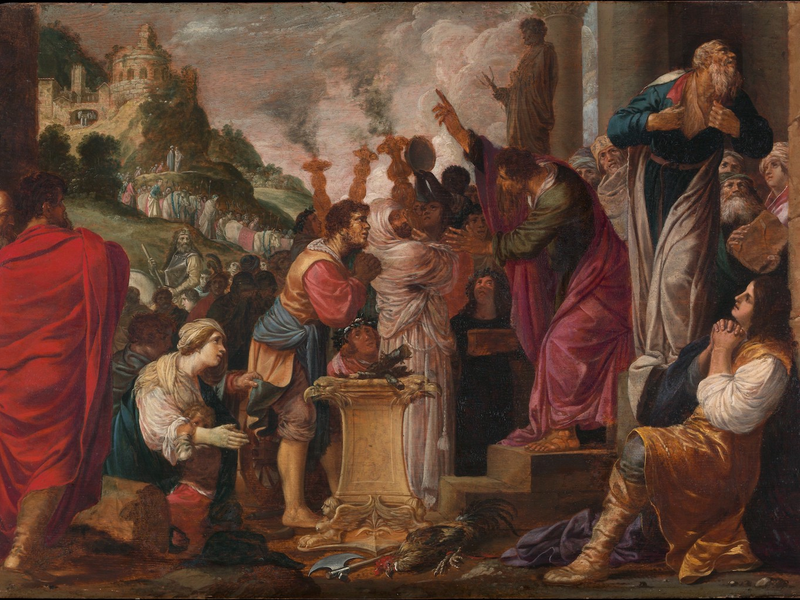
_orange-black-minimal-vacation-traveler-youtube-thumbnail-2
Judges

Politics and Conflict in Ancient Israel: A Critical Review of Judges by James B. Jordan

This is the second of a three part symposium commemorating the 40th Anniversary of Dr. James B. Jordan’s publication of Judges: a Practical and Theological Commentary . Judges was the first book length exposition of Theopolitan Reading, a practice of reading Scripture in its fullness that Theopolis continues to refine…

by Darren DukeDecember 18, 2024
_orange-black-minimal-vacation-traveler-youtube-thumbnail
Judges

America in the Days of the Judges: A Pastoral Review of Judges by James Jordan

This is the first of a three part symposium commemorating the 40th Anniversary of Dr. James B. Jordan’s publication of Judges: a Practical and Theological Commentary . Judges was the first book length exposition of Theopolitan Reading, a practice of reading Scripture in its fullness that Theopolis continues to refine…

by Chase DavisDecember 17, 2024
screenshot-2024-12-12-at-1-56-32-pm
Advent

All Life is the Lord’s

From the moment I found out I was pregnant, I knew: the only way out of this is death. Either this life inside me disappears without my consent, or I lay my own life down to line the road for another. Like palm leaves at the city entrance, allowing the…

by MargaretAnn HesterDecember 12, 2024
dp133560
Apostle Paul

The Split of Paul and Barnabas

After the Jerusalem Council (AD 48/49), which endorsed Paul’s teaching of the Gospel and established a universal theology among Christian churches, Paul and Barnabas returned to Antioch and taught for some time (Acts 15:30–35). Then, it occurred to Paul to go on a second missionary trip to visit the churches…

by Ralph Allan SmithDecember 10, 2024
aaron-burden-1ebsmyrau-s-unsplash
Acts

The Future of Jesus | The Bodily Resurrection as Essential Context

This essay first appeared at SolomonSays.net and has been lightly edited for publishing purposes. Before I go any further on what the Bible tells us about the future history of the mortal human race , I must address the end of that history: the final resurrection. When Paul was arrested…

by Mark HorneNovember 27, 2024

Showing page 15 of 309

See all

Showing page 32 of 43

See all
History

Converted Jerusalem

In his fascinating Rise of Christianity , Rodney Stark cites estimates that there were between 10,000 and 20,000 inhabitants of Jerusalem in the first century. Stark uses this to falsify Luke’s claims that there were 5000 Christians in Jerusalem (Acts 4:4) and “many thousands” of Jews (Acts 21:20): “Had there…

March 30, 2007

Hebraic hermeneutics

One Rhonda Wauhkonen discusses Nicholas of Lyra’s “Hebraic” semiotics and hermeneutics in a 1992 article on Chaucer. She begins by contrasting Augustine’s signum/res distinction to Lyra’s Hebraic viewpoint: “In the Hebrew system as evidenced in Scripture and as adapted by Nicholas, such stratification of signification did not exist, for the…

March 29, 2007

Last and first

Nicholas of Lyra is known for his notion of a “double literal” sense to Scripture. For him, interpretation ad litteram includes both the historical and the doctrinal/christological senses, and he suggests that the ancient Hebrews could well have seen the Messianic sense as the literal sense. He also suggests that…

March 29, 2007

Nicholas of Lyra’s afterlife

In Book 3 of Gargantua and Pantagruel, Rabelais attributes an odd opinion to the 14th-century exegete, Nicholas of Lyra: “Pantagruel, having wholly subdued the land of Dipsody, transported thereunto a colony of Utopians, to the number of 9,876,543,210 men, besides the women and little children, artificers of all trades, and…

March 29, 2007

Nicholas of Lyra’s afterlife

In Book 3 of Gargantua and Pantagruel, Rabelais attributes an odd opinion to the 14th-century exegete, Nicholas of Lyra: “Pantagruel, having wholly subdued the land of Dipsody, transported thereunto a colony of Utopians, to the number of 9,876,543,210 men, besides the women and little children, artificers of all trades, and…

March 29, 2007

Thomas on the Parable of the Workers

Steinmetz summarizes Thomas’s remarkably “NTWrightian” commentary on Matthew 20:1-16. While acknowledging an Origenist tradition that sees the hours as moments of an individual life, Thomas is more interested in the Irenaean tradition that interprets the parable in terms of redemptive history: “The hours mentioned in the parable are not stages…

March 29, 2007

Showing page 1699 of 2212

Browse by Category

In Medias Res

Your weekly digest for all things Theopolis.

Donate

Theopolis is nearly 100% donor-supported. Consider joining us on our mission.