Theopolis Logo

Writing

Explore our collection of theological essays, biblical studies, and reflections on faith and culture.

See all
25f3baab-e5a9-42ec-aab6-649e53879085-3
John

Israel Redux: The Image of Christ in the Gospel According to John (Part IV)

John 18, 19: Latter Prophets and the Writings John 18 and 19 record the arrest, trial, torture, and death of Jesus as laid out in detail in Isaiah 53. After the Roman soldier pierces Jesus’ side, John quotes Zechariah: “They shall look at him whom they pierced” (Zech 12:10). In…

by Geert HeetebrijDecember 6, 2018

25f3baab-e5a9-42ec-aab6-649e53879085-3
John

Israel Redux: The Image of Christ in the Gospel According to John (Part III)

John 12.12 – John 17: Latter Prophets In the Hebrew Scriptures, Kings is followed by the Latter Prophets. John 12:15 quotes Zechariah 9:9 as having prophesied Jesus’ triumphal entry: “Do not be afraid, O Daughter of Zion; see, your king is coming, seated on a donkey’s colt.” [1] N.T. Wright…

by Geert HeetebrijDecember 5, 2018
25f3baab-e5a9-42ec-aab6-649e53879085-3
John

Israel Redux: The Image of Christ in the Gospel According to John (Part II)

John 6.16-70: Joshua The book of Joshua documents the nation of Israel entering the Promised Land. Consider the order of events: (1) Israel is still receiving the daily miracle of manna; (2) Israel miraculously crosses the Jordan on dry foot; (3) The day after Passover , Israel eats produce of…

by Geert HeetebrijNovember 29, 2018
25f3baab-e5a9-42ec-aab6-649e53879085-3
John

Israel Redux: The Image of Christ in the Gospel According to John (Part I)

Since my educational and professional training have revolved around story and narrative structure, I approach John’s Gospel from a literary and narrative perspective. In doing so, I have noticed structural story patterns and followed them where they seem to lead: the Gospel of John parallels the ordering of the books…

by Geert HeetebrijNovember 27, 2018
white-hall-hospital
Art

The Clouds of Mt. Sinai

The Mt. Sinai Hospital was neolithic on the black hill of Hollow, New Hampshire. Winter dampened the trees and the wind bit at the sparse branches, the sidewalks and stairs were perilous with soggy leaves, and the dim yellow light cast a pallor upon the milky stone building. Ambling inside…

by Remy WilkinsNovember 22, 2018
sodom-and-gomorrah-58ecfa883df78c5162cb92b5
Revelation

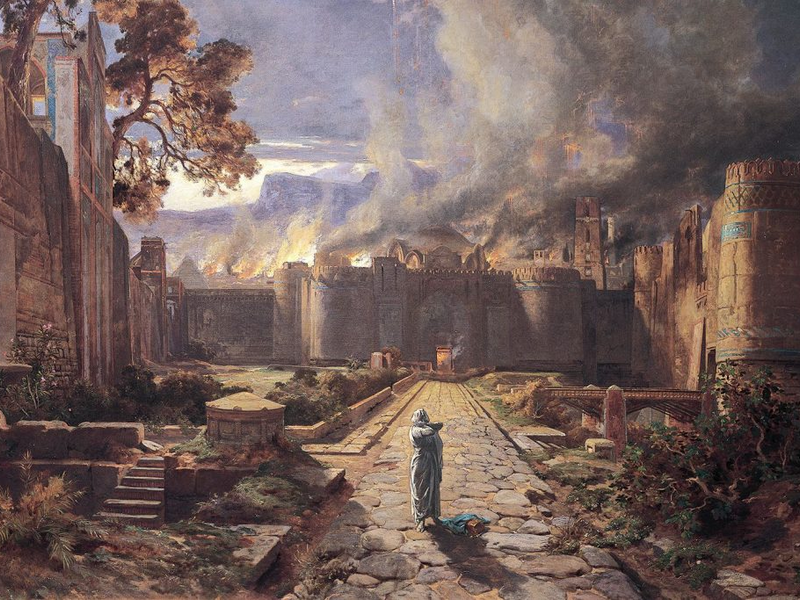
Egypt and Sodom, Where the Lord was Crucified

The Revelation can only be understood in the light of Old Testament symbols and sequences. The same is true of the epistle of Jude, which serves as a blistering hors d’oeuvre to John’s fiery feast. Possibly written by the apostle Judas Thaddaeus (Luke 6:16; Acts 1:13; John 14:22), the epistle…

by Mike BullNovember 20, 2018

Showing page 84 of 309

See all

Showing page 32 of 43

See all
History

Secularization of language

In a 1980 article in the Journal of the History of Ideas Margret de Grazia helpfully described what she calls the “secularization of language” that occurred during the 17th century. Her contribution is to show that the often-noted “linguistic pessimism” of the century arose from the destruction of “the traditional…

January 10, 2007

Deritualized selves

Lori Branch links the Reformation and post-Reformation attack on ritual with the formation of the Cartesian self: “the Reformation religious subject gradually became less a participant in communal, bodily ritual action, and more and more the Cartesian cogito , an individual, inward-looking possessor of knowledge drawn from evidence and analysis.…

January 10, 2007

Knowledge and Love

1 John 4:8 says that the one who does not love does not know God because God is love. This might be legitimately read as: God is love; knowing God therefore necessarily involves knowing love; therefore, the one who does not know love does not know God. But that’s not…

January 9, 2007

Savior of the World

The Son is sent to be savior of the world (1 John 4:14). And it’s only as the only-begotten Son that He can be Savior. This is true in the usual sense that Jesus is the “contact point” between God and man. But it’s also true in a more subtle…

January 9, 2007

Only begotten

John uses the phrase “only begotten” ( monogenes ) four times in his gospel (1:14, 18; 3:15, 18). (I’m assuming here the controversial point that the phrase does mean “only begotten.”) He uses it only once in his first epistle: God’s love is manifest in the fact that “God has…

January 9, 2007

Loving discernment, discerning love

Commentators sometimes suggest that 1 John 4:1-6 marks a rupture in John’s argument. 3:23 speaks of love as a commandment of God, but there is no mention of love in 4:1-6, which discusses testing the spirits and the warfare between the Spirit of God and the spirits of the world.…

January 9, 2007

Showing page 1738 of 2212

Browse by Category

In Medias Res

Your weekly digest for all things Theopolis.

Donate

Theopolis is nearly 100% donor-supported. Consider joining us on our mission.