Theopolis Logo

Writing

Explore our collection of theological essays, biblical studies, and reflections on faith and culture.

See all
tanner-mardis-xuxghzhibn4-unsplash-1-2
Biblical Studies

Tweets-turned-Notes on the Bible’s Chronology

Summary In what follows, I will consider the “year-stamps” employed in Scripture, i.e., statements of the form, “Such-and-such an event took place in the Xth year of Y.” In the process, I will suggest some ways in which the Biblical narrative might relate to events in the extra-Biblical world, though…

by James BejonJuly 16, 2019
durer-prodigal-son-2
Luke

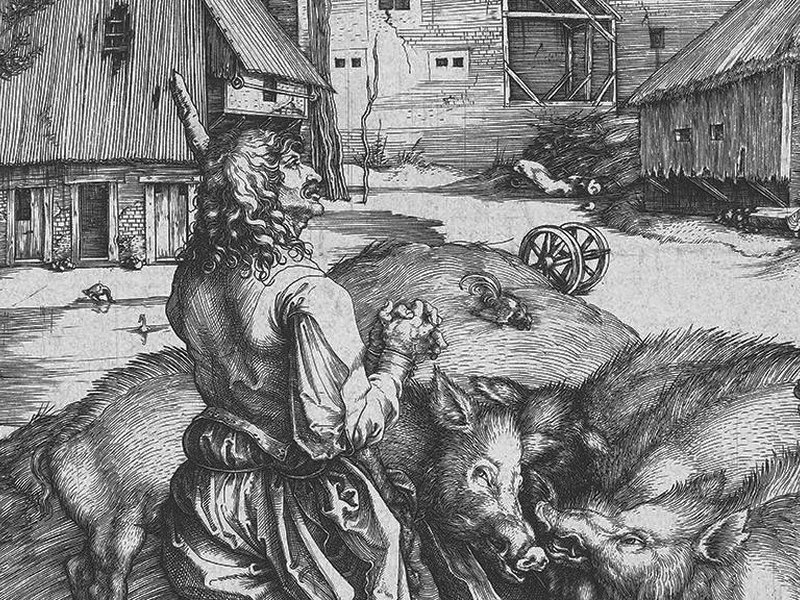
Perspectives on the Prodigal, (Part 2)

In the first essay on the parable of the Prodigal Son, I suggested that the problems commentators and others encounter in interpreting Jesus three-part parable are not accidental. These are not just problems in our ignorance of cultural background. They are intentional features of the stories —stories designed to poke…

by Ralph Allan SmithJuly 11, 2019
durer-prodigal-son-2
Luke

Perspectives on the Prodigal, (Part 1)

The story of the Prodigal Son is perhaps the most well-known story in the Bible. As others have observed, it may also be one of the most misunderstood. In two short essays, I will point out features of this story that are commonly neglected, aspects of Jesus’ parable that might…

by Ralph Allan SmithJuly 9, 2019
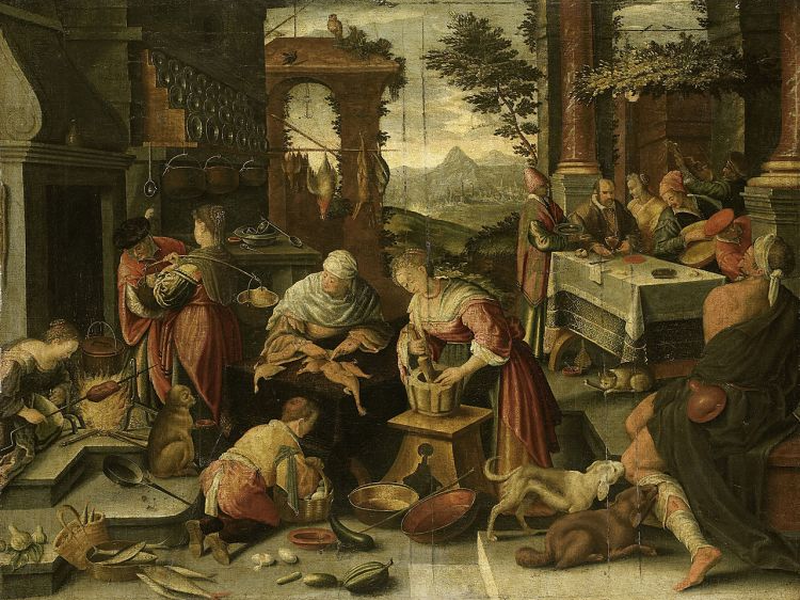
de-rijke-man-en-de-arme-lazarus-by-jacopo-da-ponte-16th-century
Luke

Lazarus and the Rich Man

The parable of Lazarus and the nameless rich man is not an independent story. It is part of a long context that begins in Luke 15:1, where Jesus is eating with tax collectors and sinners and the scribes and Pharisees grumble. In response to their hardheartedness, Jesus tells a three-part…

by Ralph Allan SmithJuly 4, 2019
aaron-burden-uynrnfdkjwg-unsplash
Luke

Everybody has Dropsy - Luke 14:1-24

The Bible is written so that even when a reader cannot pick up on what might be deeper or more detailed aspects of a text, there is virtually always a message to be heard. In the ancient world, where the “reader” of Scripture would likely be a church official facing…

by Ralph Allan SmithJuly 2, 2019
communion
Biblical Theology

Fruit Trees and Grain Plants

The distinction between garden (or vineyard) and field begins in Genesis 2. This relates to the ordering of the formless world. Plants of the field are contrasted with the garden planted by God in Genesis 2:5&8. Later on, under the Old Covenant the Israelites will be required to keep their…

by James B. JordanJune 27, 2019

Showing page 77 of 309

See all

Showing page 32 of 43

See all

Thy Word is Truth

Near the end of his prayer in 2 Samuel 7, David confesses his confidence in Yahweh’s promises concerning David’s house, saying “Thy words are truth” (v. 28). Jesus echoes this words in John 17:17. The connection seems to be a fruitful one, and perhaps there are more verbal links than…

January 5, 2007

Rigor

I and many of my friends have been criticized for our supposed lack theological rigor. It’s meant as an insult. I take it as a compliment. Rigor has its place. But it’s not the be and end all of theology. A Turretin is necessary for consolidating a Reformation. He could…

January 5, 2007

Proverbs 16:20-24

INTRODUCTION 16:20 starts a new section of the chapter, as Solomon returns again to the issue of speech. Waltke sees two sections here, verses 20-24 and 25-30. The first section focuses on the benefits of wise and winning speech, while the second section focuses negatively on destructive speech. Verse 20…

January 5, 2007
Art

Genius critics

Artists never accepted the attribution of genius as readily as theorists and bourgeois admirers applied it. Artists knew too much about the recalcitrantly physical qualities of words, paint, stone, ink, and sounds for that. Artists are as interested in technique as in inspirations. But for Kant genius was the criterion…

January 4, 2007
History

History of purity

Gadamer says, “One day someone should write the history of ‘purity.’” He cites one H. Sedlmayr, who “refers to Calvinistic purism and the deism of the Enlightenment.” Kant would play a key role: He “linked himself directly with the classical Pythagorean and Platonic doctrine of purity.” Gadamer wonders whether “Platonism…

January 4, 2007
Philosophy

Seeing as

Contrary to empiricism, perception is never pure, never merely a response to stimulus. That it is is merely a kind of “epistmological dogmatism” (Gadamer), which can only be defended if all instinct and fantasy is removed. In actual life, we never perceive without instinct or fantasy, and so “pure perception,…

January 4, 2007

Showing page 1741 of 2212

Browse by Category

In Medias Res

Your weekly digest for all things Theopolis.

Donate

Theopolis is nearly 100% donor-supported. Consider joining us on our mission.