
Theopolis Logo

Writing

Explore our collection of theological essays, biblical studies, and reflections on faith and culture.

See all
giammarco-zeh-ljawhtg-unsplash
Biblical Horizons

OPEN BOOK: Views and Reviews

Isaac E. Mozeson, The Word: The Dictionary that Reveals the Hebrew Sources of English (Northvale, NJ: Jacob Aaronson Inc., 1995), 310 pp. Reviewed by James B. Jordan. Once there was only one language in the world, the language God spoke to Adam. At the Tower of Babel, there came to…

by James B. JordanJune 28, 1996
tim-wildsmith-j6jv-mkdzqs-unsplash
Esther

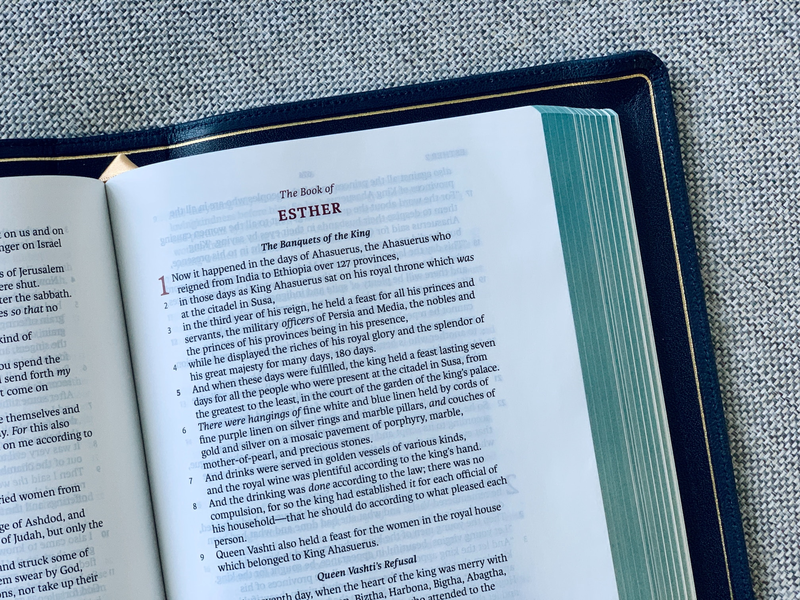
Esther: Historical & Chronological Comments (IV)

2. The Setting of the Book of Esther A. Xerxes (continued from previous issue) Ezra 6:14 says that the Jews finished building "according to the command of the God of Israel and the decree of Cyrus and Darius and Artaxerxes king of Persia." The problem with this verse is that…

by James B. JordanJune 28, 1996

ales-krivec-4mibe6zg5r0-unsplash
Acts

Jesus and Amalek

This essay goes with our previous study of the Amalek pattern back in Biblical Horizons No. 2. Since many do not have this essay, entitled "The Battle of Gog and Magog," let me cite the relevant paragraphs: Note in Genesis 12-15 that Abram moves into the land after escaping Pharaoh…

by James B. JordanJune 28, 1996
aaron-burden-1ebsmyrau-s-unsplash
Proverbs

The Strange Woman

Proverbs 7:6-23 is one of several passages early in the Proverbs in which Solomon warns his son about the wiles and dangers of the "strange woman." It is certainly quite proper to take these as straightforward warnings against sexual sins, and these are certainly warnings that need to be impressed…

by Peter LeithartJune 27, 1996
jan-kahanek-g3o5ztrk2e4-unsplash
Biblical Studies

Some Observations

1. In Luke 4:20 we read that after Jesus finished reading from Isaiah, "the eyes of all in the synagogue were fixed upon Him." This is usually taken in a psychological sense: They were amazed at Jesus somehow. I suggest that, as always, a merely psychological reading is a modern…

by James B. JordanMay 28, 1996
tim-wildsmith-j6jv-mkdzqs-unsplash
Esther

Esther: Historical & Chronological Comments (III)

2. The Setting of the Book of Esther Up to now we have assumed what we must prove, that the king in Esther is Darius the Great. While Biblical chronologists have usually taken this position, commentators on the book of Esther have often taken others as the king. One view,…

by James B. JordanMay 28, 1996

Showing page 265 of 309

See all

Showing page 32 of 43

See all

Calvin on Signs

A remarkable statement of Calvin’s, from Institutes 4.14.18: speaking of the tree of knowledge and of the rainbow, Calvin says that these are given new being by the word of God that designates them as signs or testimonies. Then this Et antea quidem arbor erat arbor, arcus arcus; ubi inscripta…

February 12, 2004

Moral Luck and the Fragility of the Good Life

In Nussbaum’s treatment, “tragic” and “Aristotelian” conceptions of moral luck and the fragility of the good life are at one. In excluding poets, Plato not only kept certain forms of literature at bay, but was protecting against the tragic potential of life. For Plato, “the best and most valuable things…

February 12, 2004
Philosophy

Moral Luck

Nussbaum’s problematic of moral luck is quite intriguing: A good man is like a tree, she says at the beginning, quoting Pindar. But that means that the good man is dependent for his flourishing on all kinds of things beyond his control ?Erainfall, winds, sun, and so on and on.…

February 11, 2004
Theology

The Sophist Critique of Nomos

Should theology agree with the sophist critique of nomos ? It would seem so, as Thomas would say: The institutions of society are the product of human construction, and the claim that they are rooted in “nature” is a rhetorical device. It is human all the way down. If it…

February 11, 2004
Economics

The Weber Thesis

Years ago, I read David Landes’s Prometheus Unbound for a class in economic history, and I can still remember the fascination I experienced at his descriptions of the steel industry (though details are sadly forgotten). In his recent Wealth and Poverty of Nations , Landes, among many other things, spends…

February 11, 2004

“Nomos” in Greek Culture

There is further evidence concerning the meaning of nomos in Greek culture, coming from Martha Nussbaum’s Fragility of Goodness . In a discussion of Euripides’s Hecuba , Nussbaum points out that Polyxena, Hecuba’s daughter who is offered as a human sacrifice by the Greeks to appease the shade of Achilles,…

February 11, 2004

Showing page 2122 of 2212

Browse by Category

In Medias Res

Your weekly digest for all things Theopolis.

Donate

Theopolis is nearly 100% donor-supported. Consider joining us on our mission.