
Theopolis Logo

Writing

Explore our collection of theological essays, biblical studies, and reflections on faith and culture.

See all
chris-bair-ndczc5739ck-unsplash
Ephesians

“Be Holy for I am Holy”

Below is an excerpt from Mark Horne’s manuscript from his forthcoming commentary on Ephesians, specifically on Paul’s reference to Christians as “saints” (Ephesians 1:1). “Paul, an apostle of Christ Jesus by the will of God, to the saints who are in Ephesus, and are faithful in Christ Jesus.” Paul greets…

by Mark HorneMarch 25, 2025
300129rgsdl
Exodus

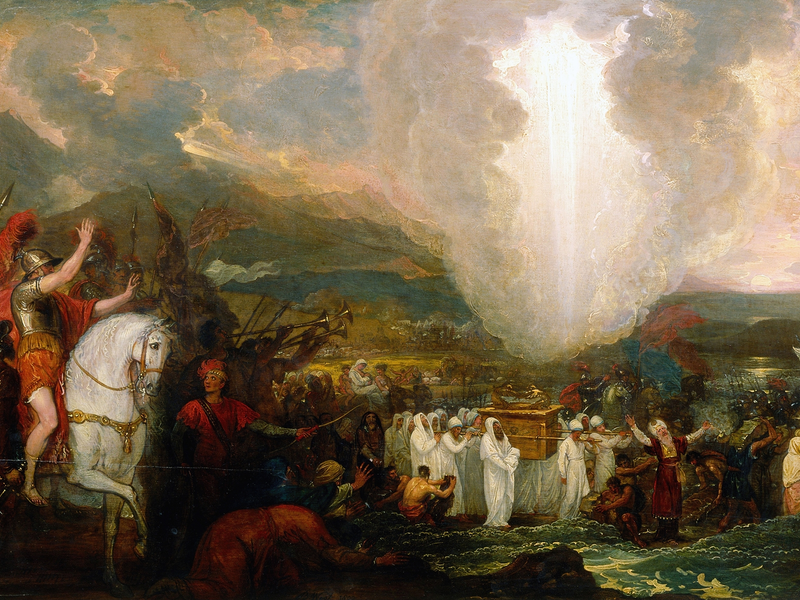
The Perishable in the Ark of the Covenant

There was nothing in the ark except the two tablets that Moses put there at Horeb, where the LORD made a covenant with the people of Israel, when they came out of Egypt (2 Chronicles 5:10). When Solomon finally brought the ark of the covenant to the finished temple in…

by Jonathan WhiteMarch 18, 2025
tim-marshall-k2u71wv2ei4-unsplash
Exodus

The Stages of a Man’s Life and the Second Table of the Law

In As You Like It , Shakespeare famously describes the seven ages of a man’s life. The division of man’s life into stages is not an invention by Shakespeare, nor merely a common medieval artifice, but an expression of the real journey taken in life. Shakespeare seems to divide up…

by Ryan HandermannMarch 13, 2025
brent-cox-2plebdf1nba-unsplash
Christology

The Essence of God’s Image

Is there a chief characteristic which best illumines the image of God in Man? What is it exactly that makes Man as a lens through which to see God? Moses thoughtfully and deliberately escorts the reader to the characteristic showcased above all else: humility. Though much ink has been spilled…

by Ben LoveladyMarch 11, 2025
josh-applegate-toksfdmznkg-unsplash
Liturgy

Two Ways of Being Liturgical: A Baptist Response to the High Church Exodus

Note: This essay is adapted from a talk delivered at the Howell E. Jackson Committee conference on “Foundations of Baptist Education,” held at Union University, Oct. 4-5, 2024. It’s no secret that evangelicals are converting to High Church traditions, a term I will use to refer to Anglo-Catholicism, Roman Catholicism,…

by Ryan SinniMarch 4, 2025
raimond-klavins-mdlseox3vzo-unsplash
Icons

Don’t Convert: Icons and Images in the Early Church

In recent years, there has been a flurry of conversions from Protestant Christianity towards Eastern Orthodoxy and Roman Catholicism, at least in part due to their supposed early church heritage relative to Protestantism. In the words of Rod Dreher, a former Methodist who converted to Eastern Orthodoxy, “Many evangelicals seek…

by John CarpenterFebruary 25, 2025

Showing page 12 of 309

See all

Showing page 32 of 43

See all

Sermon Outline, February 1

Sermon outline for Feb 1: The Days of the Son of Man, Luke 17:11-37 INTRODUCTION Jesus’ mission was to proclaim “the kingdom of God” (Luke 4:43; 8:1). By this, He meant that God was taking control of the world through Him, and putting a sinful and shattered world back together.…

January 29, 2004
Theology

Faith and Heresy

Barth says that the conflict of faith and heresy is far more serious and important than the conflicts between faith and unbelief. Unbelief cannot be taken with seriousness, he says, because we believe in the forgiveness of sins. But heresy is taken seriously to the extent that it has the…

January 28, 2004
Literature

Chaucer and Tragedy

Henry Ansgar Kelly (pp. 139-140 of Chaucerian Tragedy ) makes this important historical comment at the end of his analysis of Chaucer’s Troilus and Criseyde : “The selection introduction of Aristotelian criteria of excellent in tragedy has been a source of untold confusion in modern discussions of tragedy. For Aristotle,…

January 28, 2004

The Etymology of the “F-word”

While I’m on that subject: I’ve often wondered about the etymology of the “f-word.” The Shorter Oxford says that the derivation is unknown. I have a theory: Medieval courtly love poetry (such as the Roman de la Rose ) traced the development of courtship through several stages. The stage of…

January 28, 2004

The Etymology of the “F-word”

While I’m on that subject: I’ve often wondered about the etymology of the “f-word.” The Shorter Oxford says that the derivation is unknown. I have a theory: Medieval courtly love poetry (such as the Roman de la Rose ) traced the development of courtship through several stages. The stage of…

January 28, 2004

Cahill on Euripedes

In his beautifully written tribute to the ancient Greeks. Thomas Cahill interprets Euripides’ Medea as a cautionary tale to aristocratic Athenian men. The question he poses to the audience is: “What could drive a woman to such extremes that she would kill her own children.” Cahill’s summary of Euripides’ target…

January 28, 2004

Showing page 2130 of 2212

Browse by Category

In Medias Res

Your weekly digest for all things Theopolis.

Donate

Theopolis is nearly 100% donor-supported. Consider joining us on our mission.