Theopolis Logo

Writing

Explore our collection of theological essays, biblical studies, and reflections on faith and culture.

See all
max-kukurudziak-qbc3zmxw0g8-unsplash
History

From a Ukrainian Pastor

First, what is going on in Ukraine is not for the European Union or against Russia. It is about the Ukrainian people’s dignity and destiny. They are tired of a corrupt government which acts like a tyrant, robbing and looting from its people, and they hate a judicial system where…

by San SanychFebruary 23, 2014
kiwihug-l4gw27xzn1i-unsplash
Matthew

Babylonian Bookends

"Now after Jesus was born in Bethlehem of Judea in the days of Herod the king, behold, wise men from the east came to Jerusalem, saying, “Where is he who has been born king of the Jews? For we saw his star when it rose and have come to worship…

by Mike BullFebruary 19, 2014
ben-white-w8qqn1pmqh0-unsplash

I Will Kill Her Children

Atheists love to embarrass Christians with a snide reference to the story of Elisha setting two bears upon some helpless children. What nobody, even Christians, seem to get is the “Covenant significance” of all the players in the story, harking back to Moses. The prophets were, after all, God’s “repo…

by Mike BullFebruary 17, 2014
stephen-radford-86qxyjwq8lu-unsplash
Books

Preaching as Liturgical Art

Preaching is in trouble. The classic models of the preacher as teacher of doctrine or as herald of the gospel are flawed, and don’t hit home in the postmodern world, which is oriented to images and mystery rather than to linear discourse and rationality. Trygve Johnson suggests an alternative that…

by Peter LeithartFebruary 13, 2014
screenshot-2023-09-21-at-3-18-37-pm
Ecclesiology

Nevin's Lament, Nevin's Hope

The following remarks were given to introduce the first annual Nevin Lectures, February 7, 2014. Trinity House was founded in 2012 to promote the reformation of the church by training pastors, future pastors, and lay people in Scripture and liturgical theology. We believe the church exists for the life of…

by Peter LeithartFebruary 10, 2014
sony-dsc
Exodus

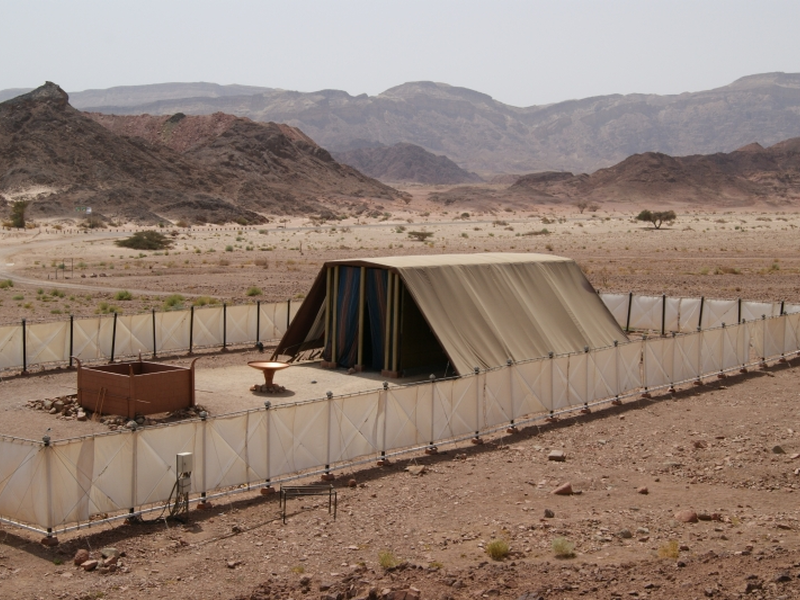
Names of the Sanctuary

We can gain basic insights into the nature and function of the tabernacle by considering the biblical terms and phrases used for that structure. Exodus 25:1-9 begins the lengthy instructions for the construction of the tabernacle, and it uses some of the key terms for understanding the theology of the…

by Peter LeithartFebruary 5, 2014

Showing page 179 of 309

See all

Showing page 32 of 43

See all
Literature

Michel on Tragedy

Laurence Michel, exploring the “Possibility of a Christian Tragedy,” suggests that the creation account of Genesis opens the possibility for a “tragic sense of life.” How? “To have a world imitative of the simple perfection of God one must have multiplicity and diversity of goods. Various evils and contraries will…

January 15, 2004
Theology

Evil and Good

CS Lewis says in Pilgrim’s Regress : “Evil is fissiparous, and could never in a thousand eternities find any way to arrest its own reproduction. If it could, it could be no longer evil: for Form and Limit belong to the good.” But what then of a Good and Infinite…

January 15, 2004
Literature

Niebuhr on Christianity and Tragedy

In a chapter in Beyond Tragedy , Reinhold Niebuhr considers the relationship between Christianity and tragedy. He denies that Christianity is tragic: “The cross is not tragic but the resolution of tragedy.” In the course of his discussion he makes several intriguing points about the tragic outlook: 1) He highlights…

January 15, 2004
Literature

Weil on Tragedy

Simone Weil offered one of the most thorough-going Christian defenses of tragedy, though that defense comes at considerable cost to her orthodoxy. As Katherine Brueck points out in her study of Weil’s theory ( The Redemption of Tragedy ), Weil recognized that what was at stake in a discussion of…

January 15, 2004

More Thoughts from Segal

Some more thoughts from Segal’s book: 1) He points out the optimism that gripped Athens in the Periclean period, an optimism about the ability of human LOGOS and NOMOS to stave off the savage potential of man’s PHUSIS. But that was short-lived: The Peloponnesian wars broke out, marked by several…

January 15, 2004

civilization in Sophocles

In his study of Sophocles, Tragedy and Civilization , Charles Segal points to several Greek terms that might be translated as “civilization” and that capture various aspects of civilized life: NOMOS = the established institutions, customs, and norms of a people POLITEIA = the form of government, especially the constitutional…

January 15, 2004

Showing page 2136 of 2212

Browse by Category

In Medias Res

Your weekly digest for all things Theopolis.

Donate

Theopolis is nearly 100% donor-supported. Consider joining us on our mission.