Theopolis Logo

Writing

Explore our collection of theological essays, biblical studies, and reflections on faith and culture.

See all
tanner-mardis-xuxghzhibn4-unsplash-1-2
Biblical Studies

Tweets-turned-Notes on the Bible’s Chronology

Summary In what follows, I will consider the “year-stamps” employed in Scripture, i.e., statements of the form, “Such-and-such an event took place in the Xth year of Y.” In the process, I will suggest some ways in which the Biblical narrative might relate to events in the extra-Biblical world, though…

by James BejonJuly 16, 2019
durer-prodigal-son-2
Luke

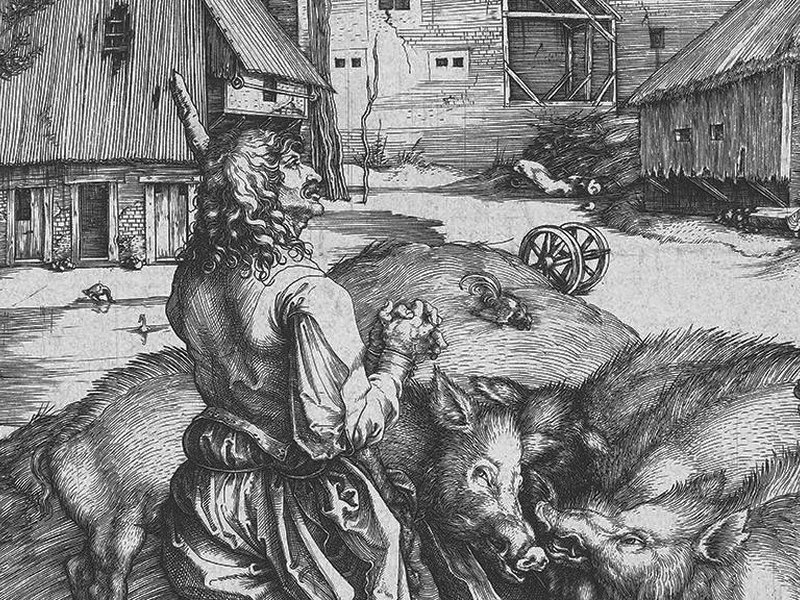
Perspectives on the Prodigal, (Part 2)

In the first essay on the parable of the Prodigal Son, I suggested that the problems commentators and others encounter in interpreting Jesus three-part parable are not accidental. These are not just problems in our ignorance of cultural background. They are intentional features of the stories —stories designed to poke…

by Ralph Allan SmithJuly 11, 2019
durer-prodigal-son-2
Luke

Perspectives on the Prodigal, (Part 1)

The story of the Prodigal Son is perhaps the most well-known story in the Bible. As others have observed, it may also be one of the most misunderstood. In two short essays, I will point out features of this story that are commonly neglected, aspects of Jesus’ parable that might…

by Ralph Allan SmithJuly 9, 2019
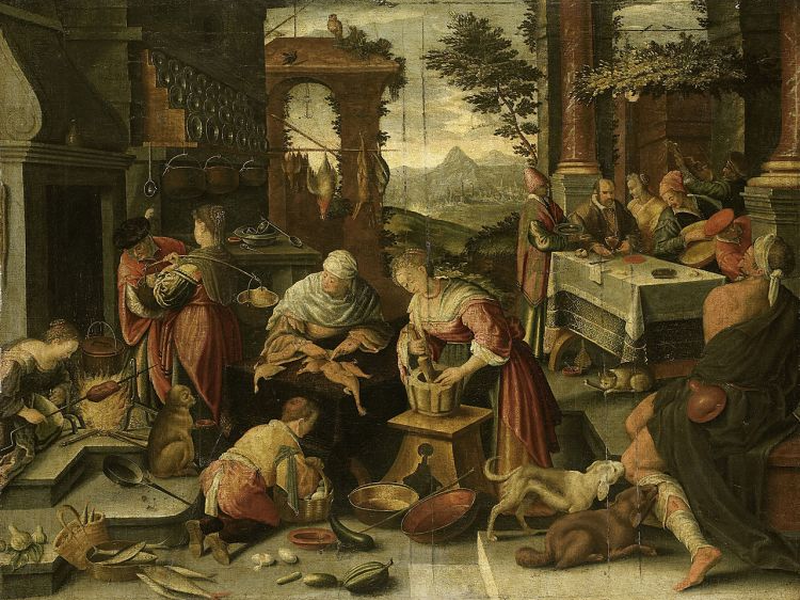
de-rijke-man-en-de-arme-lazarus-by-jacopo-da-ponte-16th-century
Luke

Lazarus and the Rich Man

The parable of Lazarus and the nameless rich man is not an independent story. It is part of a long context that begins in Luke 15:1, where Jesus is eating with tax collectors and sinners and the scribes and Pharisees grumble. In response to their hardheartedness, Jesus tells a three-part…

by Ralph Allan SmithJuly 4, 2019
aaron-burden-uynrnfdkjwg-unsplash
Luke

Everybody has Dropsy - Luke 14:1-24

The Bible is written so that even when a reader cannot pick up on what might be deeper or more detailed aspects of a text, there is virtually always a message to be heard. In the ancient world, where the “reader” of Scripture would likely be a church official facing…

by Ralph Allan SmithJuly 2, 2019
communion
Biblical Theology

Fruit Trees and Grain Plants

The distinction between garden (or vineyard) and field begins in Genesis 2. This relates to the ordering of the formless world. Plants of the field are contrasted with the garden planted by God in Genesis 2:5&8. Later on, under the Old Covenant the Israelites will be required to keep their…

by James B. JordanJune 27, 2019

Showing page 77 of 309

See all

Showing page 32 of 43

See all
Eucharist

A Eucharistic Theory of Culture

The Lord’s Supper models a proper meal, but for that very reason it models a properly ordered community, the right order of human society. How we eat together, with whom we eat tells us what kind of community we are. It also presents a model of work, creativity, culture, the…

April 13, 2016

Les Stars

In a 1972 essay on Les stars , Edgar Morin explains the difference between actors and stars by referring to ancient heroic myths. Stars are heroes of adventure, action, tragedy, and love like the heroes of myths. They are “divinisee et mythique” (39). The star's mythical, quasi-divine status applies both…

April 13, 2016

Thomas, Dionysus, Scripture

In a paper on Academia.edu, Alan Darley of the University of Nottingham examines Thomas's revision of the Pseudo-Dionysian notion of hierarchy, stressing the importance of Scripture in Thomas's revisionary efforts. Along the way, following a number of recent scholars, he highlights the central role of Scripture in the Summa .…

April 12, 2016
Shakespeare

Shakespeare's Distributed Personality

Stephen Greenblatt uses the anthropological theory of Alfred Gell to explain Shakespeare's universal appeal, particularly Gell's notion of the “distributed personality”: This refers to “the ability of an artist to fashion something - Gell called it an ‘index' - that carries agency, his own and that of others, into the…

April 12, 2016

Paul's Chiastic Mission

In an essay in the 1978 collection, Perspectives on Luke-Acts , Donald Miesner explains the chiastic structure of Paul's missionary journey: A. Jerusalem to Antioch, Cyprus, Asia Minor, 12:25-13:14a B. Paul's initial address to Jews at Antioch, 13:14b-52 C. Paul is persecuted at Iconium, gives speech at Lystra, 14:1-28 D.…

April 12, 2016

Liturgical Discipleship

The liturgy provides a rich and holistic model of evangelism and discipleship, holding together dimensions of Christian living that often fly apart. The liturgy begins with a call to enter the presence of God; just so, our entry into Christ is not a product of our diligent efforts but the…

April 11, 2016

Showing page 300 of 2212

Browse by Category

In Medias Res

Your weekly digest for all things Theopolis.

Donate

Theopolis is nearly 100% donor-supported. Consider joining us on our mission.