Theopolis Logo

Writing

Explore our collection of theological essays, biblical studies, and reflections on faith and culture.

See all
tanner-mardis-xuxghzhibn4-unsplash-1-2
Biblical Studies

Tweets-turned-Notes on the Bible’s Chronology

Summary In what follows, I will consider the “year-stamps” employed in Scripture, i.e., statements of the form, “Such-and-such an event took place in the Xth year of Y.” In the process, I will suggest some ways in which the Biblical narrative might relate to events in the extra-Biblical world, though…

by James BejonJuly 16, 2019
durer-prodigal-son-2
Luke

Perspectives on the Prodigal, (Part 2)

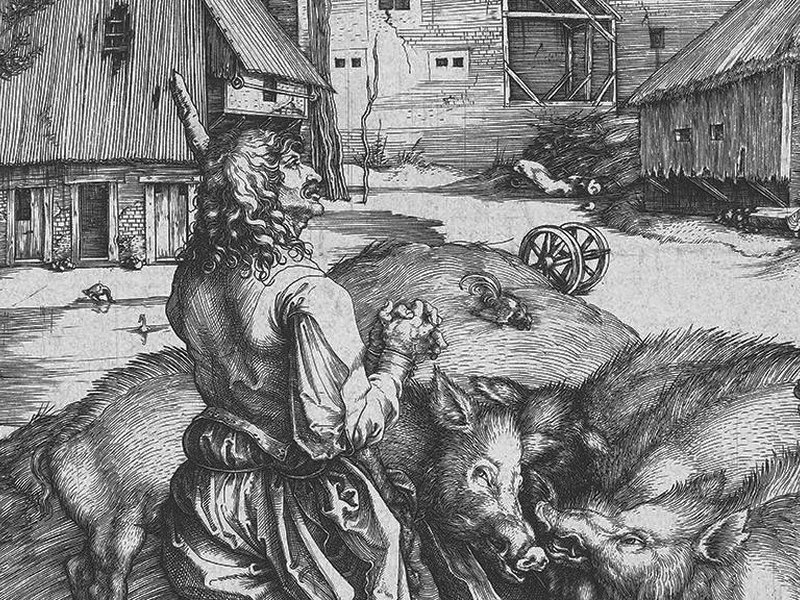
In the first essay on the parable of the Prodigal Son, I suggested that the problems commentators and others encounter in interpreting Jesus three-part parable are not accidental. These are not just problems in our ignorance of cultural background. They are intentional features of the stories —stories designed to poke…

by Ralph Allan SmithJuly 11, 2019
durer-prodigal-son-2
Luke

Perspectives on the Prodigal, (Part 1)

The story of the Prodigal Son is perhaps the most well-known story in the Bible. As others have observed, it may also be one of the most misunderstood. In two short essays, I will point out features of this story that are commonly neglected, aspects of Jesus’ parable that might…

by Ralph Allan SmithJuly 9, 2019
de-rijke-man-en-de-arme-lazarus-by-jacopo-da-ponte-16th-century
Luke

Lazarus and the Rich Man

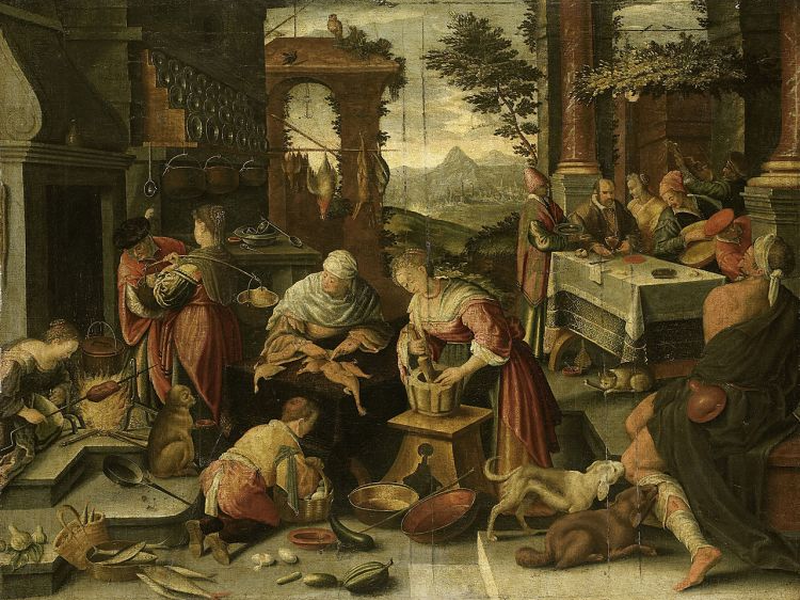
The parable of Lazarus and the nameless rich man is not an independent story. It is part of a long context that begins in Luke 15:1, where Jesus is eating with tax collectors and sinners and the scribes and Pharisees grumble. In response to their hardheartedness, Jesus tells a three-part…

by Ralph Allan SmithJuly 4, 2019
aaron-burden-uynrnfdkjwg-unsplash
Luke

Everybody has Dropsy - Luke 14:1-24

The Bible is written so that even when a reader cannot pick up on what might be deeper or more detailed aspects of a text, there is virtually always a message to be heard. In the ancient world, where the “reader” of Scripture would likely be a church official facing…

by Ralph Allan SmithJuly 2, 2019
communion
Biblical Theology

Fruit Trees and Grain Plants

The distinction between garden (or vineyard) and field begins in Genesis 2. This relates to the ordering of the formless world. Plants of the field are contrasted with the garden planted by God in Genesis 2:5&8. Later on, under the Old Covenant the Israelites will be required to keep their…

by James B. JordanJune 27, 2019

Showing page 77 of 309

See all

Showing page 32 of 43

See all
Poetry

Poetry and Metaphysics

In a 1950 article on “Agrarianism in Exile,” Richard Weaver pointed out that the Southern Agrarians did not begin their careers are publicists or partisans, but as poets: “The served the music of poetry” (589). This is revealing: “It tells us a great deal about a man to know that…

April 5, 2016

The Triumph and Failure of Marx

In the translator's introduction to Augusto Del Noce's Crisis of Modernity , Carlo Lancelotti outlines Del Noce's theory about the “heterogenesis of ends” in Marxism, its simultaneous failure and success. Originally attracted to a synthesis of Christianity and Marx, Del Noce hesitated because of his moral objections to Marxism's justification…

April 5, 2016

Wedding Homily

Every wedding is a liturgy. Note, I didn’t say: Every wedding has a liturgy. Or, Weddings tend to take liturgical form . Rather: Every wedding is a liturgy. Not only weddings like this one, with formal dress, dignified processions, pre-scripted words and prayers, gorgeous music, dialogue between minister and people.…

April 4, 2016

Foreknowledge and Freedom

In The Dilemma of Freedom and Foreknowledge , Linda Trinkaus Zagzebski outlines a variety of solutions to the dilemma of the title - how God's omniscience, which includes omniscience regarding the future, is compatible with human freedom. Is it possible to account for God's foreknowledge in such a way that…

April 4, 2016

Monotheism in Athens

Paul's apologetic sermon in Acts 17 is often taken as a model of apostolic accommodation. He quotes “one of your own poets,” speaks of “divine nature,” introduces the Athenians to a God they already vaguely know. His sermon is not so much news as an elaboration of what the Athenians…

April 4, 2016

Tribes of the Transjordan

When Israel conquered and settled in Canaan, two and a half tribes settled on the eastern side of the Jordan, in “transJordanian” territory - Reuben, Gad, and half of the tribe of Manasseh, the son of Joseph. The Chronicler treats these three tribes as a complex unit in 1 Chronicles…

April 1, 2016

Showing page 303 of 2212

Browse by Category

In Medias Res

Your weekly digest for all things Theopolis.

Donate

Theopolis is nearly 100% donor-supported. Consider joining us on our mission.