Theopolis Logo

Writing

Explore our collection of theological essays, biblical studies, and reflections on faith and culture.

See all
sixteen-miles-out-al48tflf4e8-unsplash
Food

Gluttony In The Bible (As Opposed To Gluttony In The American Church)

In the Bible, fatness is such a blessing, that it is especially hard to understand why wicked men are permitted to enjoy such a state. It requires a theodicy and faith in God. Thus: “For they have no pangs until death; their bodies are fat and sleek . They are…

by Mark HorneAugust 12, 2013

jeremy-yap-j39x2xx_8cq-unsplash
How to Worship

Biblical Worship (Video with James B. Jordan)

[fve]http://vimeo.com/71901553[/fve]

by Peter LeithartAugust 8, 2013
chris-bair-ndczc5739ck-unsplash
Deuteronomy

Holy Things for Holy People

The allusion to the Exodus story is contained in the first words of Deuteronomy 14:1 — “ye are the sons of Yahweh your God” — as well as in 14:2 in the use of the technical term translated “treasured possession,” “His own possession,” “peculiar people,” “precious people,” and so forth.…

by Ralph Allan SmithAugust 5, 2013
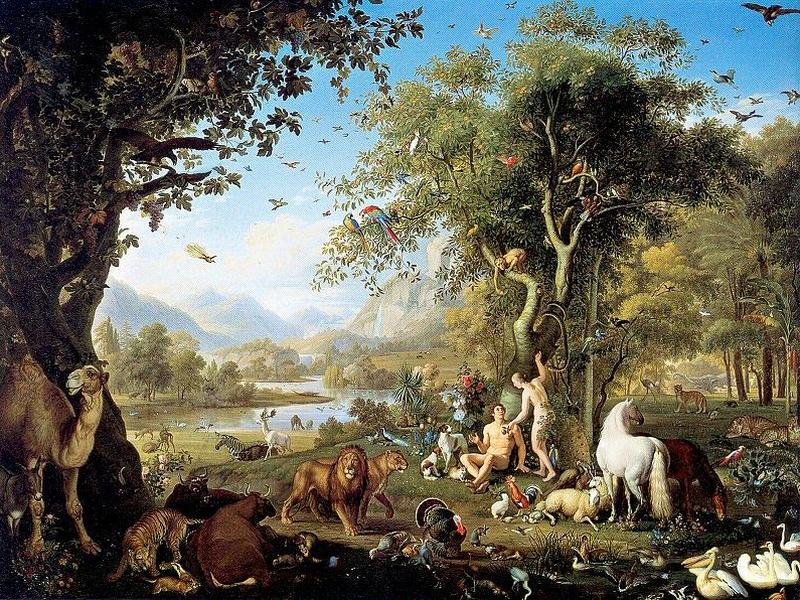
adam-and-eve-in-the-garden-of-eden-wenzel-peter
Deuteronomy

Forbidden Foods

I have argued that Deuteronomy 14:1-21 is an independent literary unit that applies the Third Word to the lives of Israelites from the time of Moses and Joshua. In this short pericope, Moses suggests broad and deep meaning by means of literary allusion to the stories of the creation and…

by Ralph Allan SmithJuly 31, 2013
david-weber-fwuo_zluhnw-unsplash
How to Worship

Pro-Sacramental Reformation

In his recently republished The New Creation , the late, delightful Herbert McCabe defends the priesthood of the plebs as roundly as anyone could want. Citing Hebrews, he claims that "there is an essential difference between the Christian community and the community of the Old Law, or any other religious…

by Peter LeithartJuly 29, 2013
eric-ward-7kqe_8meex8-unsplash
Augustine

Sexual Idolatry

Augustine famously prayed, “Our hearts our restless until they rest in You.” True indeed. Being creatures, we inherently sense our ontological poverty—our innate condition of dependence—and are compelled to find a sense of security. And it is also true—as Augustine’s own narrative painfully illustrates—that one of the things we most…

by Gerald HiestandJuly 24, 2013

Showing page 190 of 309

See all

Showing page 32 of 43

See all

Descending

Revelation uses the verb “descend” ( katabaino ) ten times, often with the specification that something descends “from heaven.” Cities come down from the sky, and angels, and dragons, and fire. The ten uses of the verb are in a fairly neat chiastic pattern: A. New Jerusalem will descend, 3:12…

February 2, 2016

Poetry, Liturgy, Spontaneity

More grist for the discussion of Protestantism and writing, taken from my review of Lori Branch, Rituals of Spontaneity . See the whole review here . Focusing on English literary culture and religion, Branch examines the formation of an “ideology of spontaneity” from the Reformation attacks on ritual through Puritan…

February 2, 2016
Economics

Economic Liturgies

“We must continue to develop nonmythological narratives that synthesize and interpret our experience. These narratives must be based on the facts as we currently know them,” argues Scott Gustafson in At the Altar of Wall Street . He thinks Marx and Schumpeter offer some coordinates for a “demythologizing” of economics…

February 2, 2016

Trump of the Lie

What does Trump do if he loses the Iowa caucuses today? asks Michael Kruse over at Politico . Kruse says that he will do what he always does: “He will deny and distort and belittle his critics and change the subject. He will say that he won.” Paul Holmes, who…

February 1, 2016

Of White Horses and their Riders

Twice in Revelation, John sees a rider on a white horse. The first comes in response to a call from the lion cherub and the Lamb's opening of the first seal (Revelation 6:1-2). He is alone, has a bow and receives a crown as he goes out conquering and to…

February 1, 2016

Protestants, Writing, Sacraments

My two-part essay on why Protestants can't write got a lot more attention last week than it did when first published in Credenda/Agenda . Clarifications are in order. Behind the bluster, bombast, and hyperbole of the essay lie an assumption, an assertion, and an argument. The assumption is that liturgy…

February 1, 2016

Showing page 326 of 2212

Browse by Category

In Medias Res

Your weekly digest for all things Theopolis.

Donate

Theopolis is nearly 100% donor-supported. Consider joining us on our mission.