Theopolis Logo

Writing

Explore our collection of theological essays, biblical studies, and reflections on faith and culture.

See all
31-03-0213
Hermeneutics

Apocalyptic Eyes

Flying scrolls. Red horses. Beasts coming out of the sea. Winged women. The list goes on. Apocalyptic literature in the Bible is like a cross between science fiction and Marvel comics. And the Bible has a fair bit of this sort of thing. Daniel sees visions in Babylon, Zechariah sees…

by Toby SumpterNovember 4, 2014

bhm-skyline-2
Theopolis News

New Name, New Look

Trinity House Institute has taken a new name, the Theopolis Institute. This striking new name expresses our unique vision and mission and captures the unified purpose behind all our specific programs and activities. We still have Bible, liturgy, and culture in our tagline. We still offer the same courses on…

by TheopolisNovember 4, 2014
istock_000012860926small
Atonement

Not Fearing the Devil

Adam Kotsko offers a socio-political variation on the Christus Victor atonement theory in his 2010 study, The Politics of Redemption: The Social Logic of Salvation . He does this by explaining "the devil" in terms of the Hegelian concept of "objective spirit," Geist . As Kotsko puts it, Geist "refers…

by Peter LeithartOctober 13, 2014
jez-timms-8muutamcwu4-unsplash
Leviticus

The Meaning of Sacrifice

Two factors keep Nahtali Meshel from discussing the meaning of sacrifice until late in his The "Grammar" of Sacrifice . The first has to do with the texts he draws from: "P says little about the meaning of its rituals" (174). The other has to do with the grammatical theory…

by Peter LeithartOctober 8, 2014
jez-timms-8muutamcwu4-unsplash
Leviticus

Praxemics

Chapter 5 of Naphtali Meshel's The "Grammar" of Sacrifice focuses on "praxemics," the physical actions of sacrificial ritual. Praxemes are constituted by six elements: an "atomact," an elementary physical act or gesture; an actor; an object that is acted up; a target for the action and often for the object…

by Peter LeithartOctober 6, 2014
markus-winkler-aid-xyrtlec-unsplash
Leviticus

Jugation and Hierarchy

Two chapters of Naphtali Meshel’s The “Grammar” of Sacrifice cover what he calls “jugation” and “hierarchies.” The first involves the addition of other materials to an animal offering. Jugates include wine, cereal, and oil that are added to the animals (zoemes) that are offered in sacrifice. Some jugates are coordinated…

by Peter LeithartOctober 1, 2014

Showing page 167 of 309

See all

Showing page 32 of 43

See all

City of Gems and Song

In her contribution to Envisaging Heaven in the Middle Ages , Beverly Mayne Kienzle summarizes Hildegard of Bingen's understanding of heaven and of the new Jerusalem. For Hildegard, “Jerusalem represents the vision of peace and salvation, the final resting place for those who perform good works in this life.” She…

January 13, 2016

Two Idolatries

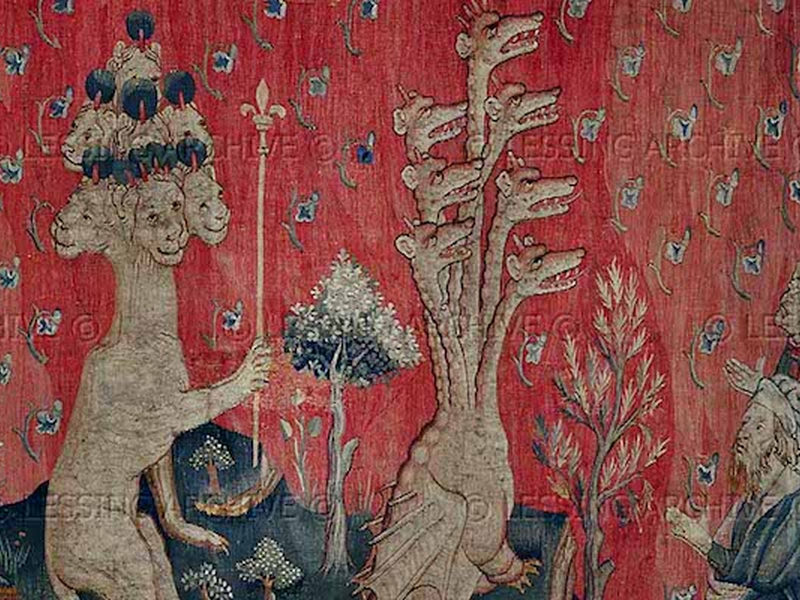
In a 1998 article in VT, Giancarlo Biguzzi argues that John describes two different forms of idolatry in the book of Revelation. The first is the traditional idolatry of idols; the second is the beast idolatry that is the focus of the book. John “speaks explicitly of that given to…

January 13, 2016

Superheroes and Modernity

“Faster than a speeding bullet, more powerful than a locomotive, able to leap tall buildings in a single bound.” The comparisons are not random, argues Aldo Regalado in Bending Steel : “By measuring Superman’s powers against those of the bullet, the train, and the skyscraper, these phrases offer clues that…

January 13, 2016

Christless Worship?

In a recent article, Loren Stuckenbruck makes this striking comment about the heavenly worship of Revelation 4: “John’s vision of a ‘Christ-less' worship in chapter 4 is so different from chapter 5; indeed, it is different from the visions described in the rest of the book in which Jesus plays…

January 12, 2016

Rodin and Tradition

The last time we had a Rodin revival was during the 1960s, writes Jed Perl. He seemed to capture the revolutionary 60s “ambiguous, contradictory, and conflicted” relation to tradition. Rodin is enjoying something of a revival again today, and Perl thinks it is for much the same reasons.” Despite his…

January 12, 2016

Writtenness

Near the end of her book on The Heavenly Book Motif , Leslie Baynes notes the “negative attitude about writing that Plato’s Socrates expresses in the Phaedrus ” is absent from early Christianity. For early Christians, “Words are ephemeral and disappear as soon as they are spoken, but writing remains.…

January 12, 2016

Showing page 333 of 2212

Browse by Category

In Medias Res

Your weekly digest for all things Theopolis.

Donate

Theopolis is nearly 100% donor-supported. Consider joining us on our mission.