
Theopolis Logo

Writing

Explore our collection of theological essays, biblical studies, and reflections on faith and culture.

See all
giammarco-zeh-ljawhtg-unsplash
Biblical Horizons

OPEN BOOK: Views and Reviews

Isaac E. Mozeson, The Word: The Dictionary that Reveals the Hebrew Sources of English (Northvale, NJ: Jacob Aaronson Inc., 1995), 310 pp. Reviewed by James B. Jordan. Once there was only one language in the world, the language God spoke to Adam. At the Tower of Babel, there came to…

by James B. JordanJune 28, 1996
tim-wildsmith-j6jv-mkdzqs-unsplash
Esther

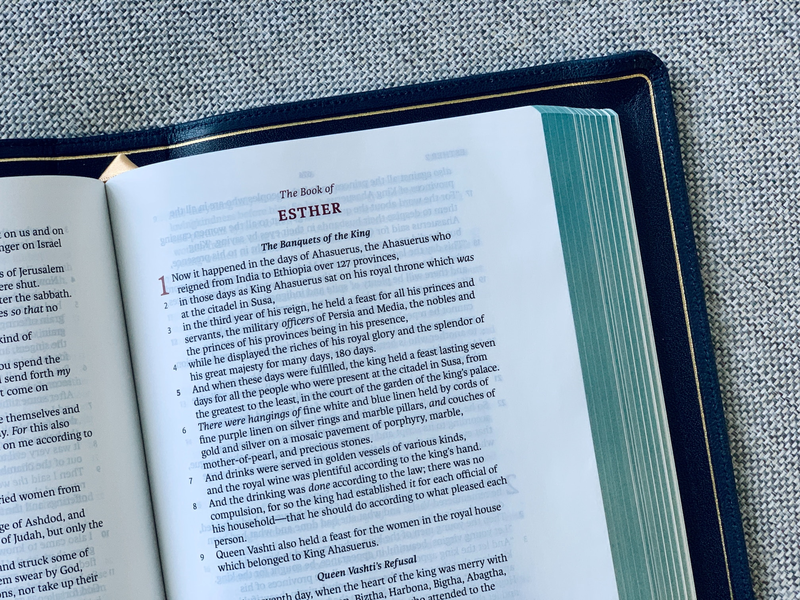
Esther: Historical & Chronological Comments (IV)

2. The Setting of the Book of Esther A. Xerxes (continued from previous issue) Ezra 6:14 says that the Jews finished building "according to the command of the God of Israel and the decree of Cyrus and Darius and Artaxerxes king of Persia." The problem with this verse is that…

by James B. JordanJune 28, 1996

ales-krivec-4mibe6zg5r0-unsplash
Acts

Jesus and Amalek

This essay goes with our previous study of the Amalek pattern back in Biblical Horizons No. 2. Since many do not have this essay, entitled "The Battle of Gog and Magog," let me cite the relevant paragraphs: Note in Genesis 12-15 that Abram moves into the land after escaping Pharaoh…

by James B. JordanJune 28, 1996
aaron-burden-1ebsmyrau-s-unsplash
Proverbs

The Strange Woman

Proverbs 7:6-23 is one of several passages early in the Proverbs in which Solomon warns his son about the wiles and dangers of the "strange woman." It is certainly quite proper to take these as straightforward warnings against sexual sins, and these are certainly warnings that need to be impressed…

by Peter LeithartJune 27, 1996
jan-kahanek-g3o5ztrk2e4-unsplash
Biblical Studies

Some Observations

1. In Luke 4:20 we read that after Jesus finished reading from Isaiah, "the eyes of all in the synagogue were fixed upon Him." This is usually taken in a psychological sense: They were amazed at Jesus somehow. I suggest that, as always, a merely psychological reading is a modern…

by James B. JordanMay 28, 1996
tim-wildsmith-j6jv-mkdzqs-unsplash
Esther

Esther: Historical & Chronological Comments (III)

2. The Setting of the Book of Esther Up to now we have assumed what we must prove, that the king in Esther is Darius the Great. While Biblical chronologists have usually taken this position, commentators on the book of Esther have often taken others as the king. One view,…

by James B. JordanMay 28, 1996

Showing page 265 of 309

See all

Showing page 32 of 43

See all

City of Gems and Song

In her contribution to Envisaging Heaven in the Middle Ages , Beverly Mayne Kienzle summarizes Hildegard of Bingen's understanding of heaven and of the new Jerusalem. For Hildegard, “Jerusalem represents the vision of peace and salvation, the final resting place for those who perform good works in this life.” She…

January 13, 2016

Two Idolatries

In a 1998 article in VT, Giancarlo Biguzzi argues that John describes two different forms of idolatry in the book of Revelation. The first is the traditional idolatry of idols; the second is the beast idolatry that is the focus of the book. John “speaks explicitly of that given to…

January 13, 2016

Superheroes and Modernity

“Faster than a speeding bullet, more powerful than a locomotive, able to leap tall buildings in a single bound.” The comparisons are not random, argues Aldo Regalado in Bending Steel : “By measuring Superman’s powers against those of the bullet, the train, and the skyscraper, these phrases offer clues that…

January 13, 2016

Christless Worship?

In a recent article, Loren Stuckenbruck makes this striking comment about the heavenly worship of Revelation 4: “John’s vision of a ‘Christ-less' worship in chapter 4 is so different from chapter 5; indeed, it is different from the visions described in the rest of the book in which Jesus plays…

January 12, 2016

Rodin and Tradition

The last time we had a Rodin revival was during the 1960s, writes Jed Perl. He seemed to capture the revolutionary 60s “ambiguous, contradictory, and conflicted” relation to tradition. Rodin is enjoying something of a revival again today, and Perl thinks it is for much the same reasons.” Despite his…

January 12, 2016

Writtenness

Near the end of her book on The Heavenly Book Motif , Leslie Baynes notes the “negative attitude about writing that Plato’s Socrates expresses in the Phaedrus ” is absent from early Christianity. For early Christians, “Words are ephemeral and disappear as soon as they are spoken, but writing remains.…

January 12, 2016

Showing page 333 of 2212

Browse by Category

In Medias Res

Your weekly digest for all things Theopolis.

Donate

Theopolis is nearly 100% donor-supported. Consider joining us on our mission.