Theopolis Logo

Writing

Explore our collection of theological essays, biblical studies, and reflections on faith and culture.

See all
hebrew-manuscript-2
Hermeneutics

The Complexity of Biblical Allusion

There is no question about the fact that the book of Deuteronomy is full of literary allusion. But there is a serious problem, even a paradox, of understanding how that allusion works. To begin with, if we assume that Deuteronomy was written by Moses — with some editorial emendations added…

by Ralph Allan SmithJanuary 23, 2018

bladerunner
Culture

The Artificial Resurrection

Genesis and Genetics in Blade Runner 2049 The power of science fiction, and what’s positive about it, is that you’re able to experience the worst-case scenario without actually having to live it. (Actor Ryan Gosling, who plays Officer “K”) (Warning: The following analysis contains spoilers for both Blade Runner films.)…

by Mike BullJanuary 18, 2018
sixteen-miles-out-d40gdcd_-he-unsplash
Biblical Studies

The Battle of Gog and Magog

The battle of Gog and Magog is found in Ezekiel 38-39. My purpose in this brief essay is to propound an explanation for this passage that I have not encountered in any of my commentaries, but that makes more sense to me than any other. I offer it here in…

by James B. JordanJanuary 16, 2018
resurrection

Deep Hope

I. Varlam Shalamov in Kolyma Tales describes his experience of the Gulag, where he spent more than a dozen of years. In a story titled The Life of Engineer Kipreev Shalamov reflects on the theme of hope in the life of a prisoner: “Hope always shackles the convict. Hope is…

by Bogumil JarmulakJanuary 11, 2018
abraham-defeats-kings-g-jollain-2
Biblical Theology

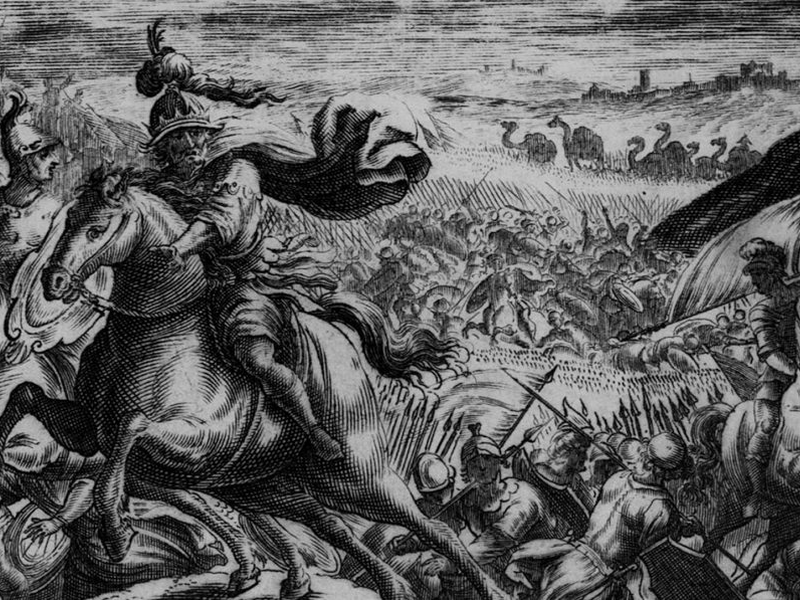
Abram’s 318 Men

Genesis 14:14 says that Abram mustered his trained men, “born in his house,” to rescue Lot, and gives their number as 318. It is clear that the precise number is provided for some reason, but what is it? S. Gevirtz notes that 318 is the sum of all the prime…

by James B. JordanJanuary 9, 2018
tanner-mardis-xuxghzhibn4-unsplash-1
Biblical Studies

The Flying Scroll

And he said to me, "What do you see?" And I answered, "I see a flying scroll; its length is twenty cubits and its width ten cubits" (Zechariah 5:2). Immediately following his vision of the outpouring of the Spirit upon the restoration community (4:1-14), Zechariah saw a flying scroll. The…

by Peter LeithartJanuary 4, 2018

Showing page 100 of 309

See all

Showing page 32 of 43

See all

Losing the Body

The Economist's review of Thomas Lacqueur's The Work of the Dead highlights the shifts in our funeral customs over the past few centuries: “A large part of the book is devoted to the slow transition from churchyards to cemeteries, a story of changing sensibilities, epitomised by the gradual replacement of…

December 4, 2015

Cultural Geography

In his forthcoming collection of essays, The Ways of the World , David Harvey observes that “it is impossible on the ground and in the streets to see where nature ends and culture begins. imposing a dichotomy where there is none is a fatal mistake.” Geography is his great illustration…

December 4, 2015

Hamlet Among Protestants and Catholics

Most readers and viewers of Hamlet take Hamlet’s most famous soliloquy as a meditation on suicide. In Hamlet, Protestantism, and the Mourning of Contingency , John E. Curran, Associate Professor of English at Marquette University, argues there are bigger things at work. Hamlet is opposing two ontologies, religious universes, moralities.…

December 3, 2015

Rhetoric: Ancient, Modern, Postmodern

Rhetoric is an ancient art. It was one of the main courses of study in ancient schools, along with grammar and logic. During the days of the Roman Empire, learning rhetoric was a path to power and prestige. Augustine, the great church father of North Africa, was trained as a…

December 3, 2015

Jerusalem, Sennacherib, and Us

The story of Jerusalem's deliverance from Sennacherib's Assyrian army, told in both 2 Kings and Isaiah, is an exciting account. It's a story worthy of Byron’s galloping verse, his medieval ballad. But still: So what? What does all this ancient history have to do with me, with my problems, with…

December 3, 2015

Would you sacrifice yourself for Iraq?

Why do we talk about patriotism in religious terms? asks Ivan Strenski (in a Library of Social Science essay): “For a student of religion what strikes one as odd is that we name the act of giving up one’s life for the sake of one’s nation, as a ‘sacrifice.' Why…

December 2, 2015

Showing page 345 of 2212

Browse by Category

In Medias Res

Your weekly digest for all things Theopolis.

Donate

Theopolis is nearly 100% donor-supported. Consider joining us on our mission.