Theopolis Logo

Writing

Explore our collection of theological essays, biblical studies, and reflections on faith and culture.

See all
james-coleman-qej5dhl4mwq-unsplash
Galatians

Getting the Galatian Heresy Right

Misunderstanding “Galatianism” has caused several problems in the Reformed church. Because circumcision is at issue in the Galatian epistle, some have fallen into thinking that ritual per se, rather than anything uniquely Mosaic or Jewish, is the object of Paul’s critique. Likewise, his polemic against “works of the law” is…

by Rich LuskJune 6, 2003

screenshot-2023-09-21-at-3-59-23-pm
Romans

Jewish Rejection of the Gospel

Many texts in the NT become more perspicuous if we keep in mind the possibility — and indeed ubiquity — of Gentile God-fearers in the Old Covenant. After the special covenant with Israel is set up, Gentiles are not altogether excluded from the hope of salvation. Israel’s special status in…

by Rich LuskJune 6, 2003
aaron-burden-1ebsmyrau-s-unsplash
Ephesians

An X-File

I was once trying to get a sermon out of Ephesians 1.12-14 and it seemed obvious that I should look for two parallel statements both ending with the phrase, “to the praise of his glory.” Paul here begins talking about two groups of people (“you” and “we”), and he later…

by Mark HorneJune 5, 2003
screenshot-2023-12-12-at-10-36-28-am-2
New Perspective on Paul

The PCA and the New Perspective on Paul

WHY A DENOMINATION WITH SOUTHERN PRESBYTERIAN ROOTS SHOULD CAREFULLY CONSIDER THE “NEW PERSPECTIVE ON PAUL” In my denomination, the PCA, we are continually haunted by the sins of our racist Southern past. It has become an annual rite at General Assembly for the issue to be addressed one way or…

by Rich LuskJune 5, 2003
screenshot-2023-09-21-at-3-59-23-pm
Justification

The Centrality of Justification

Recent debates over whether or not, “justification is central” to Paul’s theology have reminded me of a sermon I once heard by a Presbyterian seminary student. This African American student challenged his audience on the sin of racism and the ways it might manifest itself among us. Like any good…

by Mark HorneJune 5, 2003
charles-hodge-islandora6062_crop_0
Ecclesiology

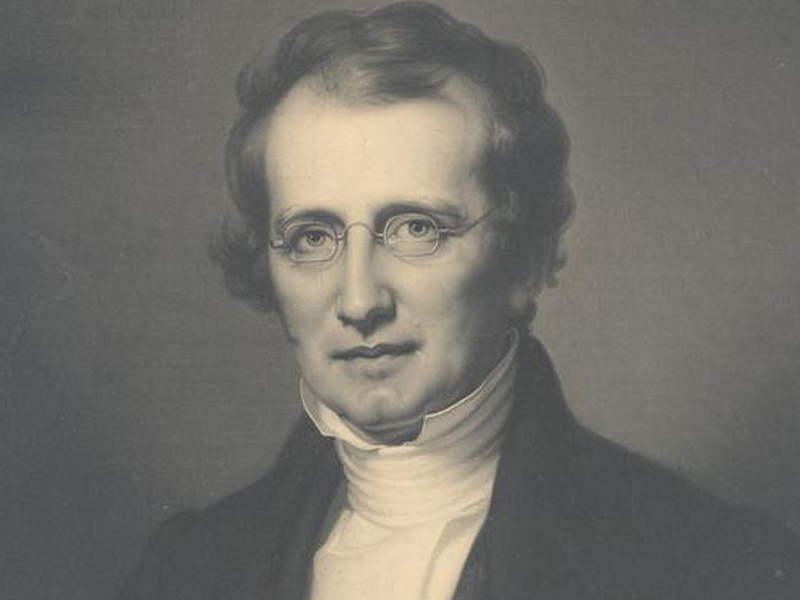
Charles Hodge’s Deficient Idea of the Church

In Charles Hodge’s 1853 article, “Idea of the Church,” his stated aim is to analyze the idea of the Church proposed in the Apostles’ Creed, in which, “the Church is declared to be “the Communion of the Saints.” He writes: The conception of the Church as the communion of saints…

by Mark HorneJune 5, 2003

Showing page 231 of 309

See all

Showing page 32 of 43

See all

Why Now?

Jesus prayed that the church's unity would reflect the unity of the Father and Son. Paul urged the Ephesians to cultivate the virtues of peace that would express the sevenfold unity of the church (Ephesians 4). That demand is a perennial one. But we've been divided for a long time.…

March 12, 2015

Fragile Fruitfulness

Israel is a vine, transplanted from Egypt (Psalm 80; Isaiah 5). She exists to produce wine that gladdens the hearts of men. Israel is the Dionysian people. Ezekiel brings out another dimension of the vine image: “Son of man, how is the wood of the vine better than any wood…

March 12, 2015

Judgment to the Corners

The oracle of judgment in Ezekiel 14:12-23 is structured as a fourfold judgment: sword, famine, beasts, plague (v. 21). The descriptions of judgment are laid out in four paragraphs that use repetitive, stereotyped language. Throughout, Yahweh says that even the intercession of Noah, Daniel, and Job could not rescue Judah…

March 12, 2015
Fairy Tales

The Political Economy of Fairy Tales

In a TLS review of several recent books on fairy tales, Fracesca Wade points to the political context and economic setting of early folk and fairy tale collections. Inspired by Herder, the Grimms, she observes, intended to recover Germanitas by study of natural German poetry: “Although the brothers drew widely…

March 12, 2015

Remembering the Present

In his Deja Vu and the End of History , Italian philosopher Paolo Virno explores the phenomenology of memory, especially in its relation to philosophies of history. The deja vu of the title isn't a metaphor; following Henri Bergson, Virno argues that it represents “the untrammelled extension of memory's jurisdiction,…

March 11, 2015

Potential, Act, and Violence

Paolo Virno ( Deja Vu and the End of History ) observes that potential and act occur simultaneously. Take language: “The language faculty irrupts into becoming in concomitance with the phrase that I am speaking. It appears precisely now, as I speak, neither before nor afterwards: but, note, right now…

March 11, 2015

Showing page 453 of 2212

Browse by Category

In Medias Res

Your weekly digest for all things Theopolis.

Donate

Theopolis is nearly 100% donor-supported. Consider joining us on our mission.