
Theopolis Logo

Writing

Explore our collection of theological essays, biblical studies, and reflections on faith and culture.

See all
kalen-emsley-bkci_8qcdvq-unsplash-1
Biblical Horizons

The Sequence of Events in the Creation Week

To begin with the source of this narrative: Since no human being was present to observe these events, we must assume that this narrative was revealed directly by God to a human author. There are three ways this might have happened. First, we might read, "God said to Abraham (or…

by James B. JordanOctober 23, 1997
eq9mnztemoq7lwjacsh3ss
Biblical Horizons

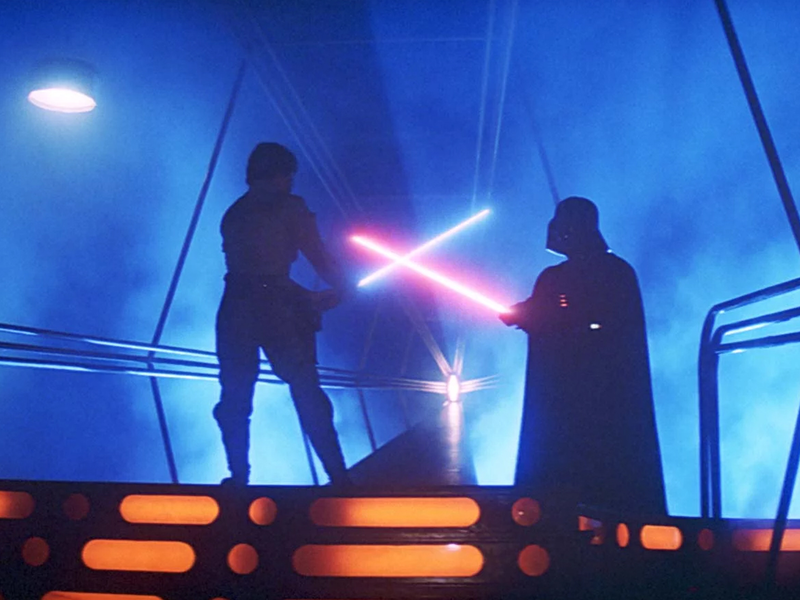
The Empire Strikes Back

The Empire Strikes Back is a movie most of us have seen more than once. It is generally regarded as the best of the three Star Wars films, which is probably due to the fact that unlike the other two, The Empire Strikes Back made use of the services of…

by James B. JordanOctober 4, 1997
lili-popper-lu15z1m_kfm-unsplash
Biblical Chronology

The Sequence of Events in the Creation Week, Part 1

Now that we have examined three unacceptable approaches to the events recorded in Genesis 1, it is only fair for me to set out what does seem to be recorded there. To begin with the source of this narrative: Since no human being was present to observe these events, we…

by James B. JordanOctober 4, 1997
raphael-schaller-gkincd2eniy-unsplash-6
Biblical Horizons

Cracking Up the “Bible Code”

Two books on the "Bible Code" have appeared this year. The first, a current bestseller, is Michael Drosnin’s The Bible Code (Drosnin, 1997). The other is Cracking the Bible Code (William Morrow, 1997), by Jeffrey Satinover, known to Christians for his outstanding 1996 book Homosexuality and the Politics of Truth…

by James B. JordanOctober 4, 1997
hannah-busing-0v6dmtujaik-unsplash
American Culture

The Case Against Western Civilization, Part 1

Part 1: Introduction The collapse of the Western tradition in the United States, seen in the hostility to Christianity in government and education, and the elimination of "traditional" or "canon" learning from our institutions of middle and higher learning, provides a crisis and an opportunity for serious believers at the…

by James B. JordanOctober 4, 1997
amjd-rdwan-erymmvvsy1y-unsplash-1
Theologia

Why Will You Die?

A Brief Defense of John Murray’s “the Free Offer of the Gospel,” & A Question About the Extent of the Atonement John Murray (1898-1975) is probably the last of the great American theologians; he belonged in the same set as that which contains such eminent Presbyterians as Charles Hodge and…

by Mark HorneOctober 3, 1997

Showing page 253 of 309

See all

Showing page 32 of 43

See all

Why Now?

Jesus prayed that the church's unity would reflect the unity of the Father and Son. Paul urged the Ephesians to cultivate the virtues of peace that would express the sevenfold unity of the church (Ephesians 4). That demand is a perennial one. But we've been divided for a long time.…

March 12, 2015

Fragile Fruitfulness

Israel is a vine, transplanted from Egypt (Psalm 80; Isaiah 5). She exists to produce wine that gladdens the hearts of men. Israel is the Dionysian people. Ezekiel brings out another dimension of the vine image: “Son of man, how is the wood of the vine better than any wood…

March 12, 2015

Judgment to the Corners

The oracle of judgment in Ezekiel 14:12-23 is structured as a fourfold judgment: sword, famine, beasts, plague (v. 21). The descriptions of judgment are laid out in four paragraphs that use repetitive, stereotyped language. Throughout, Yahweh says that even the intercession of Noah, Daniel, and Job could not rescue Judah…

March 12, 2015
Fairy Tales

The Political Economy of Fairy Tales

In a TLS review of several recent books on fairy tales, Fracesca Wade points to the political context and economic setting of early folk and fairy tale collections. Inspired by Herder, the Grimms, she observes, intended to recover Germanitas by study of natural German poetry: “Although the brothers drew widely…

March 12, 2015

Remembering the Present

In his Deja Vu and the End of History , Italian philosopher Paolo Virno explores the phenomenology of memory, especially in its relation to philosophies of history. The deja vu of the title isn't a metaphor; following Henri Bergson, Virno argues that it represents “the untrammelled extension of memory's jurisdiction,…

March 11, 2015

Potential, Act, and Violence

Paolo Virno ( Deja Vu and the End of History ) observes that potential and act occur simultaneously. Take language: “The language faculty irrupts into becoming in concomitance with the phrase that I am speaking. It appears precisely now, as I speak, neither before nor afterwards: but, note, right now…

March 11, 2015

Showing page 453 of 2212

Browse by Category

In Medias Res

Your weekly digest for all things Theopolis.

Donate

Theopolis is nearly 100% donor-supported. Consider joining us on our mission.