Theopolis Logo

Writing

Explore our collection of theological essays, biblical studies, and reflections on faith and culture.

See all
georgewhitefield-71901184-de237affa7764d6e95818a589190adf7
Biblical Horizons

The Great Awakening: A Critique

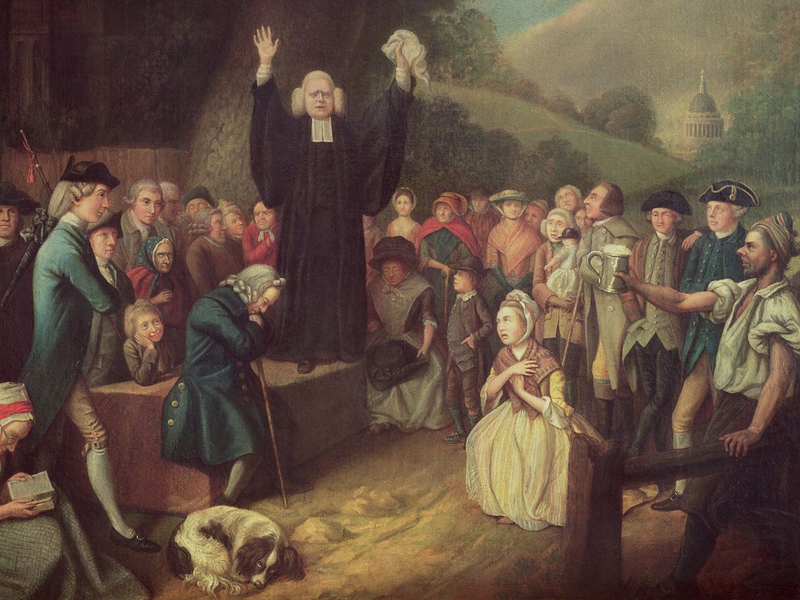
The following material was published in 1984 in Christianity and Civilization No. 4: The Reconstruction of the Church, pages 6-9, and are reprinted here as grist for the mill of the discussion of “evangelicalism.” Footnotes have not come through, of course. Though this material is offered in connection with a…

by James B. JordanJune 19, 2012

aaron-burden-1ebsmyrau-s-unsplash
Biblical Horizons

Concerning Regeneration

I wrote my beef about “regeneration” a decade ago, and I don’t really see the need to reopen what I think now. (Jordan, Thoughts on Sovereign Grace and Regeneration: Some Tentative Explorations. Biblical Horizons Occasional Paper No. 32) But. My pal Doug Wilson has been writing a series of essays…

by James B. JordanJune 19, 2012

jelleke-vanooteghem-gnxb59lgu1m-unsplash
John

Born From Above: Some Notes on John 3

Nicodemus’s conversation with Jesus in John 3:1-15 is sometimes regarded as an illustration of the tremendous stupidity of the Jews of our Lord’s day. Nicodemus is treated as just some guy who comes to Jesus at night because he doesn’t want to get into trouble by being seen with Him.…

by James B. JordanJune 18, 2012
screen-shot-2020-12-03-at-1-47-33-pm
Biblical Horizons

Is James B. Jordan an “Evangelical”?

During the last couple of weeks, Douglas Wilson has issued several posts over on his Blog and Mablog blog that deal with “evangelicalism” and who is and who is not an “evangelical.” In the course of these postings, Doug has written that while I am a fine Christian who has…

by James B. JordanJune 18, 2012
karsten-wurth-imegmbunara-unsplash
Biblical Horizons

Three Issues in Regard to Eastern Orthodoxy

Here are three issues in regard to the Eastern Church. First, here is the quote from Bavinck’s The Doctrine of God, page 317, Banner of Truth edition (1977) under the heading of Inter-Personal Relations. The Greeks derived the unity of God’s essence and the unity of the persons not from…

by Richard BledsoeJune 14, 2012
screen-shot-2020-12-03-at-1-47-33-pm
Biblical Horizons

Clerical Garb

Elsewhere on the blogosphere men are mocking the wearing of collars and albs to lead in worship. When it is pointed out that historically Reformed ministers have worn daily uniforms and robes in worship, it is replied that that was then and this is now. We ought to conform to…

by James B. JordanJune 9, 2012

Showing page 200 of 309

See all

Showing page 32 of 43

See all

Truth or Tribalism?

One Body Through the Cross , the Princeton Proposal for Christianity Unity, criticizes the ecumenical movement for “liberal indifference” to orthodoxy, which has sometimes provoked a reaction of “divisive sectarianism.” For some, the solution is to stress traditional doctrinal formulations, but this cure is part of the disease. As Margaret…

February 25, 2015

Be What We Are

The Princeton Proposal for Christian Unity ( One Body Through the Cross ) works within two “poles”: On the one hand, there is an already-established unity, “a bond of faith and communion in Christ, established by the action of God.” On the other hand, we are called to “a deeper…

February 25, 2015

Division Breeds Diversion

The Princeton Proposal on Christian Unity ( In One Body Through the Cross ) claims that “division breeds never-ending diversion from authentic mission” (section 35), and offers a shrewd diagnosis of how this occurs. It happens when “the distinct identities of our churches tempt us to relish the special marks…

February 25, 2015

Making Church Visible

In his Unitive Protestantism , John T. McNeill sketches the “communio” ecclesiology of the Reformers: “They interpreted the creedal tenet of ‘the Holy Catholic Church’ in terms of the communio sanctorum , and identified the latter both with the invisible communion of the saved and with the true visible church…

February 25, 2015

Witness of Abstinence

Jeremiah 35 introduces the Rechabites. This is a clan within Israel that had refrained from wine, lived in tents, and refused to sow seed or plant vineyards for generations. The sole basis for this abstinence from normal life was the command of Jonadab the son of Rechab who commanded “You…

February 24, 2015
Modernity

Gullible Rationalists

One of the delights of Philip Ball’s forthcoming Invisible is to see how frequently rationalists and materialists were have been taken in by charlatans. One might have thought that those who came-of-age and were Enlightened by reason would be immune to tricks, beliefs in ghosts, and in fairies and sprites.…

February 24, 2015

Showing page 459 of 2212

Browse by Category

In Medias Res

Your weekly digest for all things Theopolis.

Donate

Theopolis is nearly 100% donor-supported. Consider joining us on our mission.