
Theopolis Logo

Writing

Explore our collection of theological essays, biblical studies, and reflections on faith and culture.

See all
sinitta-leunen-dvibhmzsy8e-unsplash
Epistemology

A Cheer for the Mystics

Mystical theologians are often unguarded, extreme, un-nuanced, pressing to the edges of heresy, sometimes beyond. Still, the mystics are worthy of study. Why? Many reasons. Unlike some late medieval and post-Reformation dogmaticians, mystical theologians are often instinctively and richly Trinitarian. Historical-critical approaches to Scripture left mystical theologians virtually untouched; mystics…

by Peter LeithartSeptember 2, 2013
portrait-of-william-shakespeare-1564-1616-ca-1865
Literature

Shadow and Substance in Shakespeare's Venice

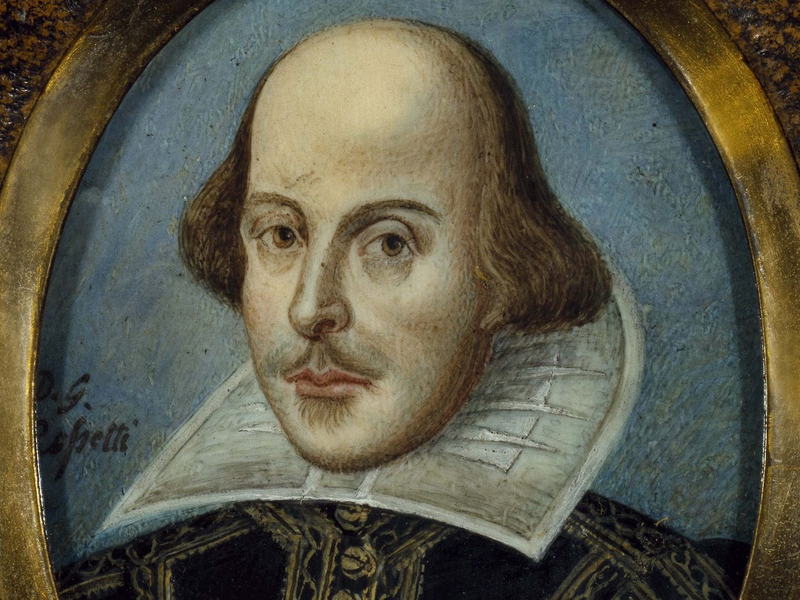
Portia of Belmont is a “lady richly left,” as Bassanio says of her in the first Act of The Merchant of Venice . Plus, she’s beautiful and wise. Suitors clamber to Belmont in hope. Her father knew it would be so, and in his will set up a fairy-tale test…

by Peter LeithartAugust 28, 2013
carlo-alberto-burato-smdx3gleu_m-unsplash
Liturgy

Liturgy Traps

[fve]http://vimeo.com/72195198[/fve]

by James B. JordanAugust 26, 2013
screen-shot-2022-05-12-at-12-07-23-pm
Deuteronomy

Victory Food

In the nature of the case, “the” Christian meditation on Deuteronomy 14:1-21 cannot be written. Meditation offers too many possibilities, opens too many doors. There is not one and only one correct set of associations for a Christian to consider when thinking of Deuteronomy 14:1-21. We could, for example, consider…

by Ralph Allan SmithAugust 21, 2013
aaron-burden-1ebsmyrau-s-unsplash
Romans

David's Sin and Israel's Salvation, Part I

Having retold the story of the cumulative sin of Israel leading to the great atonement on the cross, Paul then reemphasizes that, just as both Jew and Gentiles were locked into sin and judgment, now they are both justified by faith: Then what becomes of our boasting? It is excluded.…

by Mark HorneAugust 20, 2013
ben-white-w8qqn1pmqh0-unsplash
Deuteronomy

You are what you eat

Deuteronomy 14 is full of allusions to events of Israel’s history and other portions of Scripture. What would an Israelite learn by mediation on these allusions? The answer, I believe, is at least fourfold. Faith, Worship, War For the ancient Israelite first hearing Moses’ sermon, or perhaps hearing it read…

by Ralph Allan SmithAugust 15, 2013

Showing page 189 of 309

See all

Showing page 32 of 43

See all

Persons, Property, Words

Samson Raphael Hirsch’s Horeb is worth reading on any topic – stimulating, eccentric, illuminating, infuriating. His treatment of the eighth commandment brings out several key themes. First, he defines property as “an artificial extension of the body” (227), and since the body is a “tool” for the spirit, so property…

November 20, 2018

Old-New Atheism

John Gray ( Seven Types of Atheism ) says that “Contemporary atheism is a flight from a godless world. Life without any power that can secure order or some kind of ultimate justice is a frightening and for many an intolerable prospect. In the absence of such a power, human…

November 19, 2018

Suffering and Death in Hebrews

Bryan Dyer deploys some sophisticated critical tools to establish the "context of situation" for the book of Hebrews in his Suffering in the Face of Death . He uses the "semantic domain theory" reflected in the Louw-Nida Lexicon to identify the variety of language the writer uses to describe suffering…

November 15, 2018

Liberal Theology, Liberal Politics

In her book on Benjamin Constant, Liberal Values , Helena Rosenblatt examines the intertwining of religious and political concerns in the work of Constant and his lover/collaborator, Madame de Stael. Through his early study of liberal Protestant theologians in Germany, Constant "hit upon what would be a central principle of…

November 14, 2018

Kantian v. Kantian

Gillian Rose ( Hegel Contra Sociology , 21-24) examines how sociology attempts to overcome Kantian problematics, but remains within them all the same. Neo-Kantianism, she argues, "founded two kinds of 'sociology,' two logics of the social: a logic of constitutive principles for the sociology based on the priority of validity,…

November 13, 2018

Male and Female

Barth is no feminist. In his discussion of man and woman (CD 3.4), he insists on the created differences between male and female. Men and women must resist the temptation "to exchange their special vocations, what is required of the one or the other as such" (154). Instead, "each man…

November 13, 2018

Showing page 53 of 2212

Browse by Category

In Medias Res

Your weekly digest for all things Theopolis.

Donate

Theopolis is nearly 100% donor-supported. Consider joining us on our mission.