Theopolis Logo

Writing

Explore our collection of theological essays, biblical studies, and reflections on faith and culture.

See all
puritans
History

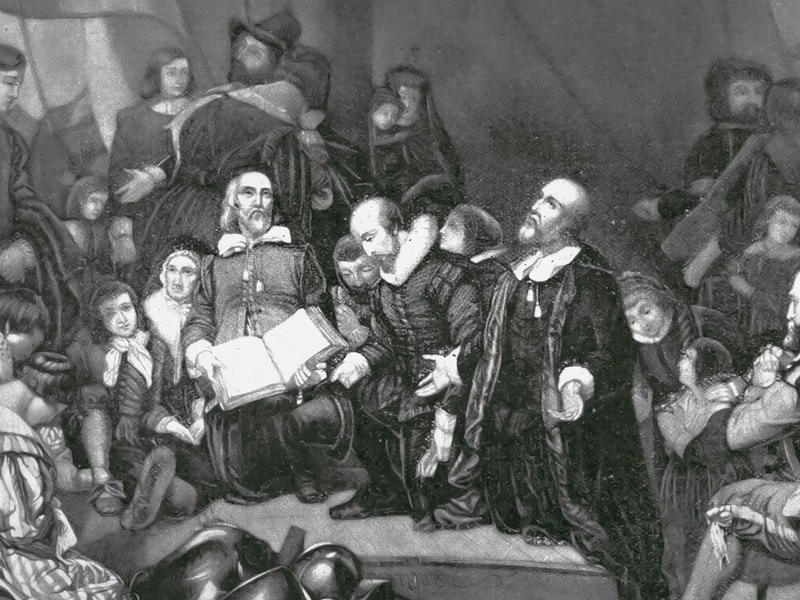
Congregational Theocracy: That Time Theocrats Ran Puritan New England

Timon Cline wrote recently that “theonomists” didn’t run Puritan New England. 1 He is correct, in his major thesis, that the claim that “Puritanism and the natural law tradition are antithetical” is “wildly ahistorical.” Mr. Cline demonstrates that Puritans repeatedly extolled natural law. Besides the Puritan sources Mr. Cline mustered,…

by John CarpenterAugust 9, 2022

screen-shot-2022-08-04-at-9-36-57-am
Mark

The Land of the Walking Trees

The Church is the land of the walking trees. In Mark’s Gospel, the identity of Jesus is slowly and progressively revealed. Though St. Mark announces at the beginning of his narrative that Jesus Christ is “the Son of God” (1:1), this is a reality that must be spoon-fed to His…

by Jackson ShepardAugust 4, 2022
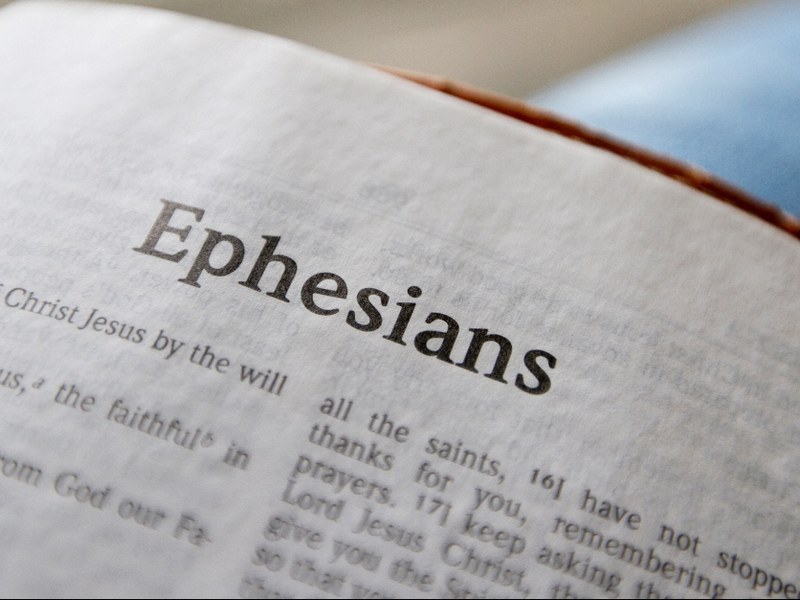
11982-sparrowstockephesians
Ephesians

The Significance of Ephesians (with a comparison to Romans)

All Scripture is of ultimate significance as the word of God, but it may be helpful to think about what makes a book (in this case, a letter) possibly unique within the canon. In this case, the “general” nature of Ephesians should stand out, but it often is not recognized…

by Mark HorneAugust 2, 2022
davide-ragusa-g32g_ibprfa-unsplash
Ecclesiastes

A Time to Kill (Ecclesiastes 3:3)

Where do we draw the lines between what is right and wrong? This question is fundamental to civilization, fundamental to a free society. To put this question in the bluntest and most offense terms: if there is a time to kill — which Solomon says there is — whom shall…

by Ralph Allan SmithJuly 28, 2022
screen-shot-2018-04-12-at-9-48-08-am
Biblical Horizons

Broadening Our View of the Trinity

This article was originally posted in May of 1994. We speak of God as Father, Son, and Holy Spirit. The early Church tended to speak of Him as Father, Word, and Spirit. In this short essay, I want to suggest some other ways to think of the Trinity, ways that…

by James B. JordanJuly 26, 2022
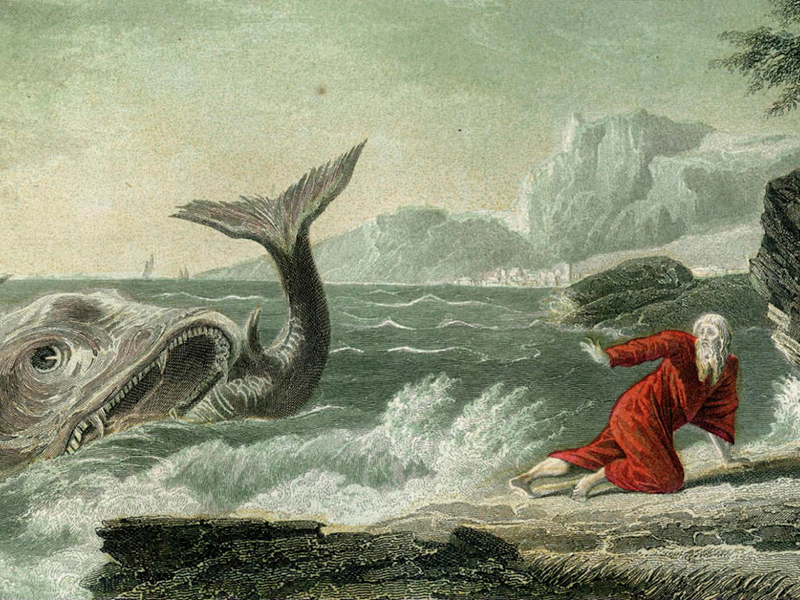
jonahwhale-1552x900
Jonah

Journeying Prophets in Kings

Jonah’s Home The story of JONAH belongs in the book of KINGS. JONAH balances the story of the unnamed Judean prophet (1K13) in KINGS’ literary structure. Each story describes a journeying prophet that crosses land or sea to confront a wayward king. The two stories are located during the reigns…

by Scott FairbanksJuly 21, 2022

Showing page 41 of 309

See all

Showing page 32 of 43

See all

Seal of Baptism

In an 1873 article in the Mercersburg Review, E.V. Gerhart, a professor at Mercersburg seminary, argued that nineteenth-century views of baptism had departed radically from the viewpoint of the Protestant confessions: “Claiming to be the faithful representative of Reformational ideas, the religious press of our day, generally at least, denies,…

February 28, 2014

Renewed in Baptism

E.V. Gerhart argues in his 1873 Mercersburg Review article that the Heidelberg Catechism teaches that “Baptism makes the sinner a new man.” He explains: “The word ‘renewed’ in this connection . . . is to be taken as affirming a new organic relation of the subject of Baptism with Christ,…

February 28, 2014

Historicism’s Dilemmas

At the beginning of her The Philosophical Question of Christ , Caitlin Smith Gilson sketches the multiple dilemmas of historicism. Historicism “takes the historicist out of history,” which is not only paradoxical but, on historicist terms, impossible, since outside history “there is no place to be” (xiii). How does this…

February 28, 2014

Pity the Subversive

Frank Kermode summarizes Alain Robbe-Grillet’s experimental novel, In the Labyrinth , in his The Sense of an Ending : “the soldier who is the central figure only slowly emerges (in so far as he does emerge) from other things, the objects described with equal objectivity, such as the mysterious packet…

February 27, 2014

Voluntary Impurity

In a contribution to Women and Water: Menstruation in Jewish Life and Law , Leslie Cook helpfully traces the differentiations of Leviticus back to the divisions of creation. In the creation accounts, God is differentiated from human beings and human beings from nature by “body, blood, food, time, and space”…

February 27, 2014

Bringing up the Cud

To be accounted clean, land animals have to “chew the cud.” The Hebrew for “chew” is alah , to bring up or to ascend. That’s quite literal. Animals that chew the cud swallow, and then regurgitate the food back to the mouth to chew. By the time we get to…

February 27, 2014

Showing page 671 of 2212

Browse by Category

In Medias Res

Your weekly digest for all things Theopolis.

Donate

Theopolis is nearly 100% donor-supported. Consider joining us on our mission.