Theopolis Logo

Writing

Explore our collection of theological essays, biblical studies, and reflections on faith and culture.

See all
screen-shot-2022-08-04-at-9-36-57-am
Matthew

Paul Doesn't Care About Universal Individual Sinfulness or General Revelation

One reason readers assume Paul is trying to prove that all human beings are sinful is that they understand him to be arguing that no one can keep the law. That means, they think, his opponents must believe that human nature is potentially sinless. Taking Paul’s statement that, if you…

by Mark HorneJune 17, 2013

karsten-wurth-imegmbunara-unsplash
Mission

Dreams and Visions

[Note: This post was written prior to our name changing to Theopolis Institute.] What is Trinity House for? Three things: We aim to advance the reformation of the church and, through the church, to promote the renewal of culture; in furthering reformation, we aspire to be a site of fraternal,…

by Peter LeithartJune 12, 2013
sixteen-miles-out-al48tflf4e8-unsplash
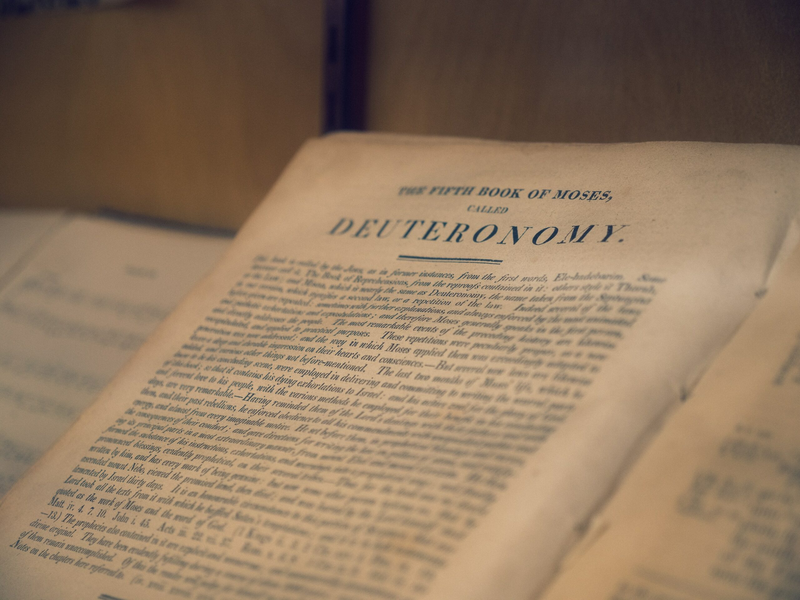
Deuteronomy

Sons to Yahweh your God!

This is the third in a series of studies of the Third Word, and especially of Deuteronomy 14. In 1979 Stephen Kaufman penned a groundbreaking essay on Deuteronomy, arguing that it was a meticulously structured and carefully composed book. In his view, chapters 12 to 26 in particular follow the…

by Ralph Allan SmithJune 10, 2013
kelly-sikkema-gpoh17dxqdm-unsplash
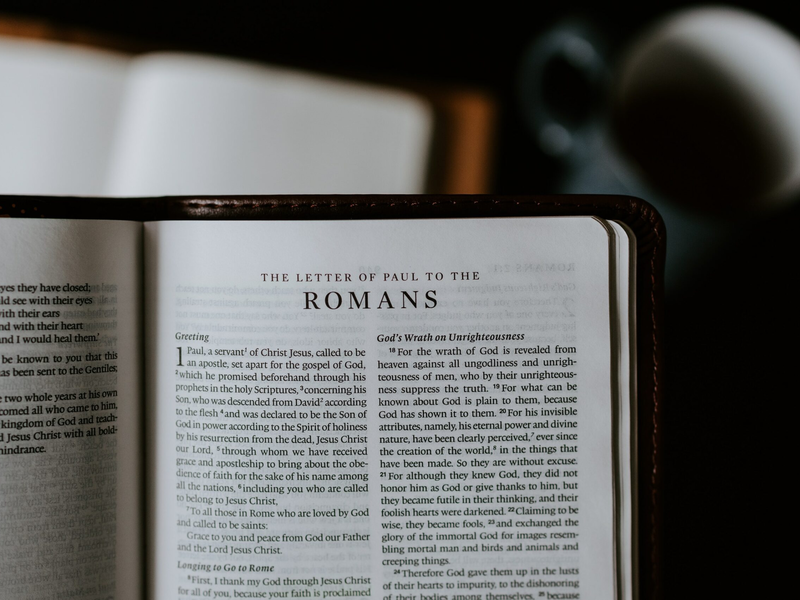
Romans

How is Wrath Revealed?

A large mistake is made in understanding Romans if one assumes that Paul is concerned with proving the fact that no one can ever live without sin—or that all attempts at obeying God’s commands are at least tainted with human sinfulness. The first problem with such an assumption is that…

by Mark HorneJune 5, 2013
chris-bair-ndczc5739ck-unsplash
Deuteronomy

The Third Word

This is the second in a series of studies on the Third Word, and especially on the food laws of Deuteronomy 14. In the second part of this series, I argue that Moses’ reworking of the Ten Words in Deuteronomy 5 includes adding nuance to the Third Word. This prepares…

by Ralph Allan SmithJune 3, 2013
yannis-papanastasopoulos-if_29sed7ta-unsplash
Culture

Turning Babel into a Beast

Recent months have brought a lively discussion of Christian participation in the culture war. On the one hand, the pro-life movement appears to be making some slow progress on the abortion issue. The trial of abortionist and serial murderer Kermit Gosnell has the potential to awaken those who are nominally…

by Joe RigneyMay 29, 2013

Showing page 193 of 309

See all

Showing page 33 of 43

See all

Suffer the Children

Judith Gundry's contribution to The Child in the Bible examines the place of children in Mark's gospel, with particular focus on the episode of Jesus blessing the children. It's an illuminating essay. Mark includes no infancy narratives, but regularly shows Jesus exerting the power of the kingdom to rescue and…

November 14, 2017

Justification in the Age of Emancipation

In his Happiness Paradox , Ziyad Marar explores the sources of "justification." Humiliation is a uniquely human form of suffering. How do we deal with it? Our strategies for staving off humiliation are strategies of "justification." Freud offers some possibilities, He "enumerates a range of ways we avoid this kind…

November 13, 2017

Mystical Atheism

Virginia Woolf, atheist though she was, couldn't avoid religious language when she spoke about her writing. Writing began from "a revelation of some order; it is a token of some real thing behind appearances; and I make it real by putting it into words." It was her "shock-receiving capacity is…

November 10, 2017

Tales of Reason

Robert Brandom ( Tales of the Mighty Dead , 13-14) observes a continuity between Hegel and Kant: Both take concepts as "norms for judgment. They determine proprieties of application to particulars of terms that, because of the normative role they play in such judgments, express universals." But then Hegel adds…

November 10, 2017

Tridentine Utraquism

Did the Council of Trent allow communion in both kinds, in bread and wine? The answer is complicated. Nathan Mitchell ( Oxford History of Christian Worship , 338-9) writes that "After intense behind-the-scenes negotiations, Pope Pius IV authorized communion in both species for German (16 April 1564). In effect, the…

November 10, 2017
Reformation

Misreading the Reformation

Reviewing Carlos Eire's Reformations at First Things , Eamon Duffy claims that "Protestantism 'desacralized' the world by accepting an essentially binary division of reality into spirit and matter. That division was expressed in Reformation iconoclasm and the rejection of the notion that material objects—the bread and wine of the Mass,…

November 10, 2017

Showing page 123 of 2212

Browse by Category

In Medias Res

Your weekly digest for all things Theopolis.

Donate

Theopolis is nearly 100% donor-supported. Consider joining us on our mission.