Theopolis Logo

Writing

Explore our collection of theological essays, biblical studies, and reflections on faith and culture.

See all
pawan-sharma-vt2efwhbs-e-unsplash
Authority

Eldership and Maturity, (Part 2)

(continued from previous issue) Between 30 and 50 What did the Levites do between age 30 and 50? Numbers 4 shows us that they carried the house of God on their shoulders. Lifting up the Lord is an image of worship in the Bible, and David’s restructuring of the Levites…

by James B. JordanJuly 8, 1995
venice-la-distruzione-del-tempio-di-gerusalemme-francesco-hayez-gallerie-accademia-venice
Romans

The Great Hangover, Parts 1-2

When God created the world, He created two lands: the Throne-land of Eden (entered through the sanctuary-garden, the Garden of Eden), and the Outlying Lands, such as the lands of Havilah and Cush. This essentially bi-polar world is the world of the Old Creation, and it continued to exist until…

by James B. JordanJuly 5, 1995
Architecture

Concerning Colors, Architecture, and Sacraments

Color is inescapable, except for those who are color blind. In our church architecture, we either employ color schemes that are helpful to worship, or we employ color schemes that are not helpful. Of course, this assertion merely begs the question: What color schemes are most helpful. God showed interest…

by James B. JordanJuly 4, 1995
baptism-of-christ
Baptism

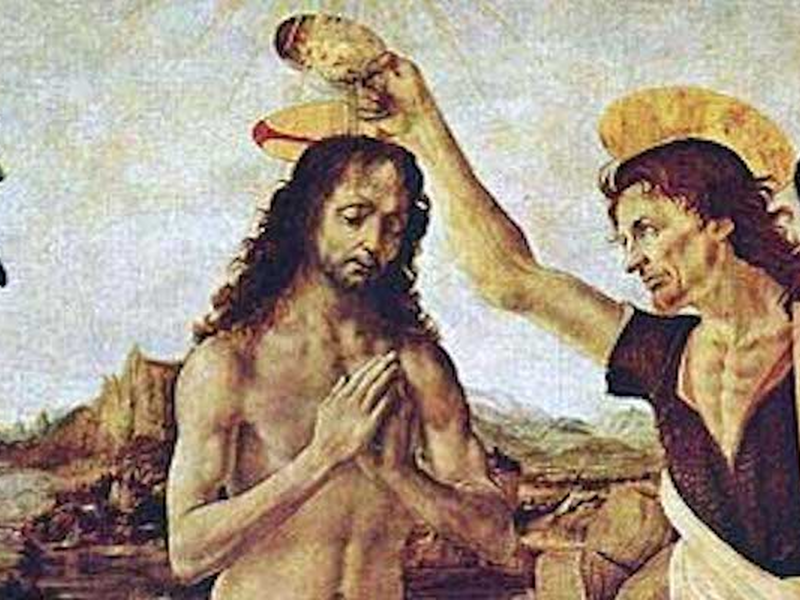
Jesus’ Baptism Into Priesthood

As I noted in an earlier article in Rite Reasons , the Church Fathers Tertullian, Ambrose, and Augustine all claimed that baptism inducts the baptized person into membership in the royal priesthood of the church, and Thomas Aquinas said that baptism, by imprinting an indelible “character” on the soul, confers…

by Peter LeithartMay 26, 1995
moses-gives-aaron-priesthood-39465-wallpaper
Baptism

Renewing Circumcision

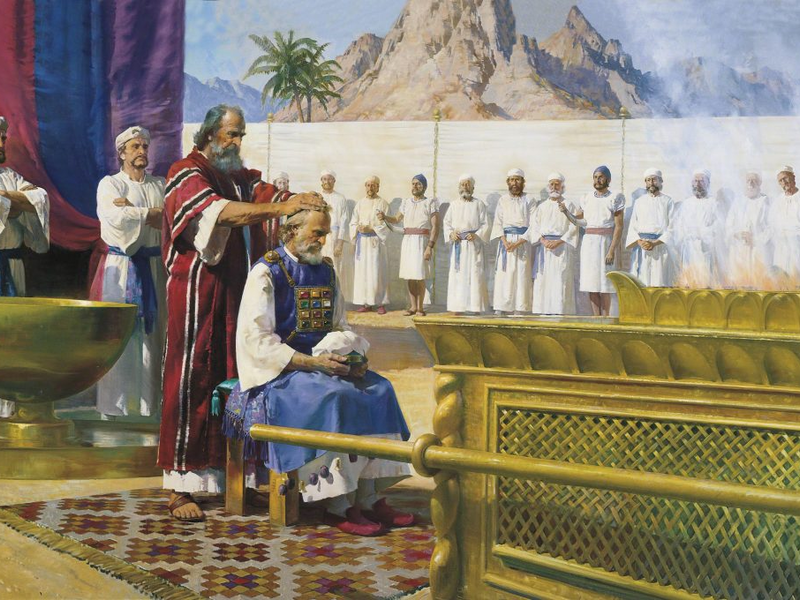
When the Aaronic priests were ordained, the blood of the ram of "filling” was placed on the lobe of the right ear, the right thumb, and the right big toe (Lev. 8:22-24). Similarly, the cleansing rite for a leper included smearing the right ear lobe, thumb, and big toe with…

by Peter LeithartMay 14, 1995
sixteen-miles-out-ki3hr9t8t7a-unsplash
Daniel

A Correction on Daniel 7

In my Preliminary Commentary on Daniel , which many of you have obtained, I argued in chapter 13 that the four monsters called up from the sea by the evangelistic work of the four winds (the saints) represented the deep hatred of God that evangelistic work brings to the fore…

by James B. JordanMay 7, 1995

Showing page 270 of 309

See all

Showing page 33 of 43

See all

Public and Private Piety

Thanks to Jayson Grieser for sending along notes and quotations from Ramie Targoff’s 2001 Common Prayer: The Language of Public Devotion in Early Modern England . Targoff points out that, contrary to what we might think, Protestants were more interested than Catholics in communal worship. “For sixteenth-century Catholics,” she writes,…

April 7, 2007

Calvin and allegory

Calvin is harsher on allegorical interpretation than almost anyone, yet he is all in favor of typology. David, Zedekiah, Joseph, Aaron, Samson, Joshua, Zerubbabel, Cyrus and others are types of Christ. It is no easy task to discover where he draws the line between allegory and typology, though. At times,…

April 5, 2007

Yahweh/Iehave

“Yahweh” is often thought to be a purely modern rendering of the Hebrew name, but Smalley finds a medieval glossator who writes the name as “Iahave.” She goes on: “The ‘monstrous form’ Jehoveh was already known to Christians in the late thirteenth century. Henry Crossy seems to compromise between Jehoveh…

April 5, 2007

Kids in Mother’s Milk

Aquinas rejected Augustine’s dismisal of literal interpretations of the law as “absurdities,” arguing that “the end of the ceremonial precepts was twofold, for they were ordained to divine worship, for that particular time, and to the foreshadowing of Christ.” Applying this principle, he sought for a plausible literal interpretation of…

April 5, 2007

Kids in Mother’s Milk

Aquinas rejected Augustine’s dismisal of literal interpretations of the law as “absurdities,” arguing that “the end of the ceremonial precepts was twofold, for they were ordained to divine worship, for that particular time, and to the foreshadowing of Christ.” Applying this principle, he sought for a plausible literal interpretation of…

April 5, 2007

Man of Sorrows

Following Jewish exegetes of his time, Andrew of St. Victor interpreted Isaiah 53 as a prophecy of Israel. Isaiah used the phrase “man of sorrows” to speak “of the people as though of one man.” “Bearing infirmities” refers to “the people who were to suffer in the Babylonian captivity” and…

April 5, 2007

Showing page 1696 of 2212

Browse by Category

In Medias Res

Your weekly digest for all things Theopolis.

Donate

Theopolis is nearly 100% donor-supported. Consider joining us on our mission.