Theopolis Logo

Writing

Explore our collection of theological essays, biblical studies, and reflections on faith and culture.

See all
sony-dsc
Leviticus

Cathedral Offerings

Interwoven within Leviticus’ opening offerings is a redemptive storyline meant to be rehearsed. Each offering makes a particular contribution to the retelling of the Exodus deliverance. Like learning a dance, Israel’s opening rituals recount their steps from Egypt to Sinai in a fashion meant to perpetually imprint its experience on…

by Ben LoveladyMay 15, 2025

patrick-fore-rm5dtbswzay-unsplash
Mark

Mark 7 in Color

In Capernaum, the leaders of Israel questioned Jesus in their hearts. Beside the sea, they questioned his disciples about their rabbi’s practices. They challenged Jesus in the grain fields, sought to trap him in the synagogue, tried to seize him, thinking he was mad, and accused him of being possessed.…

by George EdemaMay 13, 2025
ksenia-kudelkina-wvas_uto8wq-unsplash
Psalm-singing

Rascals in a Cave

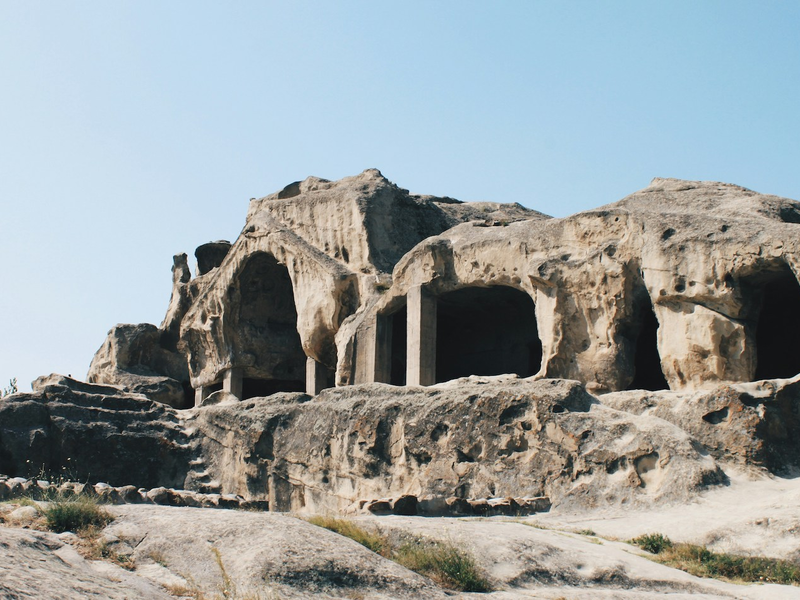
An essay on ministry taken from recent notes for a ‘solemn charge’ I gave our pastoral team (together with their spouses) at All Saints Honolulu, a church-plant that enters its fifth year. I. After receiving the sword of Goliath from Ahimelech at Nob, and after fleeing first to and then…

by Mark BriansMay 6, 2025
lexi-laginess-zfvr_8hdngc-unsplash
Biblical Theology

A Theology of Tombs: Burial and the Promises of God

When thinking about the book of Genesis, we often think of beginnings, the beginning of the world, humanity, the elect people of God. The word “genesis” itself means beginning. Genesis is also known as the book of promises. Genesis contains three of the major Old Testament covenants: Adamic, Noahic and…

by Matthew DarbyApril 30, 2025
michael-parulava-o2zbdcbtu8g-unsplash
Luke

Mountain, Tomb, Table: Moses and Elijah as the First Witnesses at the Empty Tomb

A Theological and Typological Commentary on Luke 24:4 In Luke 24:4, we are told that as the women arrived at the tomb on Easter morning, they encountered “two men in dazzling apparel” standing beside them. This description, on its own, may not immediately provoke questions. The traditional interpretation identifies these…

by Bruce GrimmetApril 29, 2025
Acts

Easter Meditation (Part 2)

For Part 1, click HERE . The four Gospel accounts give us their strange and wonderful historical accounts of the resurrection of Jesus. The rest of the New Testament, either explicitly or by suggestion, refers to the resurrection in every book except 3 John. Unlike the Gospel accounts, however, most…

by Ralph Allan SmithApril 22, 2025

Showing page 10 of 309

See all

Showing page 33 of 43

See all
History

Revolutionary timing

Are we living in a time of world-revolutionary change? Impossible to say, of course, but there might be some hints contained in the developments of the last millennium. Rosenstock-Huessy notes that Western man has been formed by periodic world-historical revolutions since the 11th century: Gregorian (11th), the Reformation (16th), Puritan…

December 29, 2006
History

One world

William Cavanaugh suggests that globalization represents a false catholicity, a unification of the human race organized around consumption and Hollywood blockbusters. That’s certainly one legitimate angle. On the other hand: The wealth of the wicked is stored up for the righteous, and Cain and Nimrod built cities long before David…

December 29, 2006
History

Fallen Soldiers

George L. Mosse’s Fallen Soldiers (Oxford 1990) is a fascinating study of the “Myth of War Experience” that developed between the French Revolution and came to a climax in World War I and its aftermath. Mosse develops a number of intertwined themes: the rise of volunteer armies after the French…

December 29, 2006

Childbirth

Rosenstock-Huessy notes the difference between animal birth and human childbirth, the main difference being that human parents remain with children after the birth: “marriage means to go from the blind act of the moment, through the whole life cycle to its most opposite point the childbirth,” and this shows “that…

December 29, 2006
History

Naming and nationalism

With nationalism at its height in the nineteenth century, the common practice of giving children biblical names was a check on nationalist idolatry, a reminder that the child was part of Christendom, not merely of France, Germany, England, etc. Rosenstock-Huessy puts the point dramatically: “When biblical names disappeared in Europe…

December 29, 2006
Science

Scientific law

In their Science & Grace (Crossway 2006), Tim Morris and Don Petcher helpfully define a law of nature as “God’s sustaining of, or man’s description of, that pattern of regularity that we observe in nature as God works out His purposes towards His own ends in HIs covenant faithfulness, through…

December 28, 2006

Showing page 1746 of 2212

Browse by Category

In Medias Res

Your weekly digest for all things Theopolis.

Donate

Theopolis is nearly 100% donor-supported. Consider joining us on our mission.