Theopolis Logo

Writing

Explore our collection of theological essays, biblical studies, and reflections on faith and culture.

See all
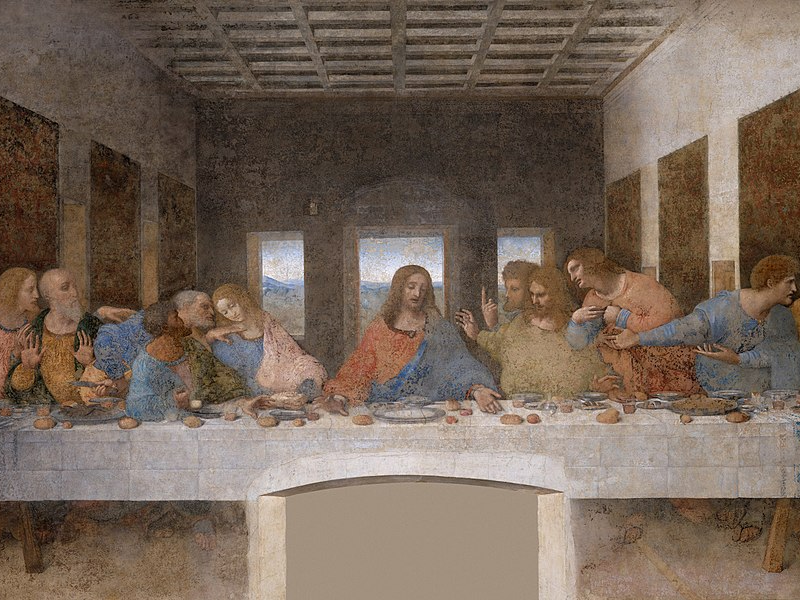
the_last_supper_-_leonardo_da_vinci_-_high_resolution_32x16-2
Biblical Horizons

Was the Last Supper a Passover?

Some readers of my essay, “ Strange and Glorious New Rites ,” have written to object that I have strained a gnat and swallowed a camel. I have strained out the gnat of a possible link to the memorial bread of the minchah (Lev. 2), while overlooking the camel that…

by James B. JordanMarch 22, 2011

screenshot-2023-09-19-at-10-48-12-am
Biblical Horizons

Planetary Judgments

In his lectures on Comparative Religion, Eugen Rosenstock-Huessy points to five fundamental gods that were over ancient man and still can dominate us today, and which must be respected. When we sin, we respect these gods more than we respect the Creator, disobeying the First Word: “You will have no…

by James B. JordanMarch 22, 2011

timothy-eberly-djj49s6ud2o-unsplash
Biblical Studies

Notes on the Book of Judges

A. Israel’s failure to hold land against the Canaanites. Progressive compromise, leading to judgment. 1:1–2:5. B. Israel’s idolatry, the cycle of judges, and war as God’s chastisement. 2:6–3:6. C. Northern Gentiles (Mesopotamia), and Othniel. 3:7-11. D. Lot: Moab, and Ehud. 3:12-13. E. Minor judge: Shamgar. 3:31. F. Canaanites opposed. Women…

by James B. JordanMarch 21, 2011
briana-tozour-mrfapsuyy8a-unsplash
Biblical Horizons

Principalities and Powers, (Part 2)

The great question for the emerging East, for Asia and other awakening third world areas, for an emerging nation like China is, “what fate awaits them?” They are now emerging from an analogous paganism that the West emerged from centuries ago. Here an amazing quotation from David Aikman, the Time…

by Richard BledsoeMarch 15, 2011
sinitta-leunen-dvibhmzsy8e-unsplash
Colossians

The Principalities and Powers, Part I

Paul contends that with the death of Christ on the Cross, there was an overcoming of the Principalities and the Powers (Col. 2:15). A great deal has been written on this subject over the last 60 years. What was for a long time either ignored, or regarded by liberal scholars…

by Richard BledsoeMarch 10, 2011
jimpreaching
Biblical Horizons

Eating and Drinking Together

One of the odd customs that has arisen in the 20th century is that many evangelical churches warp the rites of the Lord’s Supper by insisting that everyone wait so that they eat and drink together. Supposedly this is to emphasize the unity of the Church. This practice has no…

by James B. JordanMarch 3, 2011

Showing page 205 of 309

See all

Showing page 33 of 43

See all
History

Bacon’s Induction

Stanley Fish, in a renowned essay on Bacon’s Essays , concludes that the essays are “unfinished with a purposefulness that makes the bestowing of the adjective less a criticism than a compliment.” He insists on the provisionality of knowledge, and “communicates that provisionality [in the Essays ] by letting the…

September 5, 2006
Science

Lamarck Redux?

In a fascinating review of a recent book on evolution (TNR, Sept 4), Oren Harman suggests that reports of the death of Lamarck, proclaimed in every middle school science classroom for well over a century, may be somewhat exaggerated: Lamarckism “is and isn’t” dead. Insofar as Lamarckism meant “direct adaptive…

September 5, 2006

Trinity and Self-Gift

One of Barth’s main contentions that only a Triune God can give Himself. A monadic God might give, but would give something less than Himself. Only if God is both Himself and another, and only if that other is fully God, can God give Himself .

September 5, 2006

Complex reprobation

Bavinck writes: “It is wrong to conceive the decree as if it determined only a person’s end and coerced him or her in that direction regardless of what they did. The decree is as inconceivably rich as reality itself. It is, in fact, the fountainhead of all reality. It encompasses…

September 5, 2006
History

Epistemology of ingratitude

Blumenberg writes ( Legitimacy of the Modern Age ) that with Bacon, Kepler, and particularly Leibniz, the Augustinian suspicion of curiosity is overcome, and knowledge thereafter “justifies itself; it does not owe thanks for itself to God; it no longer has any tinge of illumination or graciously permitted participation but…

September 4, 2006
History

Physics and Metaphysics

Blumenberg says that Bacon drew a distinction between metaphysics and physics in terms of human control: “The former has as its object the unalterable law beyond man’s influence; the latter comprises all knowledge of the operative and material causes that man can transpose in order to influence given states of…

September 4, 2006

Showing page 1799 of 2212

Browse by Category

In Medias Res

Your weekly digest for all things Theopolis.

Donate

Theopolis is nearly 100% donor-supported. Consider joining us on our mission.