Theopolis Logo

Writing

Explore our collection of theological essays, biblical studies, and reflections on faith and culture.

See all
trinity-1
Theology

Trinity and History

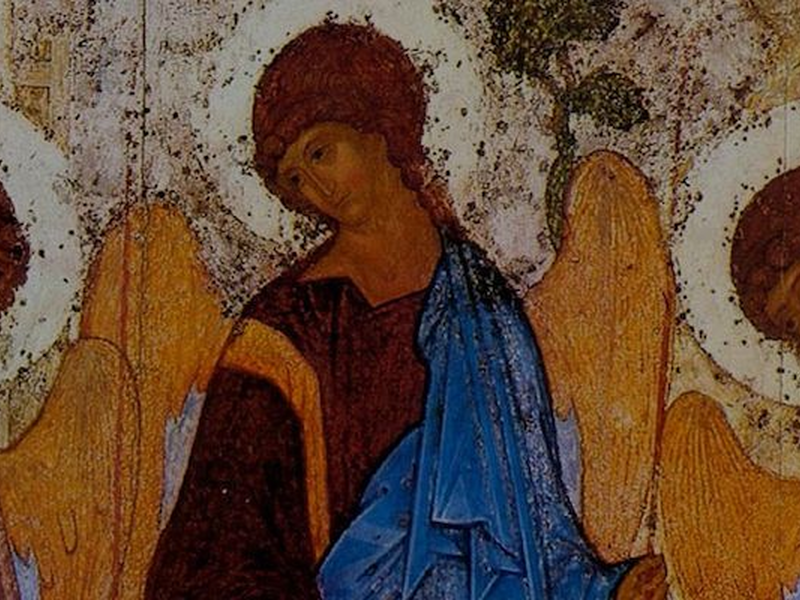
In The Meaning of History , Nikolai Berdyaev argues that the ancient Greeks had no concept of history and no philosophy of history because their concept of God and the world did not allow for it. “They conceived the world aesthetically, as a finite and harmonious cosmos. The most representative…

by Bogumil JarmulakNovember 20, 2014

preston-goff-xncifslw0jw-unsplash
Revelation

Liturgy: A Parable

You know how the curtain parts at the beginning of a play, and you see a new scene, with characters and sets and incidents that had remained hidden up til then? Church last week was like that. Except the curtain was made up of all the things I thought were…

by Peter LeithartNovember 18, 2014
pedestrians
Genesis

Human Trafficking in God's World

Genesis 3 records the terrible day when humanity fell into sin and shalom was violated. This was a moment of cosmic treason, when Adam and Eve violated their relationship with God by rebelling against His command and fell into the severe ignobility we all experience. The entrance of sin wrecked…

by Justin HolcombNovember 13, 2014
medievalilluminatedmanuscript
Biblical Studies

Bible.

One of the most important contributions of twentieth-century Catholic nouvelle théologie , and of Henri de Lubac and Jean Danielou in particular, was its rehabilitation of the typological interpretation of the Bible practiced by patristic and medieval theologians. Typological interpretation assumes that events and institutions of the Old Testament present…

by Peter LeithartNovember 11, 2014
pope-francis
Biblical Law

Capital Punishment and Rules of Evidence

The Catholic News Service has reported that Pope Francis has called for the abolition of not only the death penalty, but also of life in prison. In a meeting with representatives of the International Association of Penal Law, the pontiff called for all “Christians and people of good will” to…

by Gregory LaughlinNovember 6, 2014
olympus-digital-camera
Culture

Violence Against Women

Each year, the United Nations designates November 25 as the International Day for the Elimination of Violence against Women. U.N. Secretary-General Ban Ki-moon explains, “Violence against women and girls takes many forms and is widespread throughout the globe. It includes rape, domestic violence, harassment at work, abuse in school, female…

by Justin HolcombNovember 4, 2014

Showing page 166 of 309

See all

Showing page 33 of 43

See all
Philosophy

Hermeneutics v. Semiology

According to Michel Foucault, what Marx, Nietzsche, and Freud introduce is an age of interpretation. He develops one of the implications of this by suggesting there is a “fierce war” between semiology and hermeneutics, between treating words as signs and treating them as interpretations. Nietzsche in particular, Foucault claims, develops…

August 26, 2006
Literature

Shakespeare and Bible

Steven Marx’s Shakespeare and the Bible (Oxford, 2000), purports to be the “first book to explore the pattern and significance” of Shakespeare’s biblical allusions. Perhaps. The results are mixed. Each chapter of Marx’s book attempts to show structural, plot, and thematic parallels between a section of Scripture and a play…

August 26, 2006
Literature

Ubiquitous Shakespeare

Exploring Lake Superior in 1840, one Charles W Penny wrote, “We read the Bible I dare say much more than we would have done had we been in Detroit. Shakespeare was duly honoured, as he is every day when we travel. When on the water, some one of the party…

August 26, 2006

Divine Love

The Persons of the Trinity live out an eternal round of self-sacrificing love. If a proof text is needed, John 15 supplies it. 1) Jesus says, “as the Father loved Me, I have also loved you” (v. 9). Jesus’ love for the disciples is modeled on the Father’s for Him.…

August 26, 2006

Queen of the Sciences

John Stuart Mill declared at the beginning of his book on logic that “Logic is the common judge and arbiter of all particulars investigations. It does not undertake to find evidence, but to determine whether it has been found. Logic neither observes, nor invents, nor discovers; it judges.”

August 24, 2006
History

New

Hans Jonas writes in an essay on technological and scientific advance that one of the key cultural shifts in the sixteenth and seventeenth centuries was a, well, new understanding of “new,” and a corresponding revision of traditional ways of thinking about history: “A sign of this spreading mood is the…

August 24, 2006

Showing page 1804 of 2212

Browse by Category

In Medias Res

Your weekly digest for all things Theopolis.

Donate

Theopolis is nearly 100% donor-supported. Consider joining us on our mission.