Theopolis Logo

Writing

Explore our collection of theological essays, biblical studies, and reflections on faith and culture.

See all
james-coleman-642705-unsplash
Biblical Studies

The Literary Structure of the Whole Bible

In this essay we will think about how the whole Bible is structured as one Word of God. To begin with, there is only one Bible, not two. While we divide the Bible into Old and New Testaments, that division has no more meaning than divisions into chapters and verse,…

by James B. JordanMay 16, 2019

img_1689
Catholicity

Catholicity and Integrity

How should one badly bruised and inadequate church relate to another? (I am not addressing the blessed possessors of absolutely perfect churches, naturally.) I believe there are three things to bear in mind. First, we must be open to the values in other Christian traditions - even Roman Catholic and…

by James B. JordanMay 14, 2019
screen-shot-2019-05-09-at-2-51-07-pm
Chiasm

Fertile Meaning

The third and sixth day have a second creative act. Note the chiastic arrangement of the material in these special acts and the parallelism between them, see the figure below. The author arranges the description of each day as a chiasm. Each line in the chiasm is mated with a…

by Scott FairbanksMay 9, 2019
29994-adam-and-eve-in-the-garden-of-eden-800w-tn
Biblical Theology

Nakedness and Clothing

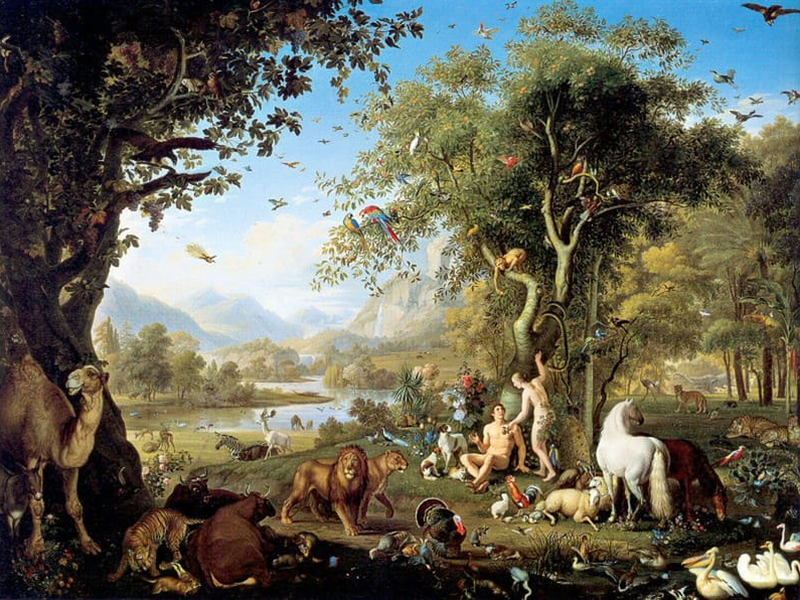
Now the two of them were naked, the man and his woman, and they did not sense shame (Genesis 2:25) The nakedness of Adam and Eve requires several comments. First of all, against those who think that nakedness is what God intended for humanity as a permanent estate, we have…

by James B. JordanMay 7, 2019
screenshot-2023-10-27-at-1-23-26-pm
Epistemology

Restoring the “Other” in Mother

I’ve been reflecting on the meaning of integration, and our longing for integration in a fragmented world. I’ve been connecting my own covenant epistemology further with the thought of scientist-philosopher Michael Polanyi, artist Makoto Fujimura, and Classical Christian metaphysician D.C. Schindler. In my last post , and now in this…

by Esther Lightcap MeekApril 30, 2019
sixteen-miles-out-al48tflf4e8-unsplash
Hermeneutics

Go Tell that Vixen!

Luke 13:31-33 is one of the strangest passages in the Gospel of Luke. It begins with a time note that sounds emphatic “At that very hour.” Then, we are told of Pharisees bringing a message that Herod wants to kill Jesus! In His answer, Jesus speaks of a three day…

by Ralph Allan SmithApril 23, 2019

Showing page 79 of 309

See all

Showing page 33 of 43

See all
History

Hermeticism and gnosticism

In his book on the hermeticist Hegel, Magee gives this helpful sketch of the differences between gnosticism and hermeticism: “Gnosticism and Hermeticism both believe that a divine ‘spark’ is implanted in man, and that man can come to know God. However, Gnosticism involves an absolutely negative account of creation. It…

August 16, 2006
Philosophy

Hegel and Hermes

In a 2001 book (Cornell), Glenn Magee argues that Hegel must be understood as a hermetic thinker. Hegel claims to have moved beyond the ancient notion of philosophy as “pursuit of wisdom” to an absolute knowledge that is simply identical with wisdom. As Magee says, “Hegel’s claim to have attained…

August 16, 2006

MacIntyre on Heroic virtue

In After Virtue , Alasdair MacIntyre provides a neat discussion of the virtue and selfhood in Greek antiquity. The unity of ARETE, virtue, “resides . . . in the concept of that which enables a man to discharge his role,” and refers to “excellence of any kind,” whether in a…

August 16, 2006
Philosophy

Logos: Harmony and Recipe

One Marc Cohen of the University of Washington, offers this account of the “logos” of Heraclitus in an online lecture outline: First, “There is an orderly, law-governed process of change in the universe. (Compare fragment 80 with Anaximander, who equates strife with injustice; for Heraclitus, strife is justice, and is…

August 16, 2006

Life of Heraclitus

Some selections from Diogenes Laertius’ “Life of Heraclitus, from his “Lives and Opinions of Eminent Philosophers: “He was above all men of a lofty and arrogant spirit, as is plain from his writings, in which he says, ‘Abundant learning does not form the mind; for if it did, it would…

August 16, 2006
History

Asocial sociability

Seigel devotes a fascinating section of his book ( Idea of the Self ) to a summary of Mandeville’s Fable of the Bees , in which Mandeville describes what Kant characterized as the “asocial sociability” of human nature. Social in the sense that even in a natural state, prior to…

August 15, 2006

Showing page 1809 of 2212

Browse by Category

In Medias Res

Your weekly digest for all things Theopolis.

Donate

Theopolis is nearly 100% donor-supported. Consider joining us on our mission.