Theopolis Logo

Writing

Explore our collection of theological essays, biblical studies, and reflections on faith and culture.

See all
james-coleman-642705-unsplash
Biblical Studies

A Daughter of Abraham

Some of the key ways Biblical writers draw attention to important details in their stories are by the use of key words, repetition, and structural devices like chiasms and parallel constructions. The Bible sounds different, even odd, to us sometimes because of the use of these and similar literary conventions.…

by Ralph Allan SmithApril 16, 2019

why-man-cannot-quit-porn-alone
Autonomy

Rehabilitating Autonomy

It is pretty standard in conservative Christian circles to condemn unbelief for pretensions of “autonomy.” Cornelius Van Til famously (at least among those of us who knows who he is) said that “There is no alternative but that of theonomy and autonomy.” Greg Bahnsen appealed to this quotation by labeling…

by Mark HorneApril 9, 2019
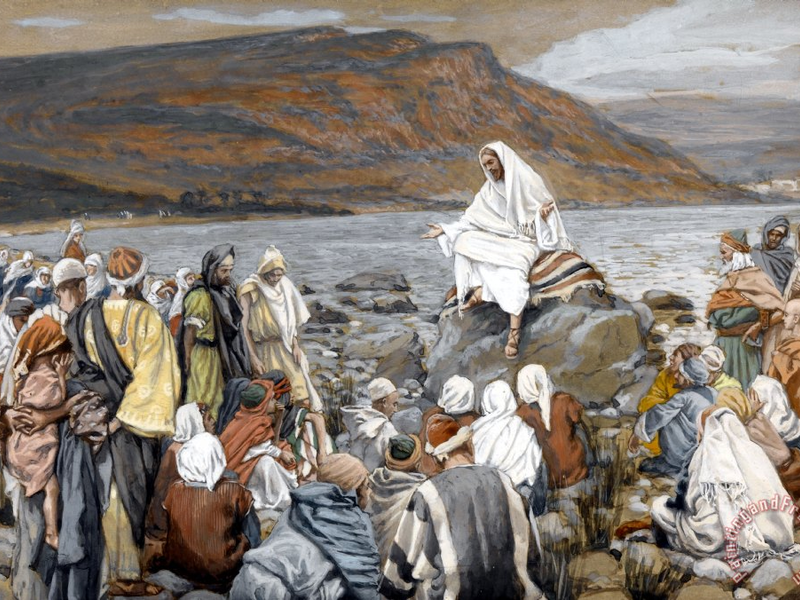
jesus_preaching
John

Jesus: Preacher of Paradox

Jesus was the greatest teacher who ever taught — the Light of the World, whose pure Truth brought sight to the blind (John 9). Almost no one — even those who speak openly against Him — disputes His reputation as a wise and good teacher of the way of love.…

by Ralph Allan SmithApril 2, 2019
esther
Esther

The Book of Esther in Covenant History

It is clear that the events in Esther are an integral part of the history of the formation of the Restoration Covenant Era. Amalek attacks. Amalek is spoiled. The spoils are used to build the Temple, in the sense that the crude Temple of Zerubbabel can now be glorified with…

by James B. JordanMarch 28, 2019
img_9025
How to Worship

A Positive View of Music

It is not coincidental that John Calvin speaks most strongly in defense of vernacular language just after his defense of singing in church. "From this also it plainly appears that public prayers must be couched not in Greek among the Latins, nor in Latin among the French or English, as…

by John AhernMarch 26, 2019
david-4
Biblical Theology

The Reopened Wounds of Jacob

In A Voyage Around the World , George Anson recounts the effects of scurvy upon an unfortunate man: But a most extraordinary circumstance, and what would be scarcely credible upon any single evidence, is, that the scars of wounds which had been for many years healed, were forced open again…

by Alastair RobertsMarch 19, 2019

Showing page 80 of 309

See all

Showing page 33 of 43

See all
History

Hermeticism and gnosticism

In his book on the hermeticist Hegel, Magee gives this helpful sketch of the differences between gnosticism and hermeticism: “Gnosticism and Hermeticism both believe that a divine ‘spark’ is implanted in man, and that man can come to know God. However, Gnosticism involves an absolutely negative account of creation. It…

August 16, 2006
Philosophy

Hegel and Hermes

In a 2001 book (Cornell), Glenn Magee argues that Hegel must be understood as a hermetic thinker. Hegel claims to have moved beyond the ancient notion of philosophy as “pursuit of wisdom” to an absolute knowledge that is simply identical with wisdom. As Magee says, “Hegel’s claim to have attained…

August 16, 2006

MacIntyre on Heroic virtue

In After Virtue , Alasdair MacIntyre provides a neat discussion of the virtue and selfhood in Greek antiquity. The unity of ARETE, virtue, “resides . . . in the concept of that which enables a man to discharge his role,” and refers to “excellence of any kind,” whether in a…

August 16, 2006
Philosophy

Logos: Harmony and Recipe

One Marc Cohen of the University of Washington, offers this account of the “logos” of Heraclitus in an online lecture outline: First, “There is an orderly, law-governed process of change in the universe. (Compare fragment 80 with Anaximander, who equates strife with injustice; for Heraclitus, strife is justice, and is…

August 16, 2006

Life of Heraclitus

Some selections from Diogenes Laertius’ “Life of Heraclitus, from his “Lives and Opinions of Eminent Philosophers: “He was above all men of a lofty and arrogant spirit, as is plain from his writings, in which he says, ‘Abundant learning does not form the mind; for if it did, it would…

August 16, 2006
History

Asocial sociability

Seigel devotes a fascinating section of his book ( Idea of the Self ) to a summary of Mandeville’s Fable of the Bees , in which Mandeville describes what Kant characterized as the “asocial sociability” of human nature. Social in the sense that even in a natural state, prior to…

August 15, 2006

Showing page 1809 of 2212

Browse by Category

In Medias Res

Your weekly digest for all things Theopolis.

Donate

Theopolis is nearly 100% donor-supported. Consider joining us on our mission.