
Theopolis Logo

Writing

Explore our collection of theological essays, biblical studies, and reflections on faith and culture.

See all
giammarco-zeh-ljawhtg-unsplash
Biblical Horizons

OPEN BOOK: Views and Reviews

Isaac E. Mozeson, The Word: The Dictionary that Reveals the Hebrew Sources of English (Northvale, NJ: Jacob Aaronson Inc., 1995), 310 pp. Reviewed by James B. Jordan. Once there was only one language in the world, the language God spoke to Adam. At the Tower of Babel, there came to…

by James B. JordanJune 28, 1996
tim-wildsmith-j6jv-mkdzqs-unsplash
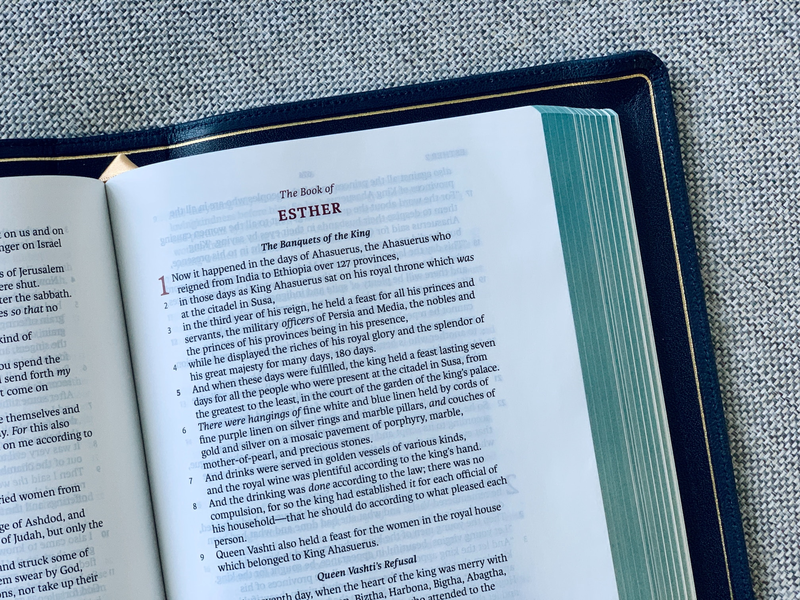
Esther

Esther: Historical & Chronological Comments (IV)

2. The Setting of the Book of Esther A. Xerxes (continued from previous issue) Ezra 6:14 says that the Jews finished building "according to the command of the God of Israel and the decree of Cyrus and Darius and Artaxerxes king of Persia." The problem with this verse is that…

by James B. JordanJune 28, 1996

ales-krivec-4mibe6zg5r0-unsplash
Acts

Jesus and Amalek

This essay goes with our previous study of the Amalek pattern back in Biblical Horizons No. 2. Since many do not have this essay, entitled "The Battle of Gog and Magog," let me cite the relevant paragraphs: Note in Genesis 12-15 that Abram moves into the land after escaping Pharaoh…

by James B. JordanJune 28, 1996
aaron-burden-1ebsmyrau-s-unsplash
Proverbs

The Strange Woman

Proverbs 7:6-23 is one of several passages early in the Proverbs in which Solomon warns his son about the wiles and dangers of the "strange woman." It is certainly quite proper to take these as straightforward warnings against sexual sins, and these are certainly warnings that need to be impressed…

by Peter LeithartJune 27, 1996
jan-kahanek-g3o5ztrk2e4-unsplash
Biblical Studies

Some Observations

1. In Luke 4:20 we read that after Jesus finished reading from Isaiah, "the eyes of all in the synagogue were fixed upon Him." This is usually taken in a psychological sense: They were amazed at Jesus somehow. I suggest that, as always, a merely psychological reading is a modern…

by James B. JordanMay 28, 1996
tim-wildsmith-j6jv-mkdzqs-unsplash
Esther

Esther: Historical & Chronological Comments (III)

2. The Setting of the Book of Esther Up to now we have assumed what we must prove, that the king in Esther is Darius the Great. While Biblical chronologists have usually taken this position, commentators on the book of Esther have often taken others as the king. One view,…

by James B. JordanMay 28, 1996

Showing page 265 of 309

See all

Showing page 33 of 43

See all
Philosophy

Giving and receiving

Pickstock offers a theological alternative to Derrida’s concern that giving is impossible since any hope of a return robs the gift of its character as gift and puts it instead into the category of mutually advantageous capitalist exchange. Pickstock points out that in renouncing “the return” as “an ethical category,”…

July 14, 2005
Philosophy

Lists

Pickstock uses the “list” as a crucial example of the dominance of asyndeton of modern discourse. Lists provide “a powerful organization of random phenomena,” but at the same time the order slips into chaos because there is nothing linking the “unrelated elements” of the list. They are merely juxtaposed spatially,…

July 14, 2005
Philosophy

Derrida’s indifference

Pickstock again: For Derrida, there is ultimately no real difference, since all difference is univocally violent. There are particular differences of this and that, but they are all different in the same way - violently different - so there is a “transcendent” sameness. Derrida’s absolute difference collapses is really penultimate…

July 14, 2005
Philosophy

Derrida’s indifference

Pickstock again: For Derrida, there is ultimately no real difference, since all difference is univocally violent. There are particular differences of this and that, but they are all different in the same way - violently different - so there is a “transcendent” sameness. Derrida’s absolute difference collapses is really penultimate…

July 14, 2005
Theology

Socrates and the erotic gaze

Catherine Pickstock argues that Socrates does not articulate a “metaphysical” view of self-presence or interiority. She focuses on the erotic character of knowledge in the Phaedrus, which she points out, radically undermines the interior/exterior boundary. Knowledge on this view always involves ecstasy, an attraction to an object outside, and the…

July 14, 2005

Structure in 2 Kings 16

2 Kings 16 is organized chiastically: 1. Formulaic introduction, 16:1-4 2. Threat to Jerusalem, and bribe of Tiglath-pileser, 16:5-9 3. State visit to Damascus, 16:10-11 (altar) 4. Ahaz ministers at the altar, 16:12-14 3’. Continuing worship at the altar, 16:15-16 2’. Tribute to Tiglath-pileser and plunder of temple, 16:17-18 1’.…

July 13, 2005

Showing page 1962 of 2212

Browse by Category

In Medias Res

Your weekly digest for all things Theopolis.

Donate

Theopolis is nearly 100% donor-supported. Consider joining us on our mission.