Theopolis Logo

Writing

Explore our collection of theological essays, biblical studies, and reflections on faith and culture.

See all
screen-shot-2023-02-24-at-1-48-41-pm
Biblical Chronology

Chronologies and Kings: Part 3

The chronology of the Kings of Judah and Israel can be divided into three periods with clearly defined boundaries. The first period begins with the death of Solomon and the accessions of Rehoboam in the south (Judah) and Jeroboam in the north (Israel). It ends with the deaths of Ahaziah…

by James B. JordanSeptember 22, 1991

johann-walter-bantz-clv9dfjlwac-unsplash-1-5
Art

Arts & Play, Part 1

Most modern people regard the arts as essentially decorative. They are hardly very important, as compared to business, politics, or religion. Yet, from a Biblical point of view, the arts lie close to the heart of human life. The universe that God created is itself an artistic masterpiece by the…

by James B. JordanSeptember 22, 1991
6273e95e0f5ac766258d8cf3_joshuasconquestoftheland-2
Exodus

Chronologies and Kings, Part 2

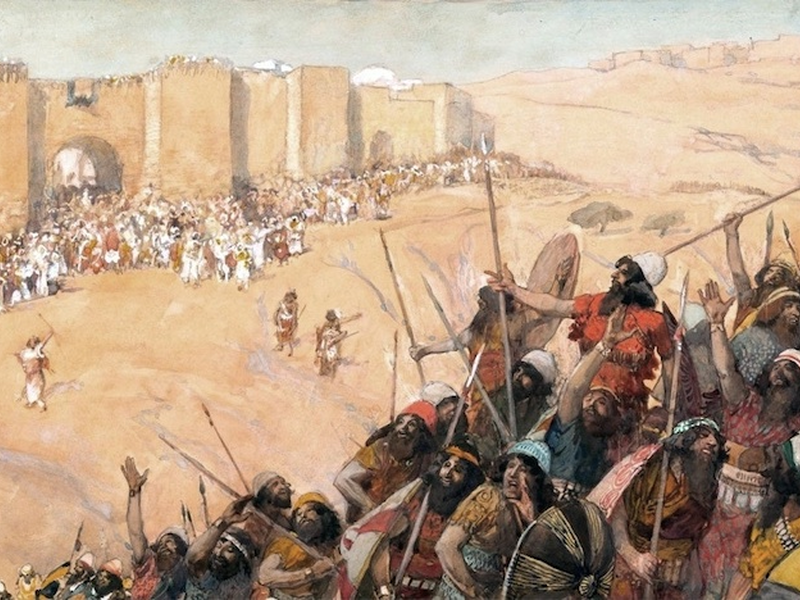
Before we move into a detailed survey of the history and chronology of the kings of Israel and Judah, let us review the chronological information that leads from creation to the kingdom. This will be helpful both to new readers of these essays, and a reminder for those who have…

by James B. JordanAugust 22, 1991
screen-shot-2023-02-24-at-1-48-41-pm
Biblical Chronology

Chronologies and Kings, Part 1

We have completed our overall survey of Biblical chronology, and now turn to a detailed examination of the Biblical information regarding the chronology of Israel’s kings. The first piece of chronological information we have regarding Israel’s kings is very cryptic, and it serves as an guide to the interpretation of…

by James B. JordanJuly 22, 1991
screenshot-2023-08-09-at-2-13-32-pm
Biblical Horizons

Book Review - To Take Place: Toward Theory in Ritual

Jonathan Z. Smith, To Take Place: Toward Theory in Ritual (Chicago: University of Chicago Press, 1987). Reviewed by Peter J. Leithart. The philosophes of the 18th century often attacked Christendom using the tools of anthropology and comparative religion. Rousseau contrasted the idyllic equality of primitive, natural peoples with the bondage…

by Peter LeithartJuly 6, 1991
screenshot-2023-08-09-at-1-47-41-pm
Biblical Horizons

Book Review: The Rise of Magic in Early Medieval Europe

Valerie I. J. Flint, The Rise of Magic in Early Medieval Europe (Princeton University Press, 1991). Reviewed by Peter J. Leithart. Valerie I. J. Flint, Professor of History at the University of Auckland, New Zealand, is refreshingly candid about her reasons for undertaking a study of The Rise of Magic…

by Peter LeithartJuly 6, 1991

Showing page 295 of 309

See all

Showing page 33 of 43

See all

Subsystemic Conflict

I rene Dingel's contribution to Lutheran Ecclesiastical Culture, 1550-1675 examines the role of controversy in the formation of Lutheran theology and practice. She examines several early intra-Lutheran controversies, among them the contest between the Gnesio-Lutherans led by Matthias Flacius and the “Philippists” led by Melanchthon. The former accused the latter…

February 7, 2017

Renewal and Temple Personnel

I n a 1991 article in the Journal of Biblical Literature , John H. Wright asks what role 1 Chronicles 23–27 play in the Chronicler's account. The chapters look like a digression. David delivers an exhortation to Solomon (1 Chronicles 23) and makes him king (23:1), but that is followed…

February 7, 2017

Ecumenism in the Sixteenth Century

D uring the early decades of the Reformation, there were efforts on all sides to reconcile Reformers and Catholics. Diarmaid MacCulloch ( Europe's House Divided ) describes the ecumenical efforts of the Archbishop of Cologne, Hermann von Wied. Von Wied was not a promising candidate to be a reform leader:…

February 6, 2017

Disenchantment and Anthropomorphism

A t the beginning of their Dialectic of Enlightenment , Max Horkheimer and Theodor Adorno define Enlightenment in terms of disenchantment of the world: “Enlightenment’s program was the disenchantment of the world. It wanted to dispel myths, to overthrow fantasy with knowledge. Bacon, ‘the father of experimental philosophy,' brought these…

February 3, 2017
Reformation

Rival Tidinesses

T he Reformation and the Catholic reaction to it caused a massive split within Western Christendom, and further divisions proliferated from that original split. As Diarmaid MacCulloch points out ( Reformation: Europe's House Divided 1490–1700 ), that is only one part of the story: “The Protestant communities, which for a…

February 3, 2017

Crackdown

“T he most influential work of Italian spirituality in these years, the Beneficio di Cristo (published 1543, and apparently selling in tens of thousands before translation into other European languages), illustrates this continuing shapelessness—it was itself a somewhat shapeless work. It was written by a Cassinese Benedictine monk Don Benedetto…

February 3, 2017

Showing page 209 of 2212

Browse by Category

In Medias Res

Your weekly digest for all things Theopolis.

Donate

Theopolis is nearly 100% donor-supported. Consider joining us on our mission.