Theopolis Logo

Writing

Explore our collection of theological essays, biblical studies, and reflections on faith and culture.

See all
aaron-burden-1ebsmyrau-s-unsplash
Biblical Horizons

The Sin of Ham and the Curse of Canaan, Part 1

The history of the sin of Ham and the curse of Canaan comes in the middle of the Generations of Noah, a section of Genesis that begins at Genesis 6:9 and extends to the closing notice, Genesis 11:9. To understand the story better, it is necessary to get in mind…

by James B. JordanJune 3, 1997

david-weber-f_nj26i9wyo-unsplash-1
Eucharist

You and Your Son and Daughter: Christ’s Communion with Young Children

This paper was written to persuade people who were members of the Presbyterian Church in America. It should be accessible to anyone who believes in baptizing infants–especially to those who consider themselves a part of the Reformation Tradition. References to “our Confession” or “our standards” invoke the Westmeinster Confession of…

by Mark HorneJune 3, 1997
screenshot-2023-07-27-at-10-25-35-am
Baptism

The Westminster Standards & Sacramental Efficacy

Version 1.2 I write this brief essay in order to address a problem I have encountered. I keep reading explanations of doctrine of the sacraments fundamentally empty of the content which was once held by virtually all Reformed confessions and formulations. Furthermore, I read explanations and commentaries on the Westminster…

by Mark HorneJune 3, 1997
aaron-burden-h8s0pf2rcqs-unsplash
Biblical Chronology

John Sailhamer Weighs In, Part 2

We continue our analysis of John Sailhamer’s book *Genesis Unbound: A Provocative New Look at the Creation Account* (Multnomah Books, 1996), which argues that Genesis 1:2ff. is not about the creation of the whole world, but about the preparation of the Land of Eden, which is also the Promised Land.…

by James B. JordanMay 31, 1997
screenshot-2023-08-30-at-11-50-23-am
Matthew

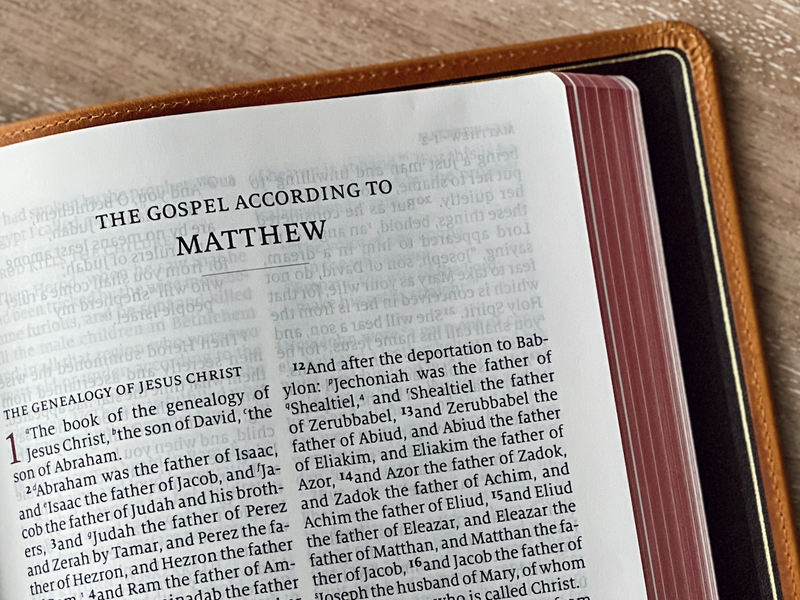
Toward a Chiastic Understanding of the Gospel According to Matthew, Part 2

III. Death of God’s Firstborn in the real Egypt: This huge chiasm has as its center the betrayal of Peter, as the leader of the disciples himself rejects Jesus. Peter holds an oficial position as high priest among the disciples of the incarnate Lord. His rejection of Jesus is the…

by James B. JordanMay 31, 1997
aaron-burden-qjdzyt_k8xg-unsplash
Eucharist

A Response to Rev. Bacon’s Argument that Manna was not a Sacrament

I wrote a response to Rev. Richard Bacon’s tract, What Mean Ye by This Service , a copy of which I borrowed from the library at Covenant Theological Seminary. However, I recently discovered that a new appendix was added to the version available on the Blue Banner’s web page. This…

by Mark HorneMay 29, 1997

Showing page 257 of 309

See all

Showing page 33 of 43

See all

Are Trinitarian Persons Persons?

B oethius defined persona as an “individual substance of a rational nature ( natuae rationalis individua substantia ). This definition is often cited as evidence that medieval Trinitarian theology, deeply influenced by Boethius, did not teach that the Trinitarian “Persons” are persons in the modern sense of the term -…

January 19, 2017

Justice and Righteousness

N estled within several chapters of 1 Chronicles that describe David's wars, 1 Chronicles 18:14–17 explains the purpose of those wars: To establish Yahweh's order of justice in Israel, an order of justice that David himself administers and mediates. Having conquered Philistia, Moab, Ammon, and Edom, David reigns over “all…

January 18, 2017

God's Sacramental Self-Gift

What does God give in creation and redemption? He gives us our own existence, and that the gift He gives is Himself. Both are true. Luther captures this latter point in his 1528 “Confession”: “These are the three Persons and the one God, Who has given Himself to us wholly…

January 17, 2017

Anthropomorphism and Nature

I n his Essays in Anthropology , Robert Spaemann observes that “the beginning of modern science was marked by polemics against the concept of nature. The concept of nature is now taken to be anthropomorphic, while the essentially teleological idea of things in the cosmos having ‘movement in themselves' is…

January 17, 2017

American Covenant

P hilip Gorski's American Covenant examines the American tradition of civil religion or civic republicanism from the Puritans through President Obama. Gorski contrasts this tradition with the two most belligerent contenders in contemporary American politics, religious nationalism and radical secularism. Civil religion differs from radical secularism in its anthropology (communitarian…

January 16, 2017

Conrad’s Mesmerizing Obscurity

K ate Symondson begins her TLS review of recent editions of Joseph Conrad’s letters and his novel Victory with a reminder of FR Leavis's complaint about Conrad's “insistence on inexpressible and incomprehensible mystery.” Symondson writes, “Instead of the Victorian preference for pellucid—almost pedantic—hardened detail, mist shrouds and encircles Conrad's fiction.…

January 13, 2017

Showing page 216 of 2212

Browse by Category

In Medias Res

Your weekly digest for all things Theopolis.

Donate

Theopolis is nearly 100% donor-supported. Consider joining us on our mission.