Theopolis Logo

Writing

Explore our collection of theological essays, biblical studies, and reflections on faith and culture.

See all
kelly-sikkema-gpoh17dxqdm-unsplash
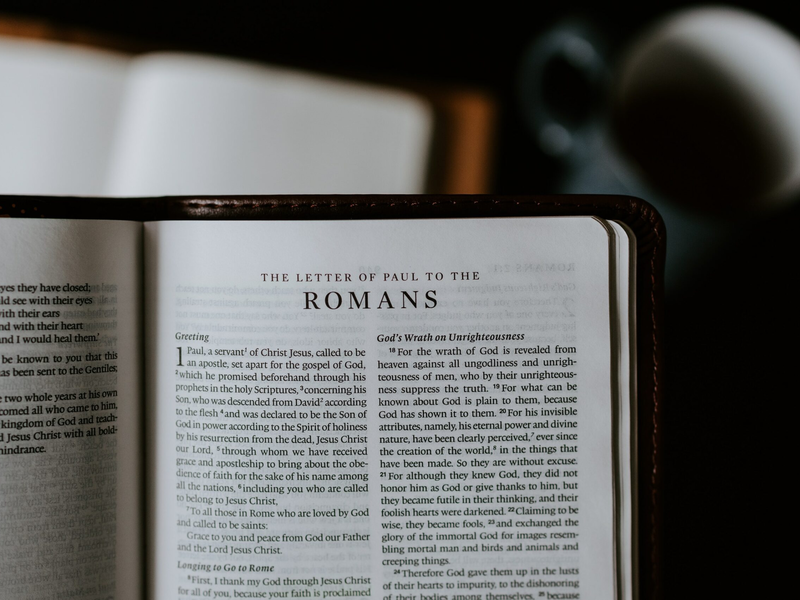
Romans

A Pathway into Romans, Addendum

An addendum to the earlier post on Romans. In my first essay, I pointed out how the role of the sin of Joseph’s brothers in bringing about Joseph’s exaltation in Egypt, and the resulting salvation of the world from famine, might show us and explanation to some of the distinctive…

by Mark HorneMarch 7, 2013

kelly-sikkema-gpoh17dxqdm-unsplash
Romans

A Pathway into Romans

When Paul wrote to the Romans, he was obviously writing a missionary support letter of a sort. One can read Romans 1.15 and then jump into 15.23 (“[S]ince I no longer have any room. . . .) without losing virtually any coherence. Yet into this letter he “dropped,” as it…

by Mark HorneMarch 5, 2013
preston-goff-xncifslw0jw-unsplash
Biblical Studies

Mapping of Time

The Westminster Confession says that each passage has one meaning , not many, and that gets picked up on by lots of people who are suspicious of and do not like typological readings of Scripture. I will defer to wiser and more learned heads than mine as to exactly what…

by Richard BledsoeMarch 1, 2013
kiwihug-l4gw27xzn1i-unsplash
John

How Jesus Saved the World | (Part 2)

By arresting, torturing, and killing Jesus, the authorities thought that they were securing well being and peace again in their society by means of the tried and true method of a single-victim scapegoat. Everyone’s thirst for violence will be satisfied and we can get on with the business of everyday…

by Jeff MeyersFebruary 28, 2013
lea-v-z2ied5ktd-8-unsplash
Ecclesiology

A Vision of Social Harmony

This is the second in a series of essays on "Continuing the Reformation." In his important though sadly unavailable book, Calvin's Doctrine of the Church (Brill, 1970), Benjamin Charles Milner argues persuasively that in Calvin's view God's perfect order for His creation, an order that was to grow and develop…

by James B. JordanFebruary 25, 2013
markus-winkler-aid-xyrtlec-unsplash
Theopolis News

Jordan Lectures

Trinity House Fellow James Jordan recently gave a series of lectures in London on how to read the Bible. They are available online at NorthLondonChurch.org .

by Peter LeithartFebruary 24, 2013

Showing page 198 of 309

See all

Showing page 33 of 43

See all
Music

Romanticism and the Rhetoric of Music

Prior to the 18th century, writes Mark Evan Bonds, instrumental music was considered inferior to music that accompanied words ( Wordless Rhetoric ). According to the artistic theory developed by Johann Georg Sulzer, “instrumental music . . . can be pleasing and at times moving, but its ‘meaning' is relatively…

April 7, 2016

Areopagus in Acts

Paul's speech on the Areopagus is the second of three programmatic speeches in Acts. Robert Tannehill notes ( The Narrative Unity of Luke-Acts ) that they trace the progression of Paul's mission: “Careful planning is indicated by the fact that we have three different types of speeches addressed to three…

April 7, 2016

World Self-Revealed

In his now-classic Sources of the Self (143-4), Charles Taylor observes that Descartes is “in many ways profoundly Augustinian: the emphasis on radical reflexivity, the importance of the cogito, the central role of a proof of God's existence which starts from ‘within,' from features of my own ideas, instead of…

April 6, 2016

Pure Music

Mark Evan Bonds's Absolute Music is a study of 19th-century debates concerning the purity or absoluteness of music, the question of the possibility and/or propriety of segregating music from the rest of the world, music as a sheer aesthetic experience, an experience of pure beauty or simple form. It's a…

April 6, 2016

Pattern of Paul's Mission

Robert Tannehill points out in the second volume of his Narrative Unity of Luke-Acts that Acts 16-19 depicts a recurring “public accusation type-scene.” Prior to chapter 16, the public accusations against Paul and his associates are not highlighted. After chapter 16, they are. “In 16:20-21 Romans accuse the mission of…

April 6, 2016

Autonomy v. Independence

Matthew B. Crawford argues in The World Beyond Your Head that things discipline our attention and thus make genuine knowledge of the world possible: “ things that can serve as a kind of authority for us, by way of structuring our attention. The design of things—for example, cars and children’s…

April 5, 2016

Showing page 302 of 2212

Browse by Category

In Medias Res

Your weekly digest for all things Theopolis.

Donate

Theopolis is nearly 100% donor-supported. Consider joining us on our mission.