Theopolis Logo

Writing

Explore our collection of theological essays, biblical studies, and reflections on faith and culture.

See all
kelly-sikkema-gpoh17dxqdm-unsplash
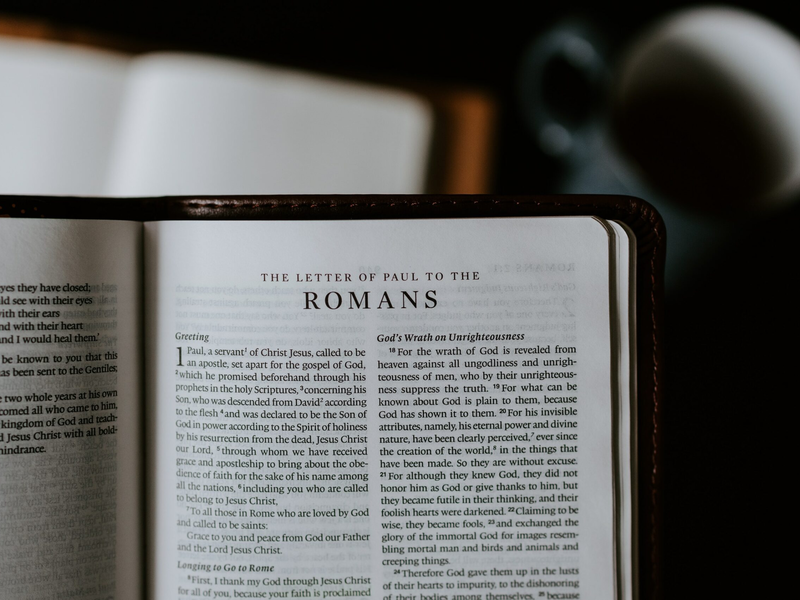
Romans

Paul’s Gospel & the Theme of Romans

Paul, a bond-servant of Christ Jesus, called as an apostle, set apart for the gospel of God, which He promised beforehand through His prophets in the holy Scriptures, concerning His Son, who was born of a descendant of David according to the flesh, who was declared the Son of God…

by Mark HorneJune 6, 2003

screenshot-2023-07-27-at-10-25-35-am
History

The Nelda Boswell Scroll: The Apostle Paul’s Town Hall Meeting in Iconium

With the surprising discovery of the Nelda Boswell scroll historians have deciphered its contents and concluded that the apostle Paul returned to the region of Galatia shortly after he wrote the letter that we call Galatians. The evidence suggests that a number of local pastors, elders, and deacons, along with…

by Jeff MeyersJune 6, 2003
aaron-burden-qjdzyt_k8xg-unsplash
Jonah

Jonah, the Judaizers, and the Gospel

Second Temple Judaism was a form of covenantal nomism, according to E. P. Sanders’ terminology. This means that Torah-observance was a way of expressing loyalty to the Lord of the covenant who had graciously elected Israel. I think Sanders’ view (taken up in bits and pieces and with some modifications…

by Rich LuskJune 6, 2003
Theologia

Gratitude or Faith?

We often hear that the key to Christian obedience is thankfulness for what God has done. But the Bible stresses faith and hope much more than gratitude. The Baptist pastor and author John Piper has written, “Nowhere in the Bible is gratitude connected explicitly with obedience as a motivation. We…

by Mark HorneJune 6, 2003
aaron-burden-qjdzyt_k8xg-unsplash
Federal Vision

God’s Righteousness & Our Justification

One of the questions that is commonly asked about Tom Wright regards his teaching about how Paul uses the term “the righteousness of God.” Since Wright’s interpretation of the term in Paul’s epistles is commonly mentioned in passing but rarely analyzed, it seems like a good idea to explicitly spell…

by Mark HorneJune 6, 2003
jordan-wozniak-xp_agmeea6s-unsplash
Genesis

Forever Means Forever: God’s Promises to the Jews

If God promised a certain land to the seed of Abraham, saying that it would be theirs “forever” (Gen. 13:15), why do Reformed churches teach that the Jews permanently lost their right to the land? What about all these Old Testament “forever” promises and prophesies made to the Jews? How…

by Jeff MeyersJune 6, 2003

Showing page 230 of 309

See all

Showing page 33 of 43

See all

Heavenly Court, Caesar's Court

David Aune has argued that the heavenly court scene of Revelation 4-5 “bears such a striking resemblance to the ceremonial of the imperial court and cult that the latter can only be a parody of the former” (5). He proposes this against the main “major competing view” that “the heavenly…

January 11, 2016

Culture and Biology in Judith Butler

Will Rees says in his TLS review of Judith Butler's Senses of the Subject that the “biggest topic of discussion” has been Butler's writing style, which he characterizes as “torturous.” It's not just the style. In her poststructuralist early work, Butler argues that “gender identities are constructed by the machinations…

January 11, 2016

The Church in Britain's Future

The Economist reports on “an immigrant-led surge in London churchgoing. Weekly participation in Christian services in the capital has grown by 16% since 2005. Most devout Londoners (88%) worship outside the ranks of the established church whose spires pierce the skyline; about a third are Pentecostal.” It is the same…

January 11, 2016

Anti-Kantian

Drawing on the work of CS Peirce, Giovanni Maddalena ( The Philosophy of Gesture ) argues that pragmatism must be understood as more than an anti-Cartesian movement in philosophy. To the critique of Descartes, it adds a critique of Kant. He summarizes Peirce's critique. Kant is a nominalist, which means…

January 8, 2016

Doctrina sacra

The Summa Theologica of Thomas Aquinas has a clear surface structure. A first part, two parts of the second part, and a third part. But that obvious structure doesn't tell the whole story. Thomas explains the structure of the treatise at the outset (1, 2): “Because the chief aim of…

January 8, 2016

Tribes, Tongues, Peoples, Nations

In his Climax of Prophecy , Richard Bauckham’s devotes a long, complicated, fascinating chapter to an analysis of the phrase “tribes, tongues, nations, peoples” (and variations) in Revelation. The arrangement of the lists varies, but the variations are not random. They reinforce substantive connections between different parts of the book.…

January 8, 2016

Showing page 334 of 2212

Browse by Category

In Medias Res

Your weekly digest for all things Theopolis.

Donate

Theopolis is nearly 100% donor-supported. Consider joining us on our mission.