
Theopolis Logo

Writing

Explore our collection of theological essays, biblical studies, and reflections on faith and culture.

See all
giammarco-zeh-ljawhtg-unsplash
Biblical Horizons

OPEN BOOK: Views and Reviews

Isaac E. Mozeson, The Word: The Dictionary that Reveals the Hebrew Sources of English (Northvale, NJ: Jacob Aaronson Inc., 1995), 310 pp. Reviewed by James B. Jordan. Once there was only one language in the world, the language God spoke to Adam. At the Tower of Babel, there came to…

by James B. JordanJune 28, 1996
tim-wildsmith-j6jv-mkdzqs-unsplash
Esther

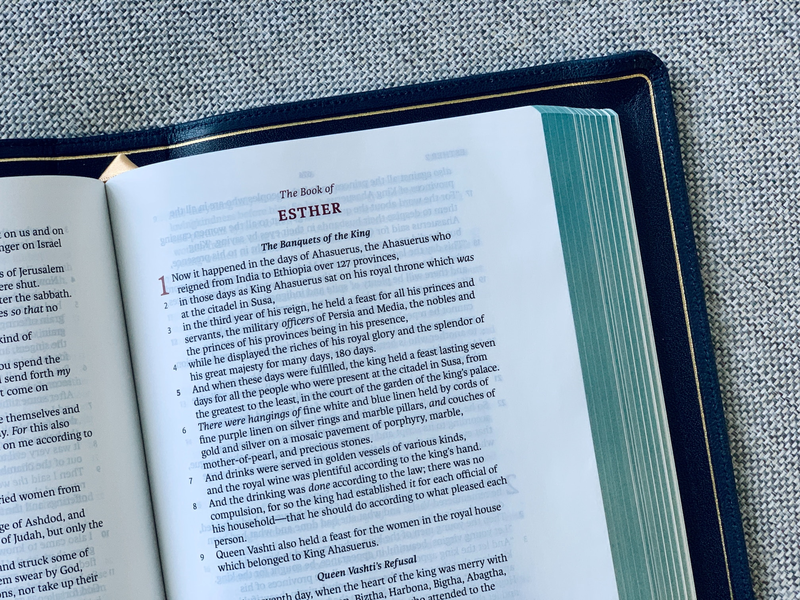
Esther: Historical & Chronological Comments (IV)

2. The Setting of the Book of Esther A. Xerxes (continued from previous issue) Ezra 6:14 says that the Jews finished building "according to the command of the God of Israel and the decree of Cyrus and Darius and Artaxerxes king of Persia." The problem with this verse is that…

by James B. JordanJune 28, 1996

ales-krivec-4mibe6zg5r0-unsplash
Acts

Jesus and Amalek

This essay goes with our previous study of the Amalek pattern back in Biblical Horizons No. 2. Since many do not have this essay, entitled "The Battle of Gog and Magog," let me cite the relevant paragraphs: Note in Genesis 12-15 that Abram moves into the land after escaping Pharaoh…

by James B. JordanJune 28, 1996
aaron-burden-1ebsmyrau-s-unsplash
Proverbs

The Strange Woman

Proverbs 7:6-23 is one of several passages early in the Proverbs in which Solomon warns his son about the wiles and dangers of the "strange woman." It is certainly quite proper to take these as straightforward warnings against sexual sins, and these are certainly warnings that need to be impressed…

by Peter LeithartJune 27, 1996
jan-kahanek-g3o5ztrk2e4-unsplash
Biblical Studies

Some Observations

1. In Luke 4:20 we read that after Jesus finished reading from Isaiah, "the eyes of all in the synagogue were fixed upon Him." This is usually taken in a psychological sense: They were amazed at Jesus somehow. I suggest that, as always, a merely psychological reading is a modern…

by James B. JordanMay 28, 1996
tim-wildsmith-j6jv-mkdzqs-unsplash
Esther

Esther: Historical & Chronological Comments (III)

2. The Setting of the Book of Esther Up to now we have assumed what we must prove, that the king in Esther is Darius the Great. While Biblical chronologists have usually taken this position, commentators on the book of Esther have often taken others as the king. One view,…

by James B. JordanMay 28, 1996

Showing page 265 of 309

See all

Showing page 33 of 43

See all

Heavenly Court, Caesar's Court

David Aune has argued that the heavenly court scene of Revelation 4-5 “bears such a striking resemblance to the ceremonial of the imperial court and cult that the latter can only be a parody of the former” (5). He proposes this against the main “major competing view” that “the heavenly…

January 11, 2016

Culture and Biology in Judith Butler

Will Rees says in his TLS review of Judith Butler's Senses of the Subject that the “biggest topic of discussion” has been Butler's writing style, which he characterizes as “torturous.” It's not just the style. In her poststructuralist early work, Butler argues that “gender identities are constructed by the machinations…

January 11, 2016

The Church in Britain's Future

The Economist reports on “an immigrant-led surge in London churchgoing. Weekly participation in Christian services in the capital has grown by 16% since 2005. Most devout Londoners (88%) worship outside the ranks of the established church whose spires pierce the skyline; about a third are Pentecostal.” It is the same…

January 11, 2016

Anti-Kantian

Drawing on the work of CS Peirce, Giovanni Maddalena ( The Philosophy of Gesture ) argues that pragmatism must be understood as more than an anti-Cartesian movement in philosophy. To the critique of Descartes, it adds a critique of Kant. He summarizes Peirce's critique. Kant is a nominalist, which means…

January 8, 2016

Doctrina sacra

The Summa Theologica of Thomas Aquinas has a clear surface structure. A first part, two parts of the second part, and a third part. But that obvious structure doesn't tell the whole story. Thomas explains the structure of the treatise at the outset (1, 2): “Because the chief aim of…

January 8, 2016

Tribes, Tongues, Peoples, Nations

In his Climax of Prophecy , Richard Bauckham’s devotes a long, complicated, fascinating chapter to an analysis of the phrase “tribes, tongues, nations, peoples” (and variations) in Revelation. The arrangement of the lists varies, but the variations are not random. They reinforce substantive connections between different parts of the book.…

January 8, 2016

Showing page 334 of 2212

Browse by Category

In Medias Res

Your weekly digest for all things Theopolis.

Donate

Theopolis is nearly 100% donor-supported. Consider joining us on our mission.