Theopolis Logo

Writing

Explore our collection of theological essays, biblical studies, and reflections on faith and culture.

See all
tanner-mardis-xuxghzhibn4-unsplash-1-2
Biblical Studies

Tweets-turned-Notes on the Bible’s Chronology

Summary In what follows, I will consider the “year-stamps” employed in Scripture, i.e., statements of the form, “Such-and-such an event took place in the Xth year of Y.” In the process, I will suggest some ways in which the Biblical narrative might relate to events in the extra-Biblical world, though…

by James BejonJuly 16, 2019
durer-prodigal-son-2
Luke

Perspectives on the Prodigal, (Part 2)

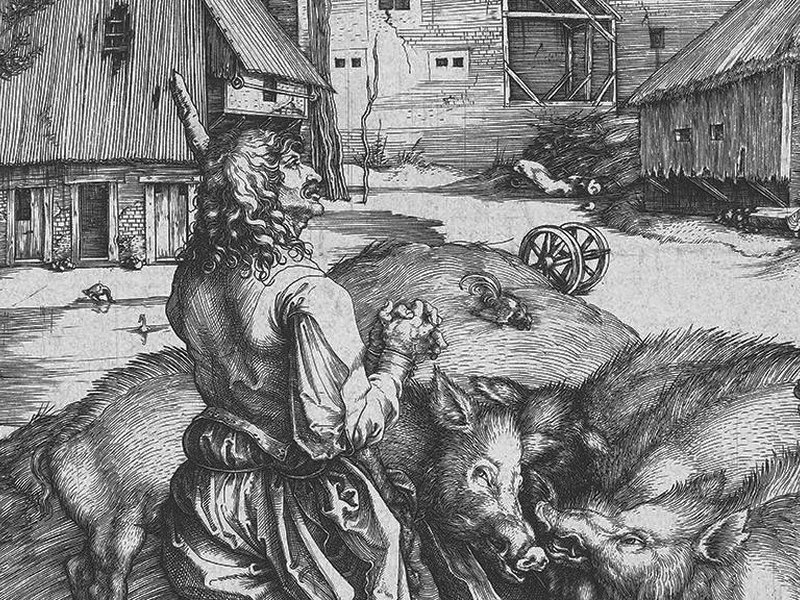
In the first essay on the parable of the Prodigal Son, I suggested that the problems commentators and others encounter in interpreting Jesus three-part parable are not accidental. These are not just problems in our ignorance of cultural background. They are intentional features of the stories —stories designed to poke…

by Ralph Allan SmithJuly 11, 2019
durer-prodigal-son-2
Luke

Perspectives on the Prodigal, (Part 1)

The story of the Prodigal Son is perhaps the most well-known story in the Bible. As others have observed, it may also be one of the most misunderstood. In two short essays, I will point out features of this story that are commonly neglected, aspects of Jesus’ parable that might…

by Ralph Allan SmithJuly 9, 2019
de-rijke-man-en-de-arme-lazarus-by-jacopo-da-ponte-16th-century
Luke

Lazarus and the Rich Man

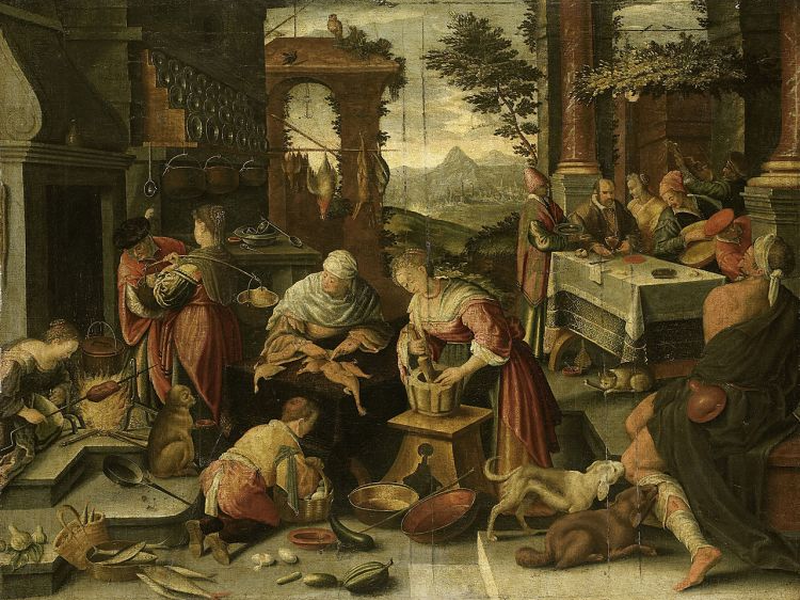
The parable of Lazarus and the nameless rich man is not an independent story. It is part of a long context that begins in Luke 15:1, where Jesus is eating with tax collectors and sinners and the scribes and Pharisees grumble. In response to their hardheartedness, Jesus tells a three-part…

by Ralph Allan SmithJuly 4, 2019
aaron-burden-uynrnfdkjwg-unsplash
Luke

Everybody has Dropsy - Luke 14:1-24

The Bible is written so that even when a reader cannot pick up on what might be deeper or more detailed aspects of a text, there is virtually always a message to be heard. In the ancient world, where the “reader” of Scripture would likely be a church official facing…

by Ralph Allan SmithJuly 2, 2019
communion
Biblical Theology

Fruit Trees and Grain Plants

The distinction between garden (or vineyard) and field begins in Genesis 2. This relates to the ordering of the formless world. Plants of the field are contrasted with the garden planted by God in Genesis 2:5&8. Later on, under the Old Covenant the Israelites will be required to keep their…

by James B. JordanJune 27, 2019

Showing page 77 of 309

See all

Showing page 33 of 43

See all

Ruined Temples

Ezekiel says that Yahweh deals with Judah so that Judah will know that He is Lord. When there are bodies scattered on the high places, then Israel will know that Yahweh is Lord (Ezekiel 6:13-14). When Judah is devastated and the Lord shows no pity, then Judah will know that…

October 30, 2015

What I Want From Catholics

My wish list for Catholics is terribly old-fashioned and terribly assertive. There’s hardly space here to defend my positions or thoroughly critique the Catholic position. So, this may end up sounding like a drive-by shooting or a childish tantrum. I trust that I can formulate my wish list with enough…

October 29, 2015

The Love of the Divine Warrior

Aren Wilson-Wright examines the elements of “Northwest Semitic combat myth” in the theme verses of the Song of Songs (8:6b-7a). I have my doubts about the presence of the combat myth, but even within a strictly biblical frame, his observations illuminate the text. He points out, for instance, that 8:6b…

October 29, 2015

Meals and the Gospel Truth

Stephen Turley ends The Ritualized Revelation of the Messianic Age by elaborating the point made in his title: “for early Pauline communities, rituals and beliefs were in fact irreducible to one another. As such, our ritual reading of Paul provides an exegetical corrective to the traditional relation posited between theology…

October 29, 2015

Sabbath in Society

Tyler Atkinson uses Bonaventure and Luther as his primary interlocutors in his study of the “work ethic” of Ecclesiastes, Singing at the Winepress . The two giants offer quite divergent readings of the book. For Bonaventure, the vanity of the world encourages withdrawal; for Luther, though, the goal is to…

October 29, 2015

Luther, Faith, and Love

In his contribution to Reformation Readings of Paul , David C. Fink argues that Luther's doctrine of justification was an effort to “grapple with the great commandment” to love God (45). Luther vehemently rejected the medieval notion that faith as the material cause had to be formed by love as…

October 28, 2015

Showing page 357 of 2212

Browse by Category

In Medias Res

Your weekly digest for all things Theopolis.

Donate

Theopolis is nearly 100% donor-supported. Consider joining us on our mission.