Theopolis Logo

Writing

Explore our collection of theological essays, biblical studies, and reflections on faith and culture.

See all
screen-shot-2022-08-04-at-9-36-57-am
Matthew

Paul Doesn't Care About Universal Individual Sinfulness or General Revelation

One reason readers assume Paul is trying to prove that all human beings are sinful is that they understand him to be arguing that no one can keep the law. That means, they think, his opponents must believe that human nature is potentially sinless. Taking Paul’s statement that, if you…

by Mark HorneJune 17, 2013

karsten-wurth-imegmbunara-unsplash
Mission

Dreams and Visions

[Note: This post was written prior to our name changing to Theopolis Institute.] What is Trinity House for? Three things: We aim to advance the reformation of the church and, through the church, to promote the renewal of culture; in furthering reformation, we aspire to be a site of fraternal,…

by Peter LeithartJune 12, 2013
sixteen-miles-out-al48tflf4e8-unsplash
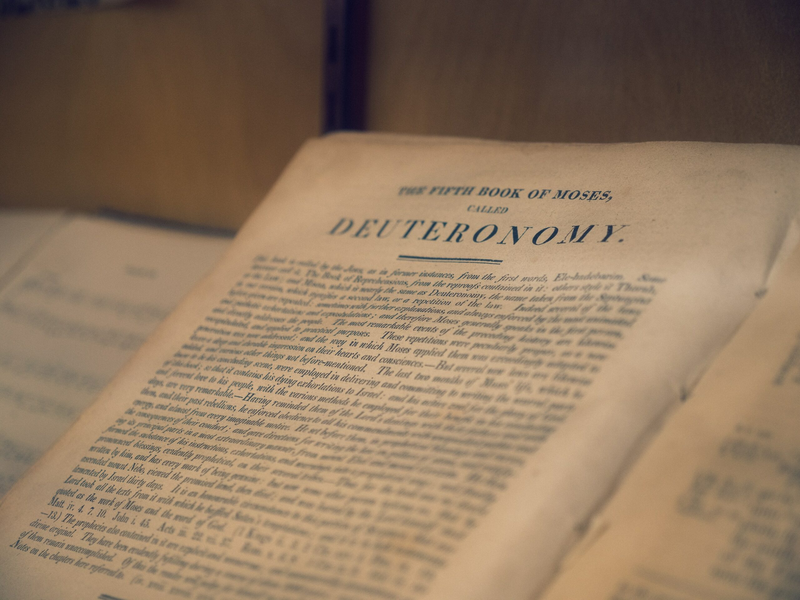
Deuteronomy

Sons to Yahweh your God!

This is the third in a series of studies of the Third Word, and especially of Deuteronomy 14. In 1979 Stephen Kaufman penned a groundbreaking essay on Deuteronomy, arguing that it was a meticulously structured and carefully composed book. In his view, chapters 12 to 26 in particular follow the…

by Ralph Allan SmithJune 10, 2013
kelly-sikkema-gpoh17dxqdm-unsplash
Romans

How is Wrath Revealed?

A large mistake is made in understanding Romans if one assumes that Paul is concerned with proving the fact that no one can ever live without sin—or that all attempts at obeying God’s commands are at least tainted with human sinfulness. The first problem with such an assumption is that…

by Mark HorneJune 5, 2013
chris-bair-ndczc5739ck-unsplash
Deuteronomy

The Third Word

This is the second in a series of studies on the Third Word, and especially on the food laws of Deuteronomy 14. In the second part of this series, I argue that Moses’ reworking of the Ten Words in Deuteronomy 5 includes adding nuance to the Third Word. This prepares…

by Ralph Allan SmithJune 3, 2013
yannis-papanastasopoulos-if_29sed7ta-unsplash
Culture

Turning Babel into a Beast

Recent months have brought a lively discussion of Christian participation in the culture war. On the one hand, the pro-life movement appears to be making some slow progress on the abortion issue. The trial of abortionist and serial murderer Kermit Gosnell has the potential to awaken those who are nominally…

by Joe RigneyMay 29, 2013

Showing page 193 of 309

See all

Showing page 33 of 43

See all

Eucharist, Evangelical and Catholic

Theodore Beza's opening speech at the Colloquy of Poissy was a model of irenic Protestantism (Nugent, Ecumenism is the Age of the Reformation ). He stressed the creedal commonalities of Rome and the Reformed, and argued that the differences were “matters of interpretation” and unnecessary accretions” (97). As Nugent says,…

September 16, 2015

Phone Booth

Way out in the Mojave desert is a phone booth. Some years ago, a resident of LA published a picture, which inspired Godfrey Daniels to start calling the phone. He was prepared to keep calling for years until someone picked up. A month later, Lorene Aiken, who worked at the…

September 16, 2015

Conformist Subversives

To secular analysts, “Progressive Pentecostals” seem naively apolitical. In their study of Global Pentecostalism , Donald Miller and Tetsunao Yamamori agree that the “integral” or “holistic” Pentecostals that they study are not social gospellers or liberation theologians. They don't aim to “reform social structures or challenge government policies.” They are…

September 16, 2015

Exit and Voice

What do people do when social institutions go wrong? Albert Hirschman ( Exit, Voice, and Loyalty ) argues that there are two main alternatives: One withdraws (exit) or one speaks out (voice). He admits that these categories sound “suspiciously neat,” but defends them because they “reflect a more fundamental schism:…

September 15, 2015

Deuteronomic Penalties

Deuteronomy 25 begins like a law-and-order text. Judges are to condemn the wicked and justify the innocent. Convicted criminals are beaten, and beaten publicly “in the presence” of the judge, beaten as much as his crime deserves (v. 2). Verse 3 takes a slight turn: It places a limit on…

September 15, 2015

Irenicism in the Reformation

“Perhaps irenicism is the finest synthesis of Renaissance and Reformation,” writes Donald Nugent in his 1974 monograph on the Colloquy of Poissy, Ecumenism in the Age of the Reformation (4). The irenicists had roots in the late medieval conciliarism and in Cusa's efforts to unite contraries, but it was humanism…

September 15, 2015

Showing page 376 of 2212

Browse by Category

In Medias Res

Your weekly digest for all things Theopolis.

Donate

Theopolis is nearly 100% donor-supported. Consider joining us on our mission.