
Theopolis Logo

Writing

Explore our collection of theological essays, biblical studies, and reflections on faith and culture.

See all
giammarco-zeh-ljawhtg-unsplash
Biblical Horizons

OPEN BOOK: Views and Reviews

Isaac E. Mozeson, The Word: The Dictionary that Reveals the Hebrew Sources of English (Northvale, NJ: Jacob Aaronson Inc., 1995), 310 pp. Reviewed by James B. Jordan. Once there was only one language in the world, the language God spoke to Adam. At the Tower of Babel, there came to…

by James B. JordanJune 28, 1996
tim-wildsmith-j6jv-mkdzqs-unsplash
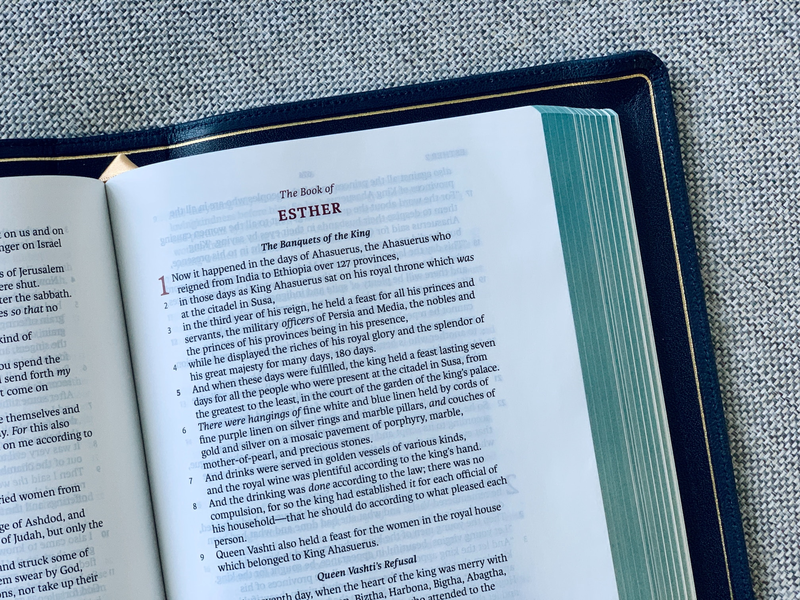
Esther

Esther: Historical & Chronological Comments (IV)

2. The Setting of the Book of Esther A. Xerxes (continued from previous issue) Ezra 6:14 says that the Jews finished building "according to the command of the God of Israel and the decree of Cyrus and Darius and Artaxerxes king of Persia." The problem with this verse is that…

by James B. JordanJune 28, 1996

ales-krivec-4mibe6zg5r0-unsplash
Acts

Jesus and Amalek

This essay goes with our previous study of the Amalek pattern back in Biblical Horizons No. 2. Since many do not have this essay, entitled "The Battle of Gog and Magog," let me cite the relevant paragraphs: Note in Genesis 12-15 that Abram moves into the land after escaping Pharaoh…

by James B. JordanJune 28, 1996
aaron-burden-1ebsmyrau-s-unsplash
Proverbs

The Strange Woman

Proverbs 7:6-23 is one of several passages early in the Proverbs in which Solomon warns his son about the wiles and dangers of the "strange woman." It is certainly quite proper to take these as straightforward warnings against sexual sins, and these are certainly warnings that need to be impressed…

by Peter LeithartJune 27, 1996
jan-kahanek-g3o5ztrk2e4-unsplash
Biblical Studies

Some Observations

1. In Luke 4:20 we read that after Jesus finished reading from Isaiah, "the eyes of all in the synagogue were fixed upon Him." This is usually taken in a psychological sense: They were amazed at Jesus somehow. I suggest that, as always, a merely psychological reading is a modern…

by James B. JordanMay 28, 1996
tim-wildsmith-j6jv-mkdzqs-unsplash
Esther

Esther: Historical & Chronological Comments (III)

2. The Setting of the Book of Esther Up to now we have assumed what we must prove, that the king in Esther is Darius the Great. While Biblical chronologists have usually taken this position, commentators on the book of Esther have often taken others as the king. One view,…

by James B. JordanMay 28, 1996

Showing page 265 of 309

See all

Showing page 33 of 43

See all

Preaching Repentance

John (Mark 1:4; Luke 3:3) and Jesus (Matthew 4:17; Mark 1:15) come preaching repentance. Over time, though, it becomes clear that the Jews are not repenting, and Jesus begins to denounce the cities that don't respond to His message of repentance (Matthew 11:20-21; 12:41; Luke 10:13; 11:32). Jesus' lurid predictions…

June 17, 2015

Race in the American Church

It was not uncommon in the early 19th century for blacks and whites to worship together. As Niebuhr observes, they “did not enjoy complete fellowship” and there was certainly not equality between them, yet “they participated in the same services and were members of the same denominations. . . .…

June 17, 2015

Denominationalism Is Secularization

“Denominational pluralism, on the American plan,” wrote Will Herberg, “means thoroughgoing secularization” (36). By “secularization,” Herberg meant a gap between “conventional” and “operational” religion. Conventional religion is that practiced by religious adherents - Protestants, Catholics, Jews, Muslims, Buddhists. Operational religion is the set of beliefs, rituals, and values that shapes…

June 17, 2015

Numerical Patterning in Revelation 16

After the third angel turns the rivers and springs to blood by pouring the passion of God into them, the “angel of the waters” praises the righteous judgment of God (Revelation 16:5-7). His speech of praise is chiastically arranged, with a modification: A. I heard the angel of waters saying…

June 16, 2015

Denominationalism and the New World

Timothy L. Smith offers a vivid portrait of the “loneliness and danger,” as well as the fragmentation of traditional social networks, that the earliest American settlers had to face (contribution to Denominationalism , 50-1): “Gone was the material heritage of the European village - the cottages and garden plots, the…

June 16, 2015

Social Sources of Denominationalism

H. Richard Niebuhr is altogether too much the sociologist. He displays the habit of peering past theological debates to the “roots” of conflict and division in the church, roots that always turn out to be fundamentally social roots. As Milbank stressed, this sort of sociology turns “society” into an explanatory…

June 16, 2015

Showing page 411 of 2212

Browse by Category

In Medias Res

Your weekly digest for all things Theopolis.

Donate

Theopolis is nearly 100% donor-supported. Consider joining us on our mission.