Theopolis Logo

Writing

Explore our collection of theological essays, biblical studies, and reflections on faith and culture.

See all
aaron-burden-h8s0pf2rcqs-unsplash
Galatians

The Restoration of the Galatians

While controversies over the writings of Paul continue in various corners of the intellectual globe, the word of God given through Paul and his scribe and all of the church’s interpreters and translators over the last two millennia is still readily available to the lofty and the lowly. Paul, as…

by Grace LangnessMarch 25, 2013

kiwihug-l4gw27xzn1i-unsplash
Deuteronomy

Law and History: How to Read the Law of Moses (Part 2)

The second in a series of studies in Deuteronomy. Deuteronomy 22:30: A man shall not take his father’s wife, and shall not uncover his father’s wing (Hebrew: kanaf ). There are a number of unusual features in this law that mark it out from the previous context, indicating that it…

by Ralph Allan SmithMarch 20, 2013
200403-moss-pilate-tease_pncfq5
History

Victimhood and the Gospel

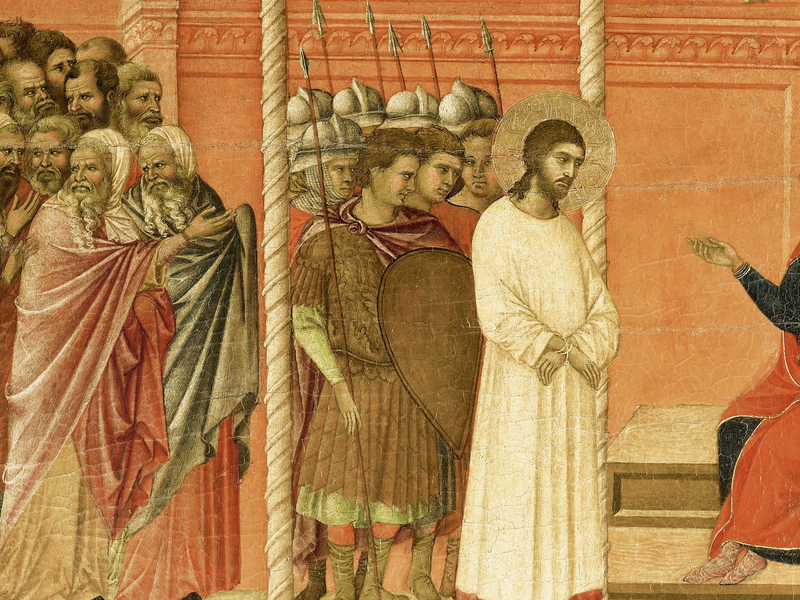
The texts of Christianity have been slowly at work, under the power of the Holy Spirit for 2000 years now. If we could be magically transported back into the world of two millennia ago, modern Americans would be shocked at the cruelty of that world. There was no concern for…

by Richard BledsoeMarch 18, 2013
aaron-burden-1ebsmyrau-s-unsplash
Luke

The Dysfunctional Family of the Gadarene Madman

The Story of the Gadarene Madman is told in all three synoptic Gospels (Matthew 8:28-34, Mark 5:1-20, Luke 8:26-37). Jesus ventures into a Gentile area when He passes over the Sea of Galilee. Upon disembarking from his boat, he is immediately met by a demon-possessed madman. Upon meeting Jesus, he…

by Richard BledsoeMarch 13, 2013
aaron-burden-1ebsmyrau-s-unsplash
Deuteronomy

Law and History: How to Read the Law of Moses

Part 1 of a multi-part series of studies on Deuteronomy 22:30-23:8. Eric Auerbach, in his classic work on Western literature, devotes his first chapter to contrasting Homer with the Bible. Of Homer, he writes of the “need of Homeric style to leave nothing which it mentions half in darkness and…

by Ralph Allan SmithMarch 12, 2013
markus-winkler-aid-xyrtlec-unsplash
Theopolis News

James Jordan in Korea, Japan

Trinity House Fellow James B. Jordan will be a speaker at an International Conference on Biblical Symbolism that will be held in Seoul on Monday, May 27 in 2013. He will address "The Importance of Biblical Symbolism and Symbolic Interpretation of the Bible." The conference will have three other speakers…

by Peter LeithartMarch 9, 2013

Showing page 197 of 309

See all

Showing page 33 of 43

See all

Semper reformanda

In his contribution to Denominationalism , Winthrop Hudson suggests that one of the principles of English Independent ecclesiology was the refusal to “make our present judgment and practice a binding law unto ourselves for the future” (25). It's a stance based on a recognition of fallibility and proneness to sin.…

June 10, 2015

Where there's fire...?

The Greek kapnos (“smoke”) appears twelve times in Revelation. Hold that number, because it might be significant. The twelve uses are grouped into six scenes, alternating between smoke having to do with the worship and glory of God and smoke from hell or hell's allies: A. Smoke of incense, 8:4…

June 9, 2015

On Subjects and Objects

“I believe in subjects and objects,” writes David Martin at the outset of his Future of Christianity (4). He illustrates with a sociological example: He believes in “religious visions of the world to come and the objective status of the dynamics of social and political action.” Martin intends to resist…

June 9, 2015

Notes Toward a Johannine Theory of Labor

Jesus tells His disciples that they are being sent into a field to harvest where they had not sown or labored. “One sows, and another reaps” (John 4:35-38). It's a principle of ministry: Ministry starts in the middle. Even in a fresh mission field, the missionary doesn't enter a place…

June 9, 2015

Sources of Schism

In a study of American Protestant schisms between 1890 and 1990, John Sutten and Mark Chaves claim that churches don't divide for purely doctrinal reasons, but rather “in response to attempts by denominational elites to achieve organizational consolidation” (171). The 1848 schism within the Plymouth Brethren, for instance, was about…

June 9, 2015

Owen and Mather on Union

In an essay on “Rules of Walking in Fellowship,” John Owen claimed that “Union is the main aim and most proper fruit of love ; neither is there any thing or duty of the saints in the gospel pressed with more earnestness and vehemency of exhortation than this.” For Owen,…

June 8, 2015

Showing page 415 of 2212

Browse by Category

In Medias Res

Your weekly digest for all things Theopolis.

Donate

Theopolis is nearly 100% donor-supported. Consider joining us on our mission.