Theopolis Logo

Writing

Explore our collection of theological essays, biblical studies, and reflections on faith and culture.

See all
al-elmes-zicz-ow1lxa-unsplash-1
Advent

Triune Advent

Our creeds, taking cues from Matthew 28:18-20 and other biblical texts, speak of the order of the Trinity as “Father, Son, Spirit.” This order is evident in the order of redemption as well: the Father sends the Son, who ascends to heaven to receive and send the Spirit. Luke 1,…

by Peter LeithartDecember 4, 2013

aaron-burden-1ebsmyrau-s-unsplash
Language

Relations, Uncreated and Created

The category of “relation” has long been central to Trinitarian theology, [1] but in recent theology it has become a transcendental, as many theologians have argued that relationality is the leading feature not only of divine life but of created life. [2] Human beings made in the image of the…

by Peter LeithartDecember 2, 2013
markus-winkler-aid-xyrtlec-unsplash
Theopolis News

Reformational Catholicism

Listen to Trinity House President Peter Leithart discuss his article on the End of Protestantism with LCMS pastor Todd Wilken at Issues, Etc .

by Peter LeithartNovember 27, 2013
screenshot-2023-08-30-at-11-50-23-am
Matthew

The Kingdom of the Parables

One of the keys to understanding the parable of the wheat and tares (Matthew 13) is to understand the time frame. Jesus is speaking in pictures and symbols about some period of history, but which? What’s the beginning, and what’s the end of the parable? Is Jesus talking about what…

by Peter LeithartNovember 25, 2013
screenshot-2023-09-21-at-11-46-30-am
Literature

Machiavellian Politics and the Idol Ceremony

Shakespeare wrote two tetrologies of English history, patriotically celebrating the Tudor monarchy by recounting its chaotic prehistory. Read in chronological order, Shakespeare’s English histories trace the depressing collapse of medieval politics, from the ineffectual but dignified medieval kingdom of Richard II, through the usurpation of Henry Bolingbroke, later Henry IV,…

by Peter LeithartNovember 20, 2013
kelly-sikkema-ggs0_g6wi-i-unsplash
Biblical Theology

Restoring the Office of Woman in the Church, (Part 3)

The Heart of Liturgy What we call sacrament, the food-aspect of worship, is essential here. Biblically, sanctuary worship, or worship in the heavenlies, is always a “marriage supper,” always sacramental. The Papal Church made the Eucharist into a private act largely separated from the community of the church. Protestant churches…

by James B. JordanNovember 18, 2013

Showing page 183 of 309

See all

Showing page 33 of 43

See all

Battle of the Soul

Prudentius’s Psychomachia (5 th century AD) is one of the first and one of the most influential of medieval allegories. It is the source of the battle of Virtue and Vice that was one of the key themes of medieval allegory, which carries right into the Elizabethan allegory of Spenser's…

April 27, 2015
johann_gottfried_von_herder_by_john_sartain
Nationalism

Nations: Grown or Imagined?

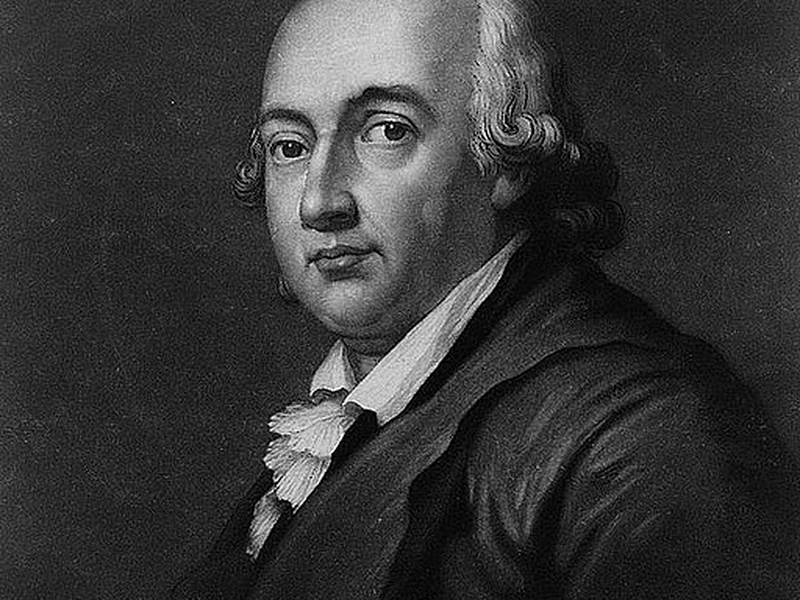
R omantic thinkers like Johann Gottfried Herder, developed an organic conception of nationhood. For Herder, a nation is an extended family, and so a perfect nation, the most natural state, is “one nation, an extended family with one national character." (I rely on this essay by Richard White.) People have…

April 27, 2015

Imagining Finland

Nations are “imagined communities,” and one of the ways nations imagine themselves is to imagine themselves as very, very old. The Finnish epic, the Kalevala , serves as an illustration of the nexus between ancient literature and national identity. Anderson writes ( Imagined Communities , 74-5), “In the eighteenth century…

April 27, 2015

The Un-Dante

In a contribution to Petrarch: A Critical Guide to the Complete Works Teodolinda Barolini contrasts the love poetry of Petrarch's Rerum vulgarium fragmenta (also known as the Canzoniere ) with that of Dante. Petrarch continues the courtly paradigm. His interest is in the shifting psychology and drama of the male…

April 27, 2015

Deflating Humanism

In his E nglish Literature in the Sixteenth Century , CS Lewis makes two deflationary comments about the effects of Renaissance humanism. First, “The ‘barbarous’ books [of medieval Latin] have survived in the only sense that really matters: they are used as their authors meant them to be used. It…

April 24, 2015

Mystic Ark

Conrad Rudolph's The Mystic Ark is the product of impressive scholarship. Its focus is on the image of the mystic ark, a complex cosmic portrait showing “the Majesty” (looking like Jesus) enthroned, flanked by angels, holding a large disk, inscribed with a square turned sideways like a diamond. Inside the…

April 24, 2015

Showing page 435 of 2212

Browse by Category

In Medias Res

Your weekly digest for all things Theopolis.

Donate

Theopolis is nearly 100% donor-supported. Consider joining us on our mission.