Theopolis Logo

Writing

Explore our collection of theological essays, biblical studies, and reflections on faith and culture.

See all
nativity-2
Advent

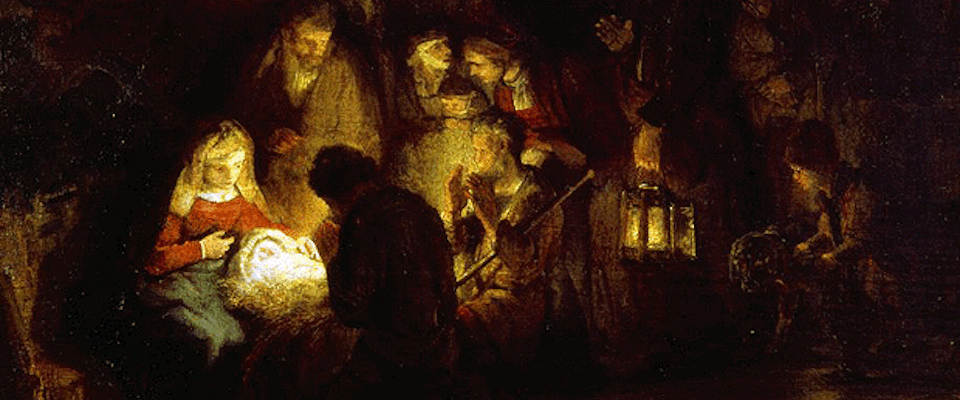
Joyful Humility

Christmas is a joyful season, but for many it turns into something else. Instead of joy, it is full of disappointment and unhappiness. Instead of an occasion for family fellowship, it becomes an opportunity for opening old wounds, reigniting old arguments, giving new life to rancor that should have died…

by Peter LeithartDecember 19, 2016

sagradafamilia-crop
Biblical Theology

Systematic Typology (Part Five)

The Temple of Time The “covenant-literary matrix” of the Bible is not a pattern imposed upon the text, but the internal logic of its arrangement. This fundamental structure, functioning at multiple levels simultaneously, is a ceaseless reiteration of God’s primary theme. It is an algorithm forged in the furnace of…

by Mike BullDecember 16, 2016
img_1456
Hermeneutics

Exodus in 1 Kings

In the four hundred and eightieth year after the Exodus, Solomon began to build the temple of the Lord in Jerusalem. [1] That the author of Kings should date the start of the building of the temple from the Exodus is noteworthy. In Exodus 15:17, in Moses’ song following the…

by Alastair RobertsDecember 8, 2016
cross-grunwald
Cross

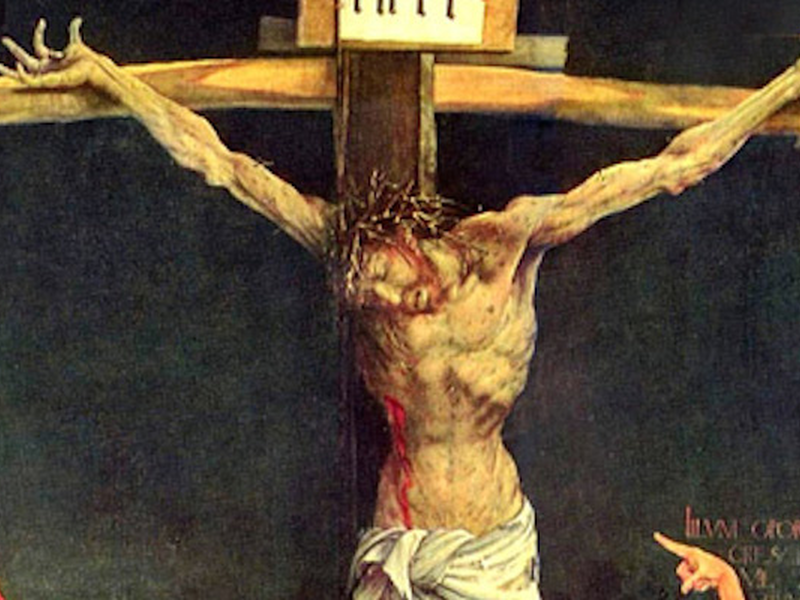
How Mist Gains Weight

Philip Schaff, a German Reformed theologian, states in The Principle of Protestantism that the material principle of Protestantism is “the doctrine of the justification of the sinner before God by the merit of Christ alone through faith.” This is the core message of the Church which leads “to the abandonment…

by Bogumil JarmulakDecember 6, 2016
mountain-top
Biblical Theology

Jesus and Godel's Theorem

“Religion” is an attempt to create or build a tower with a top, or to build a temple that is self-contained. The story of The Tower of Babel in Genesis 11 is the story of mankind’s attempt to create a world that is self-contained and does not need God. All…

by Richard BledsoeDecember 1, 2016
four-evangelists
Matthew

Dating Matthew, (Part 2)

In the first essay in this series, I presented a case for dating Matthew before AD 70, contrary to the present scholarly consensus. In this essay, I intend to present cultural, personal, ecclesiological, and theological arguments for a very early date for Matthew. [1] The cultural argument concerns literacy in…

by Ralph Allan SmithNovember 29, 2016

Showing page 121 of 309

See all

Showing page 33 of 43

See all

Law and Gospel in Public

Drawing on the work of Oliver O'Donovan, Jamie Smith offers a critique of natural law as an adequate grounding for political theology. Positively, Smith argues that “he public task of the church is not just to remind the world of what it (allegedly) already knows (by ‘natural' reason), but to…

April 2, 2015

Symbolizing Reality

At the beginning of his Silence and Praise , Ryan Hansen summarizes several of the recent approaches to understanding the cosmology of the book of Revelation. The most popular today borrows from the sociology of knowledge to suggest that John's writing creates a “symbolic universe” or “worldview” for his readers.…

April 2, 2015

Kept from Women

The emphasis on chastity, virginity, and lack of defilement from women does not have to do with misogyny or asceticism. In biblical perspective, it means that this is both a liturgical and a military assembly. When Israel arrived at Sinai, the men had to keep themselves from women so as…

April 1, 2015
Ecclesiology

Unity First?

In his Gift and the Unity of Being , Antonio Lopez claims that “Christ's kenotic gift of self restores unity with God. The redemption of the gift allows man to see that unity with God is possible and that it generates a whole that is greater than its parts. St.…

April 1, 2015

Nothing Sacred

Douglas Rushkoff's Nothing Sacred is rather all over the place (as one might say if one had a thickly superior British accent). The Judaism he favors isn't a “traditional community with concrete values and well-defined rules” (1) but one that “stresses transparency, open-ended inquiry, assimilation of the foreign, and a…

April 1, 2015

Automatic Writing

Explaining the power of liturgical habit, Paul Griffiths ( Decreation ) offers writing as an example of the self-forgetful, and world-forgetful, character of habit. It's one of the best descriptions of the experience of writing that I have come across. A few preliminaries to make sense of the analysis: Griffiths…

April 1, 2015

Showing page 445 of 2212

Browse by Category

In Medias Res

Your weekly digest for all things Theopolis.

Donate

Theopolis is nearly 100% donor-supported. Consider joining us on our mission.