Theopolis Logo

Writing

Explore our collection of theological essays, biblical studies, and reflections on faith and culture.

See all
andriy-nestruiev-gdbrwwh6doc-unsplash
Biblical Studies

Funerals and Flutes

Matthew 8-9 records three clusters of miracles, interspersed with snatches of Jesus’ teaching about various aspects of discipleship. Just as the Sermon on the Mount displays the authority of Jesus’ Word in teaching, these chapters display the authority of Jesus’ Word over sickness, uncleanness, the creation, demons, and death. In…

by Peter LeithartApril 17, 1992

michal-parzuchowski-w9uljjwg2fa-unsplash
Baptism

Daddy, Why Was I Excommunicated?

Since the early 1980s, several of the conservative Reformed Churches have debated and wrestled with the issue of paedocommunion (infant communion). The PCA and the OPC assigned study committees to examine the question, both of which produced useful reports both in support of and against the position. Though the debate…

by Peter LeithartApril 13, 1992
skyler-gerald-akljfvj5ym4-unsplash
Biblical Chronology

Chronologies and Kings, Part 9: Jehu, Hazael, and Assyria

(This issue of Biblical Chronology concludes a discussion of the Biblical and Assyrian chronologies, begun in previous posts. Click on the category link of "Biblical Chronology" above to see previous issues. Did Shalmaneser Know Jehu? Allis writes: "The Black Obelisk of Shalmaneser contains, in addition to brief accounts of the…

by James B. JordanMarch 23, 1992
denise-jans-dpemksg59la-unsplash
American Culture

Arts and Play, Part 4

Movies Movies as an art form have a powerful impact because they take place in a dark room, on a large screen, with no distractions, and because they entail many of the arts: music, acting, choreography, design and color, etc. A movie can be an overwhelming experience for a young…

by James B. JordanMarch 23, 1992
sincerely-media-bhaswrjttzw-unsplash-2
Leviticus

The Ecology of the Tribute Offering

The Hebrew word translated as "grain offering" or "cereal offering" is minchah . Like the translation of `olah as "burnt offering," the translation of minchah as "grain offering" is somewhat deceiving, since minchah does not refer to grain or cereal. In liturgical contexts outside of Leviticus, in fact, the word…

by Peter LeithartMarch 13, 1992
sincerely-media-bhaswrjttzw-unsplash-2
Ascension

Skinned and Cut

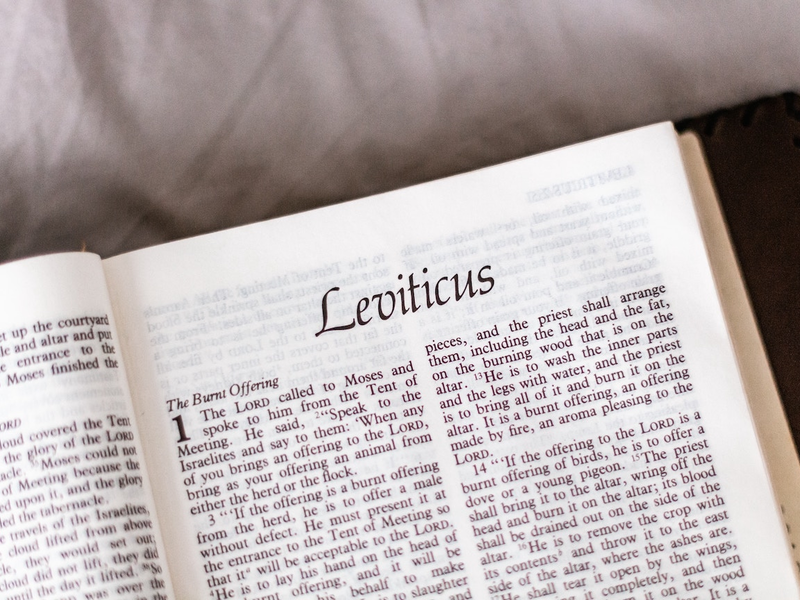
"He shall then skin the burnt offering and cut it into its pieces" (Leviticus 1:6). The normal word ( `olah ) that is translated as "burnt offering" and "whole burnt offering" has nothing to do with either burning or wholeness. It is the noun form of a verb meaning "to…

by Peter LeithartMarch 13, 1992

Showing page 291 of 309

See all

Showing page 33 of 43

See all

History of Disgust

Norbert Elias’s The Civilizing Process traces modern standards of disgust and cleanliness to the development of court society during the Renaissance. Drawing on Elias, William Miller ( Anatomy of Disgust ) suggests sensitivity to disgust and being civilized are directly proportional. Martha Nussbaum ( Hiding from Humanity , 115-6) disagrees…

December 15, 2014

Islamic Revolutionaries

In his brilliant Earthly Powers (3), Michael Burleigh cites a passage from Tocqueville’s book on the French Revolution. Taking a note from Schiller about “how early modern religious wars spilled across political boundaries, which reminded Tocqueville of the ideological struggle between Jacobins and counter-revolutionaries in late-eighteenth-century Europe,” Tocqueville drew a…

December 12, 2014

Sacrificial Politics

Semyon Frank was a Russian emigre to London. Michael Burleigh ( Sacred Causes , 39) sums up his life: “Born in 1877 into a Russian-Jewish family, he had quickly outgrown a juvenile Marxism, converting to Orthodox Christianity in 1912, on the ground that the Jewish God was as remote from…

December 12, 2014
Modernity

Un-Secular Age

Our secular age can be sustained only if the secular has been carefully distinguished from the sacred, and only if the boundary between the two is vigorously, not to say violently, guarded. But boundary-drawing between the sacred and profane is the work of a priest. It is the sacred act…

December 12, 2014

Pure Aesthetics

Hugh Grady opens his Shakespeare and Impure Aesthetics (6-10) with a brief and illuminating discussion of Kant’s aesthetics of purity. By “pure” here is meant the freedom of aesthetic experience from cognitive reason and teleological judgments, from practical or moral interests. This disinterested experience of art is an encounter with…

December 12, 2014

After the Temple

Jonathan Klawans is a great one for cutting through nonsense. In his Purity, Sacrifice, and the Temple , he points to the oddity that “documents composed three, four, or even five centuries after the destruction are labeled as delayed responses to the destruction. . . the suggestion that it took…

December 11, 2014

Showing page 487 of 2212

Browse by Category

In Medias Res

Your weekly digest for all things Theopolis.

Donate

Theopolis is nearly 100% donor-supported. Consider joining us on our mission.