Theopolis Logo

Writing

Explore our collection of theological essays, biblical studies, and reflections on faith and culture.

See all
tanner-mardis-xuxghzhibn4-unsplash-1-2
Biblical Studies

Tweets-turned-Notes on the Bible’s Chronology

Summary In what follows, I will consider the “year-stamps” employed in Scripture, i.e., statements of the form, “Such-and-such an event took place in the Xth year of Y.” In the process, I will suggest some ways in which the Biblical narrative might relate to events in the extra-Biblical world, though…

by James BejonJuly 16, 2019
durer-prodigal-son-2
Luke

Perspectives on the Prodigal, (Part 2)

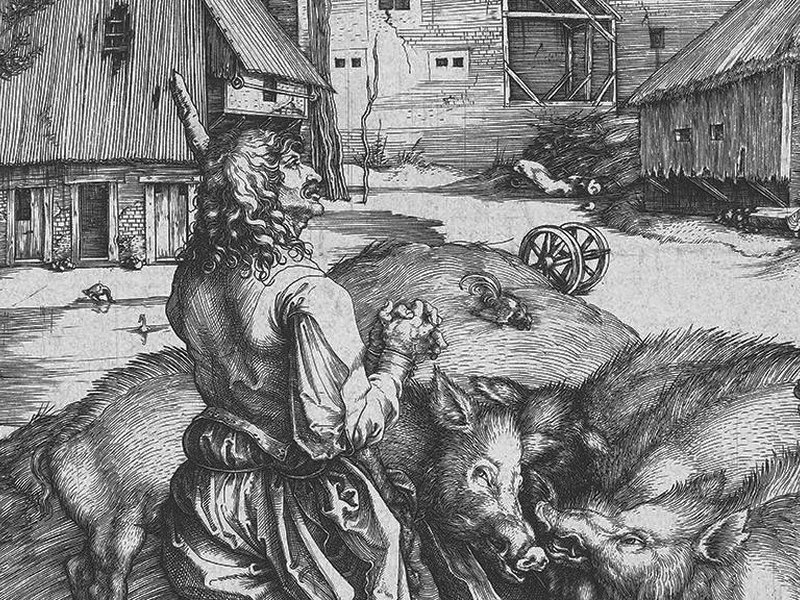
In the first essay on the parable of the Prodigal Son, I suggested that the problems commentators and others encounter in interpreting Jesus three-part parable are not accidental. These are not just problems in our ignorance of cultural background. They are intentional features of the stories —stories designed to poke…

by Ralph Allan SmithJuly 11, 2019
durer-prodigal-son-2
Luke

Perspectives on the Prodigal, (Part 1)

The story of the Prodigal Son is perhaps the most well-known story in the Bible. As others have observed, it may also be one of the most misunderstood. In two short essays, I will point out features of this story that are commonly neglected, aspects of Jesus’ parable that might…

by Ralph Allan SmithJuly 9, 2019
de-rijke-man-en-de-arme-lazarus-by-jacopo-da-ponte-16th-century
Luke

Lazarus and the Rich Man

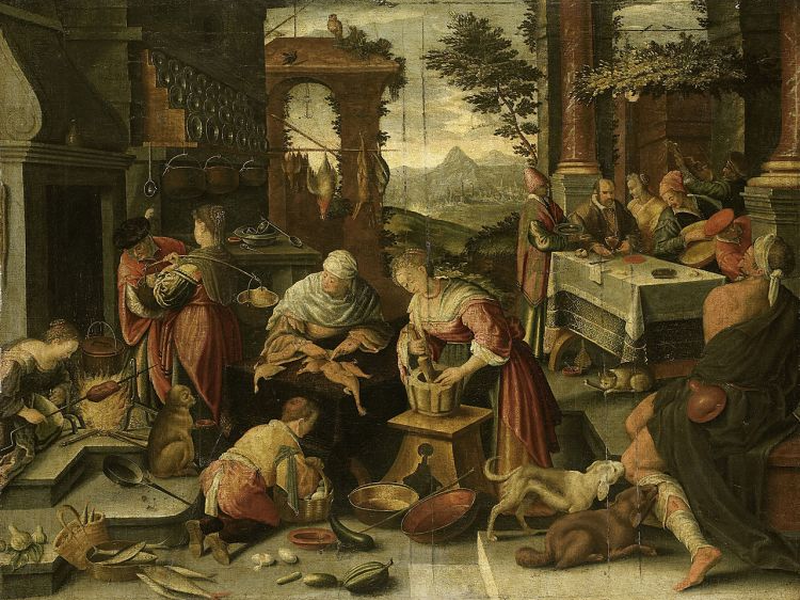
The parable of Lazarus and the nameless rich man is not an independent story. It is part of a long context that begins in Luke 15:1, where Jesus is eating with tax collectors and sinners and the scribes and Pharisees grumble. In response to their hardheartedness, Jesus tells a three-part…

by Ralph Allan SmithJuly 4, 2019
aaron-burden-uynrnfdkjwg-unsplash
Luke

Everybody has Dropsy - Luke 14:1-24

The Bible is written so that even when a reader cannot pick up on what might be deeper or more detailed aspects of a text, there is virtually always a message to be heard. In the ancient world, where the “reader” of Scripture would likely be a church official facing…

by Ralph Allan SmithJuly 2, 2019
communion
Biblical Theology

Fruit Trees and Grain Plants

The distinction between garden (or vineyard) and field begins in Genesis 2. This relates to the ordering of the formless world. Plants of the field are contrasted with the garden planted by God in Genesis 2:5&8. Later on, under the Old Covenant the Israelites will be required to keep their…

by James B. JordanJune 27, 2019

Showing page 77 of 309

See all

Showing page 33 of 43

See all

Anselmian Abelard

In his study of Abelard’s soteriology, Logic of Divine Love , Richard Weingart the common claim that Abelard’s doctrine of the atonement is a “subjective” one. For starters, that opinion is based on a brief comment in Abelard’s Expositio in Epistolam ad Romanos that “is only an outline of Abailard’s…

November 14, 2014

Cruel Kindness

Abelard insisted that human beings cannot be held guilty of acts that the did not commit. And there went original sin. But he also recognized that people suffer evils, and he tied this to the original sin of Adam and Eve. Without repentance, people are heading to eternal damnation. Infants…

November 14, 2014

Costly Forgiveness

Like some other recent writers on the atonement, Sharon Baker argues ( Executing God , 125), in a fashion similar to Thomas, that “the sacrifice of Jesus Christ on the cross was acceptable to God not because of the external offering of Christ’s body with its dripping blood, but because…

November 14, 2014

No Sacraments, No Protestantism

Phillip Cary of Eastern College has argued, “Protestantism cannot carry through its own deepest intention – to put faith in the word of Christ alone – without a Catholic doctrine of sacramental efficacy.” I offer a brief defense of Cary’s counter-intuitive claim at The Evangelical Pulpit .

November 14, 2014

Infusion, Imputation, and Luther

Distinguishing Catholic-infused from Protestant-imputed is difficult to sustain, since Luther frequently claims that justifying righteousness is “within” rather than “outside.” Luther’s 1520 treatise The Freedom of a Christian provides some rich material for this investigation. This is a very early treatise, and does not represent in every respect Luther’s mature…

November 13, 2014

Not Last Adam

The title of Benjamin Dunning’s Christ Without Adam summarizes one of the key themes of his book. He devotes chapters to Stanislas Breton, Alain Badiou, and Zizek, all of whom have written on Paul in recent years. In each case, though in different ways, they break the links that Paul…

November 13, 2014

Showing page 499 of 2212

Browse by Category

In Medias Res

Your weekly digest for all things Theopolis.

Donate

Theopolis is nearly 100% donor-supported. Consider joining us on our mission.