Theopolis Logo

Writing

Explore our collection of theological essays, biblical studies, and reflections on faith and culture.

See all
kristina-flour-bcjdbykwquw-unsplash
Culture

On Foul Language

The Stranger: Do you have to use so many cuss words? The Dude: What the f*ck you talking about? - The Big Lebowski There was a man I knew, an elder at his church, who, whenever he was called upon to announce a pregnancy, preferred the euphemism “with child” because…

by Remy WilkinsJanuary 12, 2016
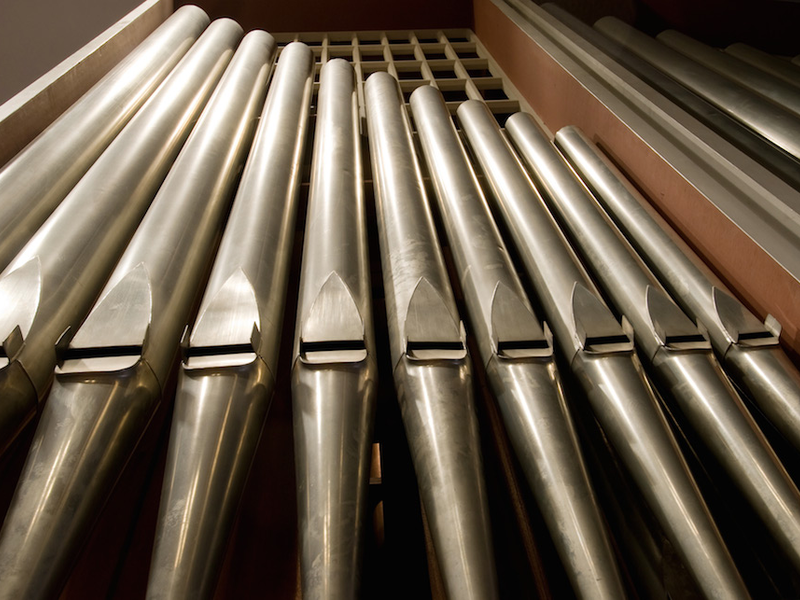
organ-pipes
How to Worship

Pipes Worth Playing

I know what you’re thinking. Organ: funeral, ball game, grand dusty cathedral. Why should modern Christians of such a technological age revisit a thousand year-old instrument? Don’t worry, I will not be trying to punch another hole in my Weird Music Preferences and Opinions card here. The truth is, our…

by Jarrod RicheyJanuary 7, 2016
tree-2
James

Do Things Have Natures?

Do things have natures? As I am posing the question, it is not simply a question of whether there are particular kinds of things in the world that have characteristic features, patterns of behavior, trajectories of growth and development. If that is what the word means, then the answer is…

by Peter LeithartJanuary 5, 2016
jim-leading-worship
Theopolis News

2016 Nevin Lectures with Father John Behr

We are excited to announce our 2016 Nevin Lectures featuring Father John Behr. Fr. John is the Dean of St. Vladimir's Seminary and Professor of Patristics, as well as the author of multiple works. He will be delivering three lectures over the course of two days dealing with "What Protestants…

by Brian MoatsJanuary 4, 2016
times-square
Creation

Time, Curse or Gift?

New Year's Day makes one reflective, at least about the past year, perhaps about life, perhaps, more broadly, about time itself. Many view time as a curse. Some see it as a curse because of missed chances. As one day or year moves on to the next, all we can…

by Peter LeithartDecember 31, 2015
nativity-2
Advent

The Manger

It seems a truism to say that we live in the world: that the world is outside of us. In reality the world is very much inside of us too. In fact the world passes through us as much as we pass through it. We breathe in its air, using…

by Arthur KayDecember 29, 2015

Showing page 138 of 309

See all

Showing page 33 of 43

See all

Tent of Meeting

Leviticus 1 tells us that Yahweh called Moses from the tent of meeting to deliver instructions about sacrifice. What is that "tent of meeting" ( 'ohel mo'ed )? Judging by the usage of Leviticus, it would seem to be the tabernacle or a portion of the tabernacle. Most of the…

January 8, 2019

Don't Do, Don't Desire

The Ten Words include twelve negative commands. Most of the verbs that are negated are unique: 1) Thou shalt not have ( lo' yihyeh-leka ; literally, "there shalt not be to thee") other gods. 2) Thou shalt not prostrate ( lo'-tishtachweh ) to them (i.e., images). 3) Thou shalt not…

January 7, 2019
Philosophy

Theology's Maidservant

Thomas Aquinas summed up a long tradition when he said that philosophy is theology's ancilla , its maidservant. That's an apt description, and applies as well to natural science, social science, poetry, literary criticism, history, etc. etc. Philosophy has a special role only because her work often resembles theology's, and…

December 20, 2018

The Limits of Natural Law

John Milbank currently has a series of essays on natural law running a Church Life Journal . It's a "revisionist" account of natural law. And one of the revisions is Milbank's post-Kantian conception of the relation of nature and culture, something he lays out in his essay, " Only Theology…

December 19, 2018

Simplicity: Further Exploration

Steven Duby ( Divine Simplicity ) addresses the sort of argument I offered in yesterday's post . I quote a long paragraph (p. 148), with comments interspersed. "One might contend," Duby writes, "for a divine complexity that is necessary and irrevocable with no risk of divisibility. Such a hypothesis elicits…

December 18, 2018

Divine Simplicity: An Experimental Response

This is a response to the notion of divine simplicity. It's not a refutation. It's an experiment designed to tease out the logic of the claim. Simplicity means that God is without parts. He has no physical parts, and He's not a composite of any metaphysical "parts" either. He's not…

December 17, 2018

Showing page 50 of 2212

Browse by Category

In Medias Res

Your weekly digest for all things Theopolis.

Donate

Theopolis is nearly 100% donor-supported. Consider joining us on our mission.