Theopolis Logo

Writing

Explore our collection of theological essays, biblical studies, and reflections on faith and culture.

See all
timothy-eberly-djj49s6ud2o-unsplash
Biblical Studies

Whom Shall We Believe? Evangelicals and Scholarship

As we move into the Persian period of ancient history, and try to reconcile it with Daniel’s prophecies, we need to ask some hard questions about the interpretation of the data before us. One question concerns the reliability of the Biblical witness, and beyond that a second question concerns the…

by James B. JordanJanuary 30, 1991

a2-118606403-jpg
Biblical Horizons

Understanding Russia

Ewa Majewska Thompson: Understanding Russia: The Holy Fool in Russian Culture Ewa M. Thompson is Professor and Chairman of the Department of German and Slavic Studies at Rice University. In this seminal study, she investigates the concept of the "holy fool" as it exists in Russian culture and civilization. While…

by James B. JordanJanuary 30, 1991
alfons-morales-ylswjsy7stw-unsplash-1
Biblical Studies

The Bible and Western Literature

The most cursory glance at the history of Western literature reveals that it has been deeply influenced by the Bible. Some of the greatest classics of Western literature draw their plots, characters, and ideas largely from Scripture; Dante’s Divine Comedy and Milton’s Paradise Lost are two of the most notable…

by Peter LeithartJanuary 23, 1991
screen-shot-2022-04-28-at-4-57-36-pm
Exodus

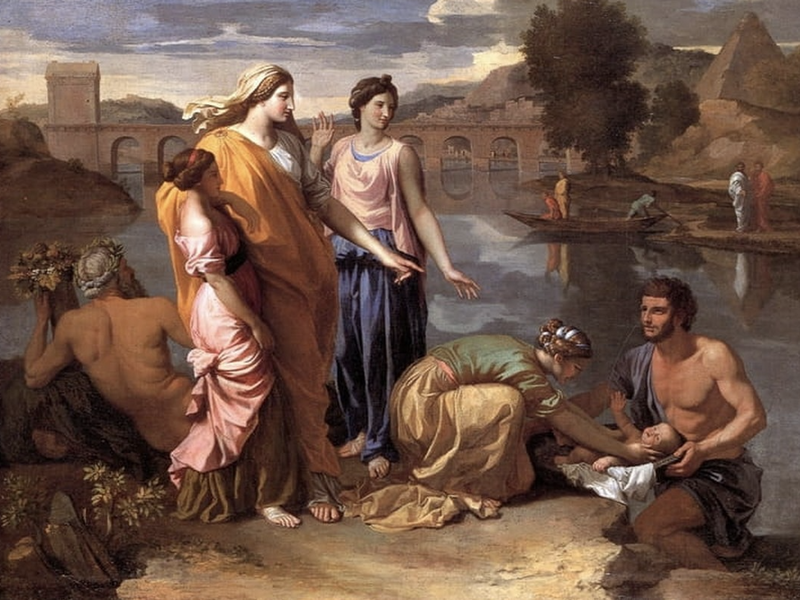
The Beautiful Child

Each time the Scriptures recount the story of Moses’ birth and deliverance from Pharaoh, reference is made to two facts about that event. First, each text points out that Moses was "beautiful." Second, each text points out that Amram and Jochebed, his parents, hid him for three months (cf. Ex.…

by Peter LeithartJanuary 23, 1991
501819ld-2
Romans

Who Rules the Land? The Meaning of the Noahic Covenant, Part 2

Click HERE for Part 1. The Message of the Covenant Can we really say that the saints presently rule the world, and always have since Noah? Look around and you can see that the wicked rule in virtually every country on earth. There are wicked civilizations that rise Babelically age…

by James B. JordanDecember 30, 1990
hebrew-manuscript-6
Hermeneutics

Daniel’s 70 Weeks

As we saw last time , we have come to the place in the study of Biblical chronology where it seems that we are forced to abandon the Bible itself as our primary source of information. If we assume that the seventy sevens of Daniel 9:24-27 are in fact weeks…

by James B. JordanDecember 23, 1990

Showing page 300 of 309

See all

Showing page 33 of 43

See all

De-Priesting, Re-Priesting

When Aaron and his sons were ordained, they were washed, vested, and anointed (Leviticus 8:6-9). When Aaron approached the Most Holy Place on the Day of Atonement, he puts on linen clothes and washes (16:4). There is no anointing, he removes the garments of glory. The ordination rite goes in…

February 19, 2014

Faith, Not Sight

Faith is the discernment of things unseen. Faith looks for a city yet to come, not made with hands. To any visible arrangement of things, faith stands with Faust in his refusal of “Stay, you are so fair.” Faith says to every human construction, “Good, but not it .” Faith’s…

February 19, 2014

Incinerating enemies

In a contribution to Ancient Mediterranean Sacrifice , David Frankfurter analyzes several contexts of Egyptian religion on the way to a critique of the whole category of “sacrifice.” In some of these contexts, no animals were slaughtered; no violence done. In some contexts, though, animals were killed. He elaborates on…

February 18, 2014

Symbolic rites

Jonathan Klawans asserts in an essay in Ancient Mediterranean Sacrifice that “symbolic action was an undeniably central feature of ancient Israelite culture” (114). As evidence, he points to passages in the Hebrew Bible that highlight the memorial function of rituals. Passover, Sukkot, Sabbath, circumcision, phylacteries are all presents as communicative…

February 18, 2014

Sacrifice or Silence

In his treatise On Abstinence from Killing Animals , Porphyry states a principle of philosophical sacrifice: Different strokes for different deities. For “intelligible gods,” the best worship is “hymn-singing in words,” since “sacrifice is an offering to each god from what he has given, with which he sustains us and…

February 18, 2014

Backfire

John Steven explains at Slate why the ceasefire in South Sudan, like many ceasefires, could well backfire” “The cease-fire is making it worse. Indeed, this uncomfortable truth isn’t even unique to South Sudan. Cease-fires almost always make a conflict worse, delaying political deals, prolonging the killing, and ensuring that the…

February 18, 2014

Showing page 679 of 2212

Browse by Category

In Medias Res

Your weekly digest for all things Theopolis.

Donate

Theopolis is nearly 100% donor-supported. Consider joining us on our mission.