Theopolis Logo

Writing

Explore our collection of theological essays, biblical studies, and reflections on faith and culture.

See all
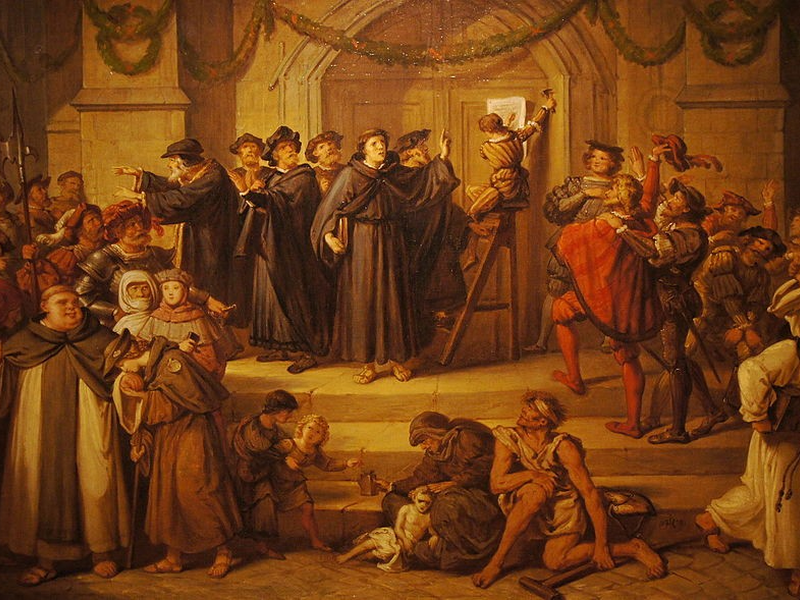
der_anschlag_von_luthers_95_thesen-1024x589
Church Calendar

Five Misconceptions of Reformation Day

For many people the date October 31 is significant not only for being the Eve of All Saints (All Hallows Eve, Halloween) but as the day in 1517 when Martin Luther nailed his 95 theses to the door of the Castle Church in Wittenburg. These theses were a list of…

by Timothy LeCroyOctober 31, 2017

sacre-bleu-r__kixb0i5m-unsplash
Church Calendar

Concerning Halloween

It has become routine in October for some Christian schools to send out letters warning parents about the evils of Halloween, and it has become equally routine for me to be asked questions about this matter. "Halloween" is simply a contraction for All Hallows’ Eve. The word "hallow" means "saint,"…

by James B. JordanOctober 26, 2017
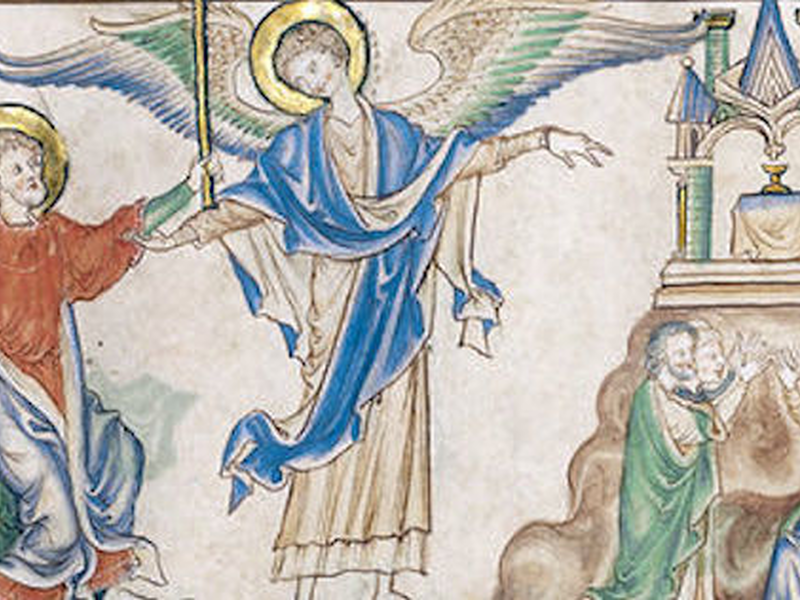
revelation-john-with-rod
Revelation

Preaching, An Art of Division

The following is an excerpt from Peter Leithart's forthcoming two-volume commentary on Revelation (T&T Clark). Y ou must prophesy again concerning many peoples and nations and tongues and kings,” a voice tells John (Rev. 10:11). Then someone gives him a “reed like a rod” and instructs him to measure (11:1).…

by Peter LeithartOctober 24, 2017
josiah-death

Back To Egypt

Josiah is an ideal Davidic king in many ways. He not only “did right,” but he “walked in the ways of his father David” and “did not turn aside to the right or to the left” (2 Chronicles 34:2). At the age of 16, he began to seek Yahweh, and…

by Peter LeithartOctober 19, 2017
augustine
Augustine

Augustine and the Music of Time

One of the best discussions of Augustine’s views on time comes from Jeremy Begbie’s Theology, Music, and Time (ch. 3). Following Paul Ricoeur, Begbie claims that Augustine’s distentio “is conceived as the three-fold present, and the threefold present as distentio . The distentio consists in the non-coincidence of the mind’s…

by Peter LeithartOctober 17, 2017
img_1043
How to Worship

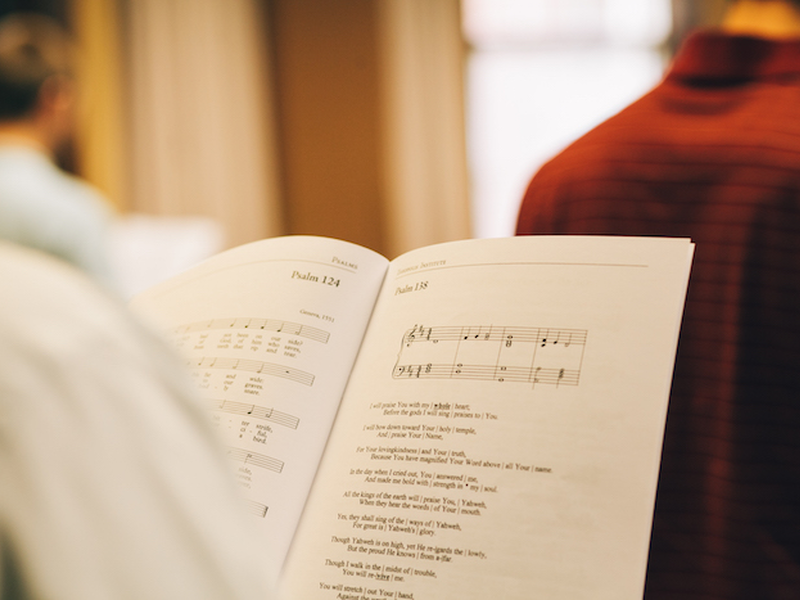
The Psalter Should be Woven into the Fabric of Worship

This has always been the position of the Christian Church, and from an historical perspective the present situation in evangelicalism is appalling. The early liturgies of the Church, which are still used in Episcopal and Lutheran worship, are laced with psalm phrases. The early hymns, such as the Te Deum…

by James B. JordanOctober 12, 2017

Showing page 104 of 309

See all

Showing page 34 of 43

See all
History

Bacon’s Induction

Stanley Fish, in a renowned essay on Bacon’s Essays , concludes that the essays are “unfinished with a purposefulness that makes the bestowing of the adjective less a criticism than a compliment.” He insists on the provisionality of knowledge, and “communicates that provisionality [in the Essays ] by letting the…

September 5, 2006
Science

Lamarck Redux?

In a fascinating review of a recent book on evolution (TNR, Sept 4), Oren Harman suggests that reports of the death of Lamarck, proclaimed in every middle school science classroom for well over a century, may be somewhat exaggerated: Lamarckism “is and isn’t” dead. Insofar as Lamarckism meant “direct adaptive…

September 5, 2006

Trinity and Self-Gift

One of Barth’s main contentions that only a Triune God can give Himself. A monadic God might give, but would give something less than Himself. Only if God is both Himself and another, and only if that other is fully God, can God give Himself .

September 5, 2006

Complex reprobation

Bavinck writes: “It is wrong to conceive the decree as if it determined only a person’s end and coerced him or her in that direction regardless of what they did. The decree is as inconceivably rich as reality itself. It is, in fact, the fountainhead of all reality. It encompasses…

September 5, 2006
History

Epistemology of ingratitude

Blumenberg writes ( Legitimacy of the Modern Age ) that with Bacon, Kepler, and particularly Leibniz, the Augustinian suspicion of curiosity is overcome, and knowledge thereafter “justifies itself; it does not owe thanks for itself to God; it no longer has any tinge of illumination or graciously permitted participation but…

September 4, 2006
History

Physics and Metaphysics

Blumenberg says that Bacon drew a distinction between metaphysics and physics in terms of human control: “The former has as its object the unalterable law beyond man’s influence; the latter comprises all knowledge of the operative and material causes that man can transpose in order to influence given states of…

September 4, 2006

Showing page 1799 of 2212

Browse by Category

In Medias Res

Your weekly digest for all things Theopolis.

Donate

Theopolis is nearly 100% donor-supported. Consider joining us on our mission.