Theopolis Logo

Writing

Explore our collection of theological essays, biblical studies, and reflections on faith and culture.

See all
little-girl
Children

Honor God With Your Body

I am making a new rule in our house! We are actually kind of skimpy on the house rules. I try very hard to keep things simple: love God, love others, be joyful. It’s not complicated to avoid discipline here. But I have found myself repeating this new rule over…

by Lindsey TollefsonApril 9, 2015

giotto-noli-me-3
John

The Gardener and the Beloved, (Part 3)

Click HERE for Part 2 The voice of Jesus transforms and changes Mary when she hears him speak her name. This is her last “turning.” So also the woman in the Song of Songs longs to hear the voice of her beloved. Let me see your face, let me hear…

by Jeff MeyersApril 6, 2015
giotto-noli-me-2
John

The Gardener and the Beloved, (Part 2)

Click HERE for Part 1. The details of this story call the attentive reader back to the drama of Solomon’s Song of Songs. And the Song of Song’s alludes to, ties us into the story of Adam and Eve in the Garden and the promise of a coming Messiah that…

by Jeff MeyersApril 4, 2015
easter-term-2015-2
Theopolis News

Easter Term, 2015

“The course was a paradigm shift for me,” said Jonathan Sedlak, a Milwaukee electrical contractor who attended Theopolis’s course on Revelation. “I am left with a book that is far more practical than it has ever seemed before.” Jonathan Anderson of Louisville, Kentucky found the course “refreshing.” “I finished with…

by TheopolisApril 2, 2015
psalm-singing
Genesis

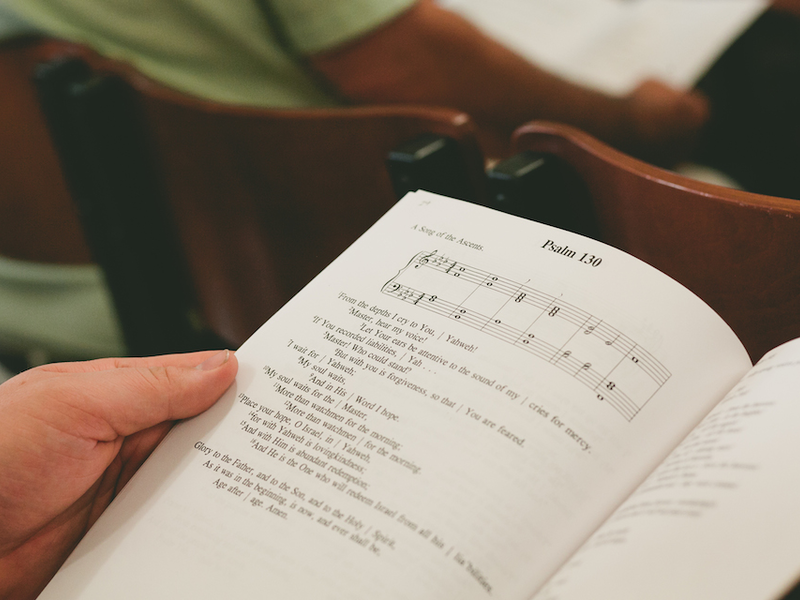
Worship as Response: Liturgical Logic, (Part 1)

“It is only by participation in a rational, practice-based community that one becomes rational.” – Alasdair MacIntyre It may be perfectly clear to a chef why adding unsifted powdered sugar to a hot frosting is a bad idea. But for an amateur cook, this may be the kind of rule…

by Jonathan BarlowApril 2, 2015
giotto-noli-me
John

The Gardener and the Beloved, (Part 1)

On a fresco in a chapel in Padua, Italy, there is a famous painting depicting the dramatic post-resurrection scene in John 20 with Mary and Jesus outside of the garden tomb. Giotto di Bondone painted it in the early 14th century. Jesus is striding from the tomb with a victor’s…

by Jeff MeyersApril 1, 2015

Showing page 156 of 309

See all

Showing page 34 of 43

See all

Sermon Outline, February 1

Sermon outline for Feb 1: The Days of the Son of Man, Luke 17:11-37 INTRODUCTION Jesus’ mission was to proclaim “the kingdom of God” (Luke 4:43; 8:1). By this, He meant that God was taking control of the world through Him, and putting a sinful and shattered world back together.…

January 29, 2004
Theology

Faith and Heresy

Barth says that the conflict of faith and heresy is far more serious and important than the conflicts between faith and unbelief. Unbelief cannot be taken with seriousness, he says, because we believe in the forgiveness of sins. But heresy is taken seriously to the extent that it has the…

January 28, 2004
Literature

Chaucer and Tragedy

Henry Ansgar Kelly (pp. 139-140 of Chaucerian Tragedy ) makes this important historical comment at the end of his analysis of Chaucer’s Troilus and Criseyde : “The selection introduction of Aristotelian criteria of excellent in tragedy has been a source of untold confusion in modern discussions of tragedy. For Aristotle,…

January 28, 2004

The Etymology of the “F-word”

While I’m on that subject: I’ve often wondered about the etymology of the “f-word.” The Shorter Oxford says that the derivation is unknown. I have a theory: Medieval courtly love poetry (such as the Roman de la Rose ) traced the development of courtship through several stages. The stage of…

January 28, 2004

The Etymology of the “F-word”

While I’m on that subject: I’ve often wondered about the etymology of the “f-word.” The Shorter Oxford says that the derivation is unknown. I have a theory: Medieval courtly love poetry (such as the Roman de la Rose ) traced the development of courtship through several stages. The stage of…

January 28, 2004

Cahill on Euripedes

In his beautifully written tribute to the ancient Greeks. Thomas Cahill interprets Euripides’ Medea as a cautionary tale to aristocratic Athenian men. The question he poses to the audience is: “What could drive a woman to such extremes that she would kill her own children.” Cahill’s summary of Euripides’ target…

January 28, 2004

Showing page 2130 of 2212

Browse by Category

In Medias Res

Your weekly digest for all things Theopolis.

Donate

Theopolis is nearly 100% donor-supported. Consider joining us on our mission.